Philosophy of Mathematics
128 articles
-


A Letter, a Paradox, and the Tower of Types That Fixed Math
Why can't a set contain all sets? A simple rule—things can only point to things on lower levels—fixes a nasty loop and now runs your computer.
-
Are Numbers as Real as Your Left Foot?
Is the number three as real as your left foot? Dive into the ancient puzzle of whether math lives in the world or only in our minds.
-

Are Numbers Just Positions in a Giant Pattern?
What's 2 really? If you can build it in different ways, maybe numbers aren't objects but spots in a pattern. That shifts how you think about all of math.
-
Are Numbers Real, or Just Pieces in a Game?
When you add 2+2, are you uncovering a truth about the universe, or just following rules like a board game? The debate that divided philosophers.
-
Are Numbers Real? The Fight Over What Math Is Actually About
What is a number? Are numbers real like rocks or invented like chess? This ancient debate shapes all of math, and it's still wide open.
-
Are Some Infinities Bigger Than Others?
Georg Cantor proved that infinity comes in sizes. His discovery transformed math but triggered paradoxes that shook the foundations of logic.
-
Are Some Infinities Bigger Than Others? Cantor's Discovery
Cantor found that some infinities are bigger than others. Then he asked an impossible question about the continuum — and it broke mathematics.
-
Are There Math Problems No Computer Can Ever Solve?
Some math problems can never be solved by any computer. Alonzo Church's surprising discovery changed computer science forever.
-
Are Two Recipes That Always Bake the Same Cake Really the Same Recipe?
When two computer programs do the same thing with different steps, are they the same program? A 1930s logic puzzle that still shapes your apps.
-
Are You Pretending When You Say 'Two Plus Two Is Four'?
Is math real, or are we just pretending? Some philosophers think numbers, rules, and even objects are like make-believe. Find out why that idea matters.
-
Brouwer's Big Idea: Why Some Statements Have No 'Yes' or 'No'
Is every statement true or false? Not for infinite things—we might never know. Brouwer's logic demands proof before claiming truth, shaping computing.
-
Can “Some” Ever Be Free of “All”?
Can 'some' ever be free of 'all'? Attempts to answer this puzzle led to new ideas about truth and the limits of computers.
-

Can a Computer Solve Every Puzzle? The 50-Year Fight Over P vs. NP
Are solving puzzles and checking answers the same? If yes, many impossible problems would become easy. That's the 50-year fight over P vs NP.
-

Can a Doodle Prove a Point? The Surprising Logic of Diagrams
Can drawings prove things like words? Yes—Euler’s circles show logic clearly. But pictures can trick you if you’re not careful.
-
Can a Machine That Never Wavers Make Something Truly Random?
Can a steady machine make something truly random? Coin flips seem random, but patternless code isn't. Find out how chance and randomness differ.
-
Can a Math Proof Also Be a Computer Program?
Can a math proof also be a computer program? This idea checks proofs by running them, making software that never crashes.
-

Can a Picture Prove a Math Theorem?
For centuries, math has had a secret fight: can a picture ever be a proof? Some say diagrams are dangerous, but a colored knot might prove them wrong.
-
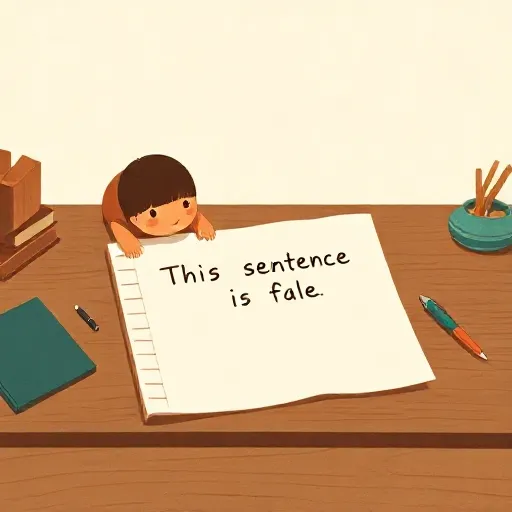
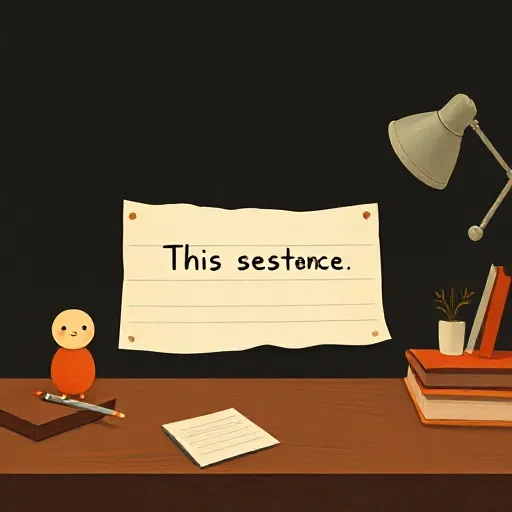
Can a Sentence Break Itself? The Puzzle of Self-Reference
Can a sentence be true and false at once? The liar paradox loops and broke logic's rules, leading to big ideas in math and computing.
-
Can a sentence go on and on forever? Logic’s strange answer
First-order logic can't say "there are infinitely many things." But infinitary languages can — and they reveal why logic sometimes needs to be infinite.
-


Can a Sentence Really Say It’s False? The Logic of “True”
Philosophers tried to write down the rules for truth and found that it can create impossible puzzles—and surprising new mathematics.
-

Can a Sentence Tell You It’s True? Alfred Tarski’s Puzzle
Can a sentence declare itself true without creating a logical loop? Alfred Tarski’s discovery reveals a boundary no language can cross.
-
Can a Set Belong to Itself? The Fight Over Circular Sets
Most mathematicians say a set can’t contain itself. But some disagree — and that clash changes how we think about infinity, lists, and truth.
-

Can a Set Belong to Itself? The Puzzle That Nearly Broke Math
A simple idea about collecting things into sets led to a logical explosion. How mathematicians patched up the rules so all of math wouldn't collapse.
-

Can a Set Contain Itself? The Paradox That Shook Mathematics
Why can't a set contain itself? Russell found a paradox that broke the old rules of math and led to new ways of thinking about collections.
-

Can a Simple Switch Explain the Limits of Mathematics?
How does a light switch's on/off logic reveal that some math statements can never be proved? It shows how logic, sets, and math are connected.
-
Can a Spiral Be True Geometry? Descartes’ Controversial Answer
Descartes wanted geometry based on clear motions. His rule solved an ancient puzzle but banned spirals. The fight over real curves still matters.
-
Can a Tiny Universe Contain an Infinity Too Big to Count?
Can a tiny, countable universe hold an uncountable set? This paradox makes us question if math reflects reality or is just a game with rules.
-
Can a Truth Exist Even If No One Knows It?
Bernard Bolzano argued that some truths are true forever, even if every mind in the universe forgets them. His proof sparked a revolution in logic.
-


Can All of Math Be Built from Pure Logic?
Two men spent a decade trying to prove math is just logic. They almost succeeded — but a few stubborn problems got in the way.
-
Can an Endless Staircase of Numbers Prove Math Is Safe?
Can we prove basic math never contradicts itself? A young logician used an infinite ladder of numbers to show it's safe, reshaping our idea of proof.
-

Can Making Up a Word Change What’s True?
Can making up a word change reality? Discover how definitions can unlock new truths or just be empty labels, depending on the rules you follow.
-
Can Math Prove All Truths? Kurt Gödel's Surprising Answer
Can math prove all truths? Gödel showed that even in arithmetic, some true statements can't be proved, which is a surprising limit.
-
Can Math Prove Itself Safe from Contradictions?
Can we prove that math will never give a wrong answer like 2+2=5? The surprising answer is no—and it reveals a deep limit to what we can know.
-
Can Math Prove That It Has No Contradictions?
Can math prove it has no hidden contradictions? Gödel showed it can't from within, but Gentzen found an infinite method—and today's apps rely on it.
-
Can Mathematics Prove Everything? Why Kurt Gödel Said No.
Can math prove everything? Kurt Gödel showed even simple arithmetic contains true facts that can't be proven — shattering the dream of perfect knowledge.
-
Can Numbers Actually Explain Why Things Happen?
Scientists use math to predict, but can mathematics itself explain the world? A debate that connects cicadas, bridges, and the reality of numbers.
-


Can Numbers Touch the Real World? Hermann Weyl’s Impossible Question
Can we touch reality directly, or do numbers build our world? Hermann Weyl asked this and discovered a hidden symmetry that holds atoms together.
-


Can One Planet Be Two Stars? The Puzzle That Changed Philosophy
Frege wanted to prove that math is just logic. His efforts led to a devastating paradox, but also to a puzzle about why two names for Venus feel different.
-
Can Philosophers Tell Mathematicians They’re Wrong About Math?
Can a philosopher's doubts change math that science and everyday life rely on? This debate decides who truly sets the rules for numbers.
-
Can Something Be Real Even If You Can’t See It?
Berkeley said objects vanish when unperceived. Mackie argued moral facts are too strange to exist. Are numbers just useful fictions? The puzzle of reality.
-

Can Space Really Bend? How Geometry Lost Its Certainty
For ages, geometry seemed unshakable, but new kinds of geometry made people wonder: is math discovered or invented? This changed how we see truth.
-

Can We Build All Math from Pure Thinking Alone?
Frege tried to prove that math is just logic, but a paradox cracked his plan. The clever fix he never fully used still shapes math today.
-
Can We Choose Our Own Mathematical Universe, or Is There a Right One?
Is there a true mathematical universe, or can we pick? This explores the battle between determinacy and choice, where infinite games have no clear winner.
-


Can You Bet on a Belief?
Can you measure what you believe by what you'd bet? Frank Ramsey thought so, and his idea changed how we predict weather and build computers.
-


Can You Build a Universe Inside Your Head?
Is math discovered or invented? Two brilliant mathematicians became bitter enemies over this question, and your own thoughts might hold the answer.
-

Can You Build All of Math with Parts, Not Sets?
Stanisław Leśniewski hated sets full of contradictions. So he invented a whole new logic built on the simple idea of parts and wholes.
-

Can You Ever Kick a Number? The Fight Over Abstract Things
Are numbers and stories real if you can't touch them? Philosophers disagree, and their answer affects how we trust math and talk about fairness.
-
Can You Measure Goodness with a Math Equation?
In 14th-century Oxford, Richard Kilvington used logic and math to solve puzzles about motion, infinity, and virtue. His ideas helped launch modern science.
-


Can You Pick Without a Rule? The Surprising Power of a Choice
Can you pick one thing from every set without a rule? That idea leads to mind-bending results like doubling a ball and challenges what we can prove true.
-
Can You Prove It Exists Without Finding It?
Can you prove something exists without ever finding it? This debate splits math and shapes logic and computer science.
-
Can You Prove You Know? The Secret Logic of Reasons
When is a reason good enough to say 'I know'? Justification logic maps out the hidden structure of reasons and helps computers check proofs.
-
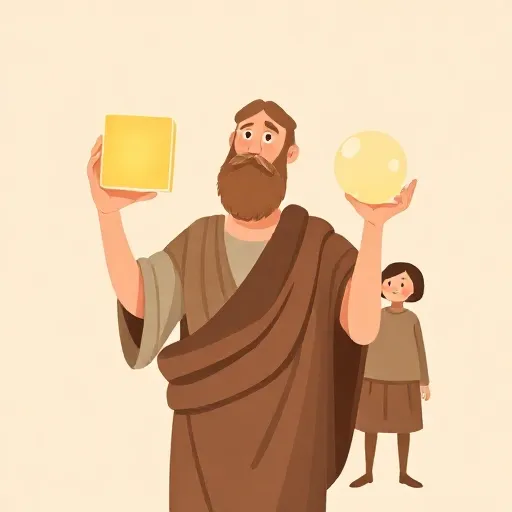
Can You Really Add 2+3? The Philosopher Who Said No.
Xenocrates believed numbers are special Forms that can't be added. Aristotle said that destroys math. A 4th-century BCE fight about the soul of numbers.
-
Can You Solve an Argument With Algebra?
A self‑taught English teacher turned logic into a kind of math. His strange rules – where “A and A” is just A – now live inside every computer.
-

Can You Solve an Argument with an Equation? The Algebra of Logic
Can an argument be solved like a math problem? George Boole's algebra of logic showed it could, and his ideas became the hidden language of computers.
-

Can You Trust Your Mind? Descartes’ Rules for Finding Truth
Can a step-by-step method make knowledge completely certain? Descartes tried, and his ideas still spark debate among thinkers.
-


Could a Board of Sliding Pegs Reason Like a Human?
Could a board of sliding pegs reason? This story of a 19th-century inventor's dream of a thinking machine reveals surprising limits.
-
Could Geometry Suddenly Contradict Itself? Hilbert vs. Frege
In 1899, Hilbert found a clever trick to prove geometry would never break. Frege said it was nonsense. A battle that still shapes how we think about math.
-
Did Frege Invent Modern Logic Twice?
Why did Frege invent modern logic twice? His two logics treated names and sentences differently, revealing puzzling questions about what logic is.
-


Did God Invent the Number 2?
Did God make numbers? If not, something else has always existed. If yes, could God ever make 2+2 equal something else?
-

Did We Invent Geometry, or Did We Discover It?
Did we invent geometry, or did we discover it? The answer—that we choose the simplest geometry that works—changed science forever.
-
Did We Invent Math, or Was It Always There?
You think 1+1=2 is a fact about the world. Wittgenstein said it's just a rule we follow, like a game. Why that changes everything.
-

Do Numbers Exist in a Heavenly Place, or Only in Our Minds?
Is the number 3 real like a chair, or just a thought? This ancient debate shapes math, stories, and what we believe exists.
-


Do Numbers Exist Outside Your Mind? A Medieval Muslim Debate
Where do numbers go when objects vanish? Medieval Muslim thinkers debated this. Their ideas changed how we see math's truth.
-

Do Numbers Really Exist, or Are They Just Useful Fictions?
Some philosophers think numbers are as real as rocks. Others say math is a story we tell. A centuries-old fight about the invisible stuff of mathematics.
-

Do Numbers, Colors, and Stories Really Exist?
Do numbers, colors, and made-up characters actually exist? The answer could make you rethink what's real.
-
Do Truths Exist Before Anyone Discovers Them?
Do truths exist before anyone discovers them? Bernard Bolzano argued yes, and his ideas changed how we think about logic and facts.
-
Do You Need a Proof to Say It’s True?
Brouwer argued you can’t claim “either it is or it isn’t” without a mathematical construction. His logic rewired how we think about truth and proof.
-

Does Math Have a Style — and Does It Matter?
Mathematicians approach problems in different ways, like artists. Some think style is just decoration, but others say it shapes what math even is.
-

How a Simple Question Broke Logic—and Then Fixed It Forever
What happens when you ask if the set of all sets that don't contain themselves contains itself? A logic crash and the birth of type theory.
-

How Do Words Make Truth? The Puzzle Inside Sentences
How do words make true statements? Simple sentences hide rules called functions. The puzzle: can a rule apply to itself? The answer reshaped logic.
-
How Many Points Are on a Line? The Riddle of the Continuum Hypothesis
How many points are on a line? More than all counting numbers, but math can't say how many. Is there an answer? Some think no, others look deeper.
-
How Much Infinity Do You Really Need to Prove Something?
Mathematicians used to think some theorems were just true. Then they asked: what rules are actually necessary? The surprising ladder of logical strength.
-


How Much Surprise Hides in a Text? The Quest to Measure Information
Shannon said information is surprise, measured in bits. Kolmogorov said it's the shortest program that can produce it. Two ideas that built your phone.
-
How to Banish Variables from Logic Forever
Schönfinkel found a way to rewrite logic using a single symbol and combinators, tiny functions that can even apply to themselves—making variables obsolete.
-
If Math Is Only in Our Heads, Why Can It Predict Eclipses?
Why can math predict eclipses if numbers are only in our heads? Exploring this puzzle might change how you think about equations.
-
If Numbers Aren’t Real, Why Do We Trust Math?
Are numbers found in the world, or just in our heads? This puzzle makes you wonder if math is discovered or made up—and why it works so well.
-

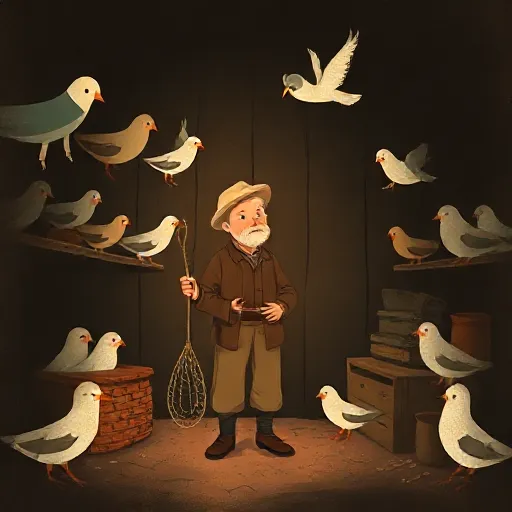
Is 'He Is Killing All of Them' True? The Game of Model Theory
A mysterious sentence about a pigeon-killer reveals a powerful idea: truth depends on interpretation. This is model theory, and it changed math and logic.
-
Is Every Math Statement Either True or False?
Do infinite sets exist? Some mathematicians say you must build them, not just imagine them. This changes what counts as true.
-
Is It Okay to Use Fake Math If It Works?
Physicists use “mathematical fictions” that break all the rules but give perfect answers. A century‑long fight about whether physics needs perfect math.
-
Is Math About Things or About How They Connect?
Is math about things or the connections between them? Category theory says connections matter most. It changed math and how we see identity.
-
Is Math Finished, or Are There Questions We’ll Never Answer?
Can every true math fact be proved from a set of rules? Kurt Gödel showed that some truths are forever out of reach, making math a never-ending puzzle.
-

Is Math Just a Giant Game with Rules?
Is math just a giant game with rules? Some say numbers aren't real like chairs, but then some truths can't be proved.
-
Is Math Just Logic in Disguise? The 200-Year Battle
Is math just logic? A 200-year debate over whether numbers are invented or discovered nearly ended when a hidden flaw was found. The argument still rages.
-
Is Math Really About Drawing Necessary Conclusions?
Benjamin Peirce said math is the art of drawing conclusions that must be true. Does that mean logic rules the world? It still shapes how we play and think.
-
Is Space Made of Tiny Pixels?
If you zoomed in far enough, would the universe look smooth or blocky? The surprising fight over whether geometry can be built from bits.
-
Is the World Smooth or Pixelated?
Can you keep cutting something forever, or is there a smallest piece? This ancient question helped create calculus and still makes us wonder about reality.
-

Is There a Problem No Computer Can Ever Solve?
Some math problems are so hard that no computer can ever solve them. Mathematicians like Turing and Gödel proved this, showing what computers cannot do.
-


Is There a Set of Everything? The Rival Answers That Both Work
Is there a set of all sets? A simple question about sets that don't contain themselves broke logic, leading to two clever but different answers.
-
Just Read Aristotle, Not the Commentators
Why did a 1495 teacher tell students to read Aristotle, not heavy commentaries? He believed simple analogies could reveal hidden connections in knowledge.
-
Second-Order Logic: The Power to See All Properties, but at What Cost?
What makes a logic so powerful it perfectly describes numbers, yet leaves some truths forever unprovable?
-
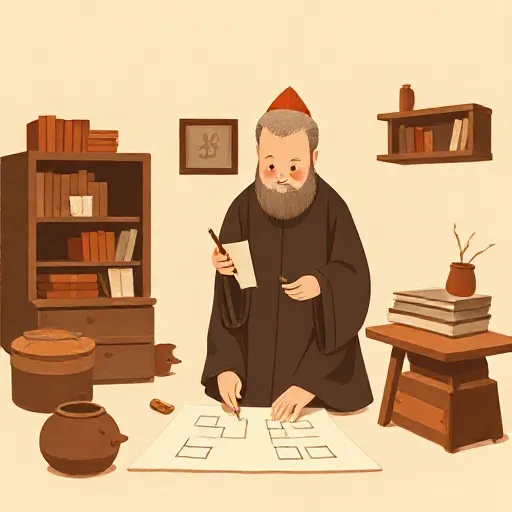
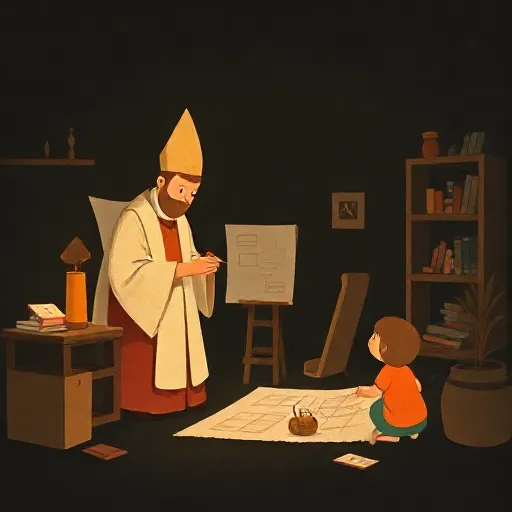
The Bishop Who Said Space Is Just ‘Here’ and ‘There’
A 14th-century French bishop argued that space isn’t a real thing, time doesn’t need motion, and infinity can be summed up. His ideas still matter.
-
The Computer That Cracked a 50-Year Math Puzzle
Can a computer program solve a math puzzle that stumped experts for 50 years? Yes, and it teaches us that computers can be thinking partners.
-

The Fill-in-the-Blank Trick That Changed Logic Forever
How a simple pattern with blanks can generate infinite true sentences. From ancient Aristotle to modern truth, schemas are the secret recipes behind logic.
-


The Infinite Hotel and the Race That Never Ends
Can you finish something with no end? A hotel that always has room shows the puzzle of infinite tasks, changing how we see time and the universe.
-
The Little Symbol That Almost Saved Mathematics
How did a tiny symbol try to make math safe from contradictions, and what surprising uses did it find?
-
The Logic Nobody Wanted — and Why It Rules Everything Now
A quiet fight over the “right” logic lasted a century. First-order logic seemed useless — until it quietly took over math, computers, and your phone.
-
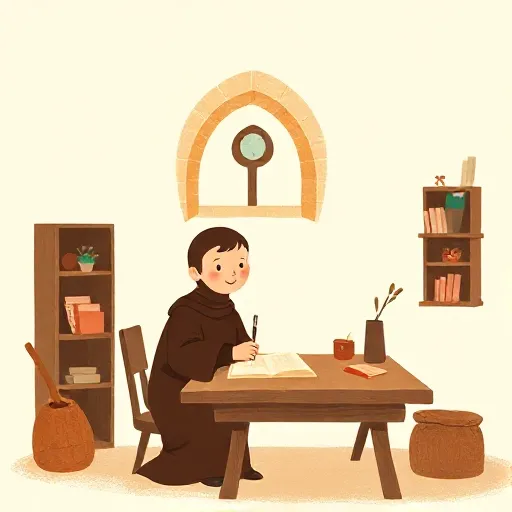

The Monk Who Connected Everyone (and Thought Math Was Enough)
He began as a fierce defender of faith, then became the secret hub of a scientific revolution. Marin Mersenne believed only math gives certainty.
-
The Set That Wasn’t: How a Logical Contradiction Remade Math
How can a rule about sets create a contradiction? Bertrand Russell found a paradox that broke mathematics, leading to new foundations we still use.
-
What Are Numbers, Really? The Quiet Revolutionary Who Changed Math
Dedekind showed that numbers aren't just for counting—they can be built from pure logic. His ideas still shape how math is taught.
-
What Can Computers Solve? The Question That Started It All
Alan Turing asked what happens when a person calculates. His answer led to digital computers and showed some problems can never be solved by machines.
-
What Does “And” Mean? It’s All About the Rules
How do words like 'and' get meaning? One idea says from truth facts, another says from reasoning rules. This changes how we see logic and truth.
-
What Happens If You Stick Your Hand Beyond the Edge of the Universe?
What if you could reach beyond the universe? Archytas said you always can, so the universe has no boundary. An idea that still amazes.
-
What Happens When a Math Sentence Says “I Am Provable”?
If a math sentence claims it's provable, does that make it true? Löb's surprising answer shows the limits of what math can know about itself.
-
What If Logic Can't Say "It Depends"?
Ordinary logic can say "every boy loves some girl." But can it say the second boy doesn't depend on the first? A new logic had to be invented.
-
What If Numbers Are the Secret Recipe of the Universe?
What if numbers are the secret recipe of the universe? The Pythagoreans thought so, and their ancient hunch still inspires scientists today.
-

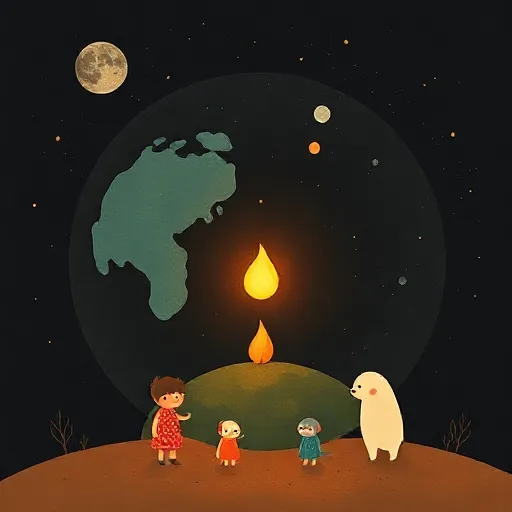
What if the Earth Circled a Hidden Fire? The World of Philolaus
Long before Copernicus, Philolaus imagined Earth moving around a hidden fire. His puzzle: How do numbers and harmony hold the universe together?
-
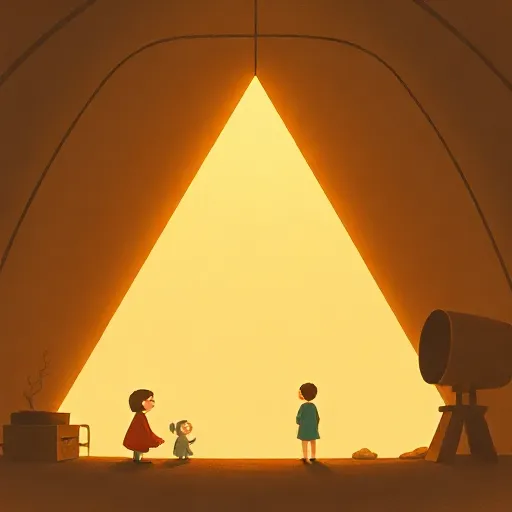
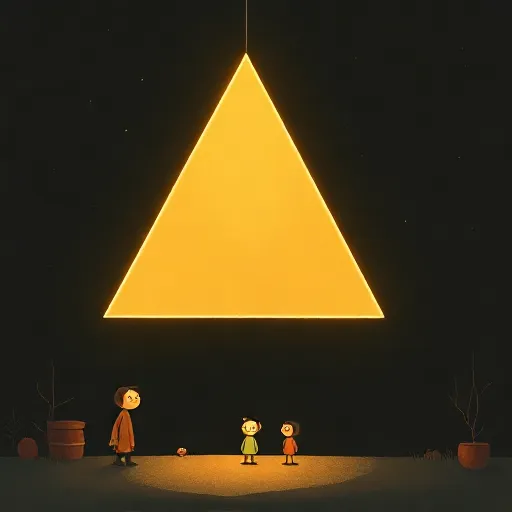
What If Triangles Didn't Add Up to 180°?
Can a triangle have less than 180 degrees? Changing one rule about parallel lines led to curved space, proving geometry isn't fixed.
-

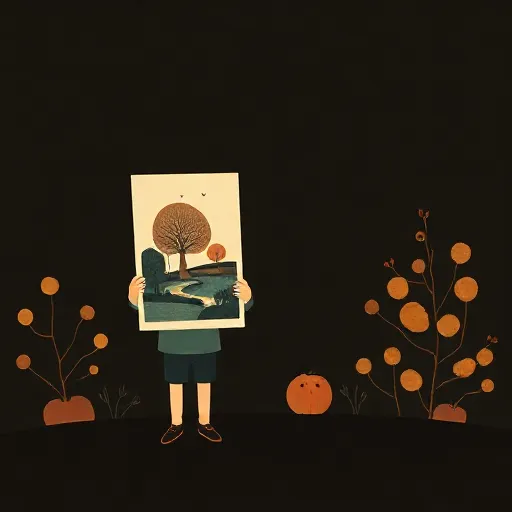
What If Two Plus Two Equaled Five—and It Was Fine?
What if contradictions in math didn't cause chaos? By tweaking logic, mathematicians safely study impossible ideas like unbuildable pictures.
-
What Makes Something Logically Follow? Tarski's Algebra of Arguments
If you know a few facts, what else must be true? Tarski turned this into a math of consequences — and later mapped all logics like a family tree.
-


Who Decides What's True in Math? The Rebel Who Said: You Do
In the 1920s, L.E.J. Brouwer said math is something your mind creates—not a hidden world to discover. The fight he started isn't over.
-


Who Should Get the Biggest Slice? The Algorithm for Fairness
What is the fairest way to share? Two farmers and a wise elder show that fairness depends on which rule you follow. It’s not always simple.
-


Why “Most” Isn’t Just a Word—It’s a Mathematical Idea
What does 'most' really mean when we say it? It's a logical shortcut that compares sets, and studying it reveals how language and reasoning work.
-
Why a Simple Question About Sets Nearly Broke Mathematics
How did a barber's puzzle reveal a deep crack in mathematics? The search for an answer changed how we think about infinity.
-
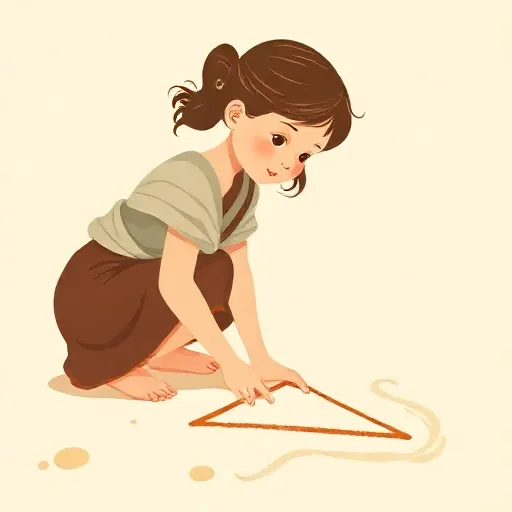
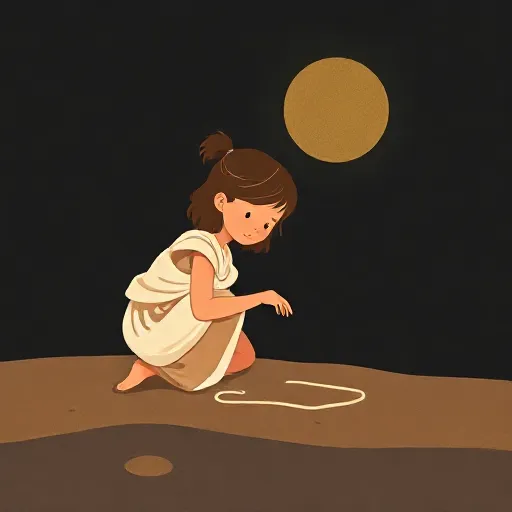
Why a Wobbly Sand-Triangle Can Prove a Perfect Theorem
How can a crooked sand triangle prove a perfect math theorem? Aristotle’s 'qua filter' idea explains why math works without a separate perfect universe.
-

Why Build It Yourself? Bertrand Russell's Honest Toil
Why is it better to build ideas from simple parts instead of assuming they're true? Russell's 'honest toil' changed math and logic.
-
Why Can't Computers Solve Every Problem?
Why can't computers solve everything? Alan Turing proved some problems are impossible for any machine. That discovery still shapes what your phone can do.
-
Why Did a 2,000‑Page Math Book Use Dots Instead of Parentheses?
Why did a giant math book use dots instead of parentheses? Those strange symbols weren't just weird—they tried to prove math from scratch using only logic.
-
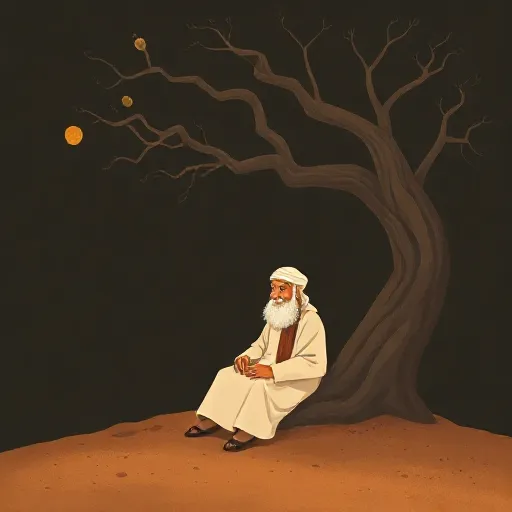
Why Did a Brilliant Mathematician Write Poems Full of Doubt?
Why did a great thinker both prove God and doubt life's meaning? His struggle shows that head and heart don't always agree.
-


Why Did Algebra Stop Being All About Numbers?
How a tool for finding unknowns grew into a language of hidden rules, reshaping geometry, physics, and the digital world.
-
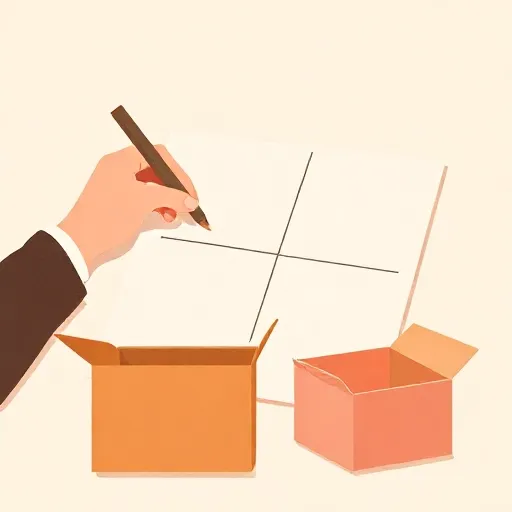
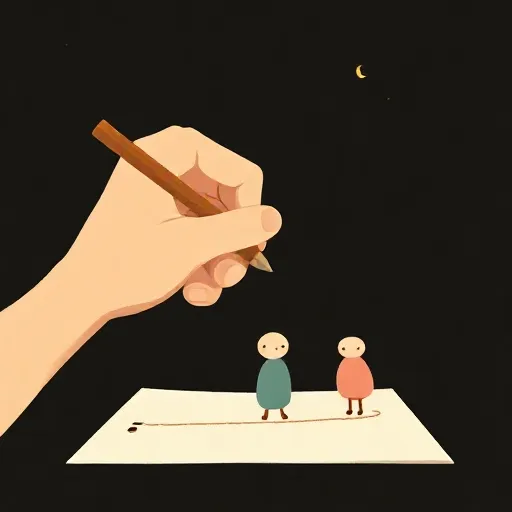
Why Do Logicians Sort the World into Kinds?
Why do logicians sort the world into kinds? It stops nonsense mix-ups and helps us reason about time travel and computers.
-
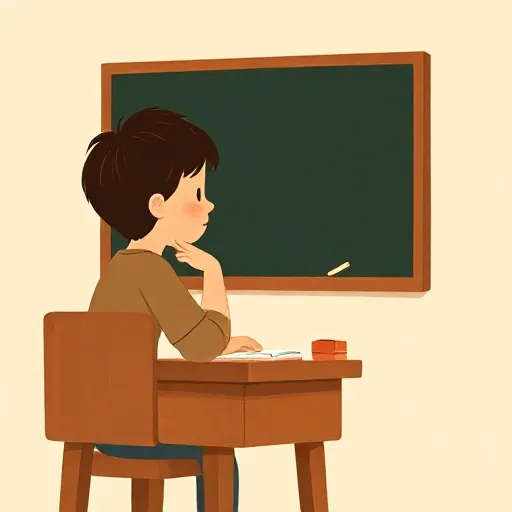

Why Do Mathematicians Believe Things They Can’t Prove?
Mathematicians think proof is everything. But they trust the Goldbach Conjecture without one. A look at induction, experiments, and probability in math.
-
Why Does 7 + 5 = 12? Kant’s Shocking Answer About Math
Kant argued that math truths are built inside your own mind, not just discovered in the world. That changed how we think about knowing stuff.
-

Why Some Infinities Are Bigger Than Others
Are all infinities the same size? Discover why some infinities are bigger than others and how this changes our understanding of math and the universe.
-

Why Some Questions Have No Answer, Even for the Smartest Machine
Turing invented a paper-and-pencil machine that could compute anything—until he found a problem it could never solve, changing math and computers forever.
-


Why Your Rules Can’t Pin Down an Infinite Number Line
Why can't rules describe only one number system? The same rules can fit many number worlds—some tiny, some huge. That sparked a hunt to sort them.
-


Would You Pay a Million Dollars to Flip a Coin?
A coin-flip game with infinite prize money: math says pay any price, but it feels absurd. Why does this puzzle stump philosophers?
-
You'll Never Reach the Finish Line: Zeno's Tricky Paradoxes
Can motion be an illusion? Zeno's ancient paradoxes about infinity still make us doubt our own eyes.
-


Zeno Said Motion Is Impossible. Here’s Why You Still Can’t Ignore Him.
He argued that an arrow in flight never moves and a runner can't finish a race. Modern math has answers, but the puzzles still bug philosophers.