Just Read Aristotle, Not the Commentators
A Shortcut Through the Forest of Books

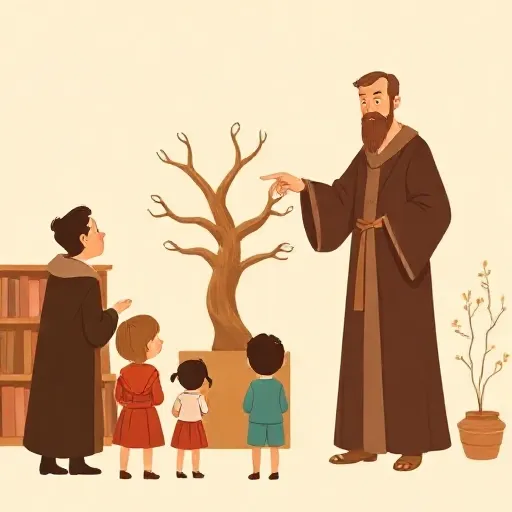
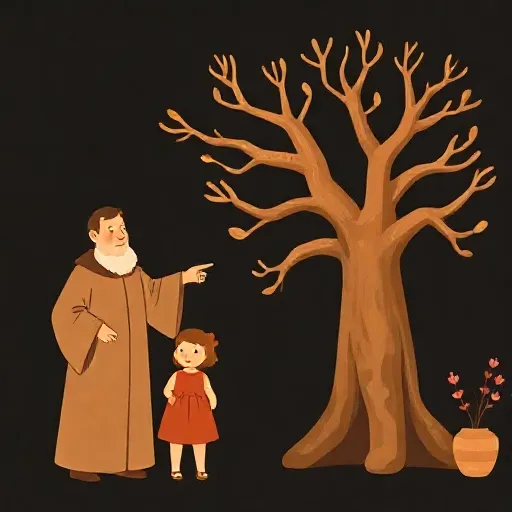
Imagine you’re a student in Paris around 1495. You want to learn philosophy. But the library shelves are crammed with enormous books — not works by the ancient Greek Aristotle himself, but thick commentaries on commentaries, filled with special terms and tricky puzzles. Your teacher, Jacques Lefèvre d’Étaples, thinks this is nonsense. He hands you a thin pamphlet and says that you should read it first, then go straight to Aristotle and dip into the pure spring at its source.
Lefèvre spent nearly twenty years teaching at the Collège du Cardinal Lemoine. Over that time he produced a whole library of miniature handbooks, each devoted to a branch of philosophy: logic, physics, ethics, mathematics. These were epitomes — short, clear summaries that gave students the skeleton of a subject quickly. The goal was not to replace Aristotle but to get you ready so you could read him on your own, without drowning in what Lefèvre called “lifeless matters, like so much hay.”
Skipping the Commentators: Why Lefèvre Hated School Logic
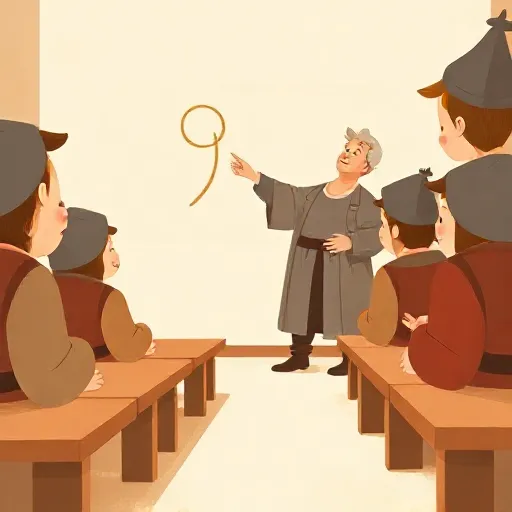
To understand why his handbooks mattered, you have to look at what they replaced. By the late Middle Ages, university logic was dominated by the logic of the moderns — a thicket of technical vocabulary: sophismata, insolubilia, exponabilia. These were clever puzzles about words and reasoning, and students spent years mastering them. Lefèvre found the whole tradition a waste of time. He called these puzzles “certain factious and extraneous matters, which should be condemned rather than refuted.”
Instead, he wanted logic to be a modest tool. It should teach you three things: how to form simple statements (what he called proloquia), how to judge whether arguments are valid, and how to find good material for reasoning (invention). The first part mattered most to him — getting clear about how words name the real things around us. If you got that foundation right, the rest would follow. Once you could handle the basics, you could leave logic behind and move on to the real content: physics, mathematics, ethics.
Notice the bigger point. Lefèvre believed every subject had its own proper method. You couldn’t just apply logical tricks from one area to another. “Logic should be left to deal with logical matters, mathematics with mathematical matters, and divine discipline with metaphysical matters,” he wrote. Cross the borders carelessly and you’d end up confused. But if you respected the different methods, he suspected you’d start to spot something remarkable — hidden similarities that tied everything together.
The Secret Analogy: How Math Connects Everything

Lefèvre often told his readers to look for analogies — patterns that repeat across different subjects. He called this a “secret analogy lying hidden underneath the whole of Aristotle’s philosophy, without which philosophy is inanimate and lifeless, like a body without the sense of touch.” He never spelled out the full blueprint, partly because he wanted you to discover it yourself. But his hints make the idea clear.
Mathematics offered the best training. Numbers, ratios, proportions — these were not just for counting coins. When you understood that a point in geometry relates to a line much as a unit relates to a number in arithmetic, you were learning to think abstractly. Lefèvre’s textbooks began with synoptic tables that mapped out each field’s basic parts, hoping you would see how the parts echoed each other. He even said that knowing “the method of analogies and uplifting exercises” was like walking up steps from the physical world to the divine.
His own works on music theory, astronomy, and natural philosophy are full of mathematical examples. When explaining how a quality like heat gradually increases, he used a quasi-geometrical figure — twin scales of hot and cold that rise and fall in degrees — to show why you can’t have maximum heat and maximum cold in the same thing at once. He wasn’t turning physics into pure math. He was borrowing clarity from numbers to make Aristotelian ideas easier to see. The hidden belief, never fully written out, was that the same divine mind had structured both the world and our thinking, so the patterns would match.
Are Universals Real? Lefèvre’s Middle Road

When we use a word like “human,” do we name a real, shared thing — something that exists outside our minds — or just a convenient label we attach to many individuals? Medieval philosophers fought over universals for centuries. Lefèvre refused to pick a side in the big realist-versus-nominalist war. Instead, he aimed for a moderate middle.
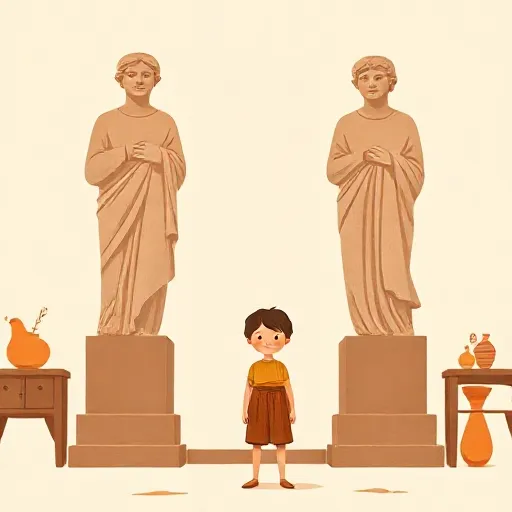
In his edition of Aristotle’s logical works, he inserted a short dialogue between two students in the ancient academy of Chrysippus. One argues that universals are what particular things truly share. The other says universals are just what people agree to say they share — they exist by convention. By the end, the two young men agree on something subtle. When you call something “a human,” you are not simply pointing at a physical body. You are adding something to it, a concept or ratio, which is not just a sound but a real pattern that the mind grasps. The word “human” points both at the thing and at that shared notion.
Lefèvre followed the ancient Roman thinker Boethius here. Universals exist “in sensible things” but are “grasped by the intellect” as abstract ideas. That let him say that numbers, too, have a kind of extramental reality. When you count two apples, you are using the counting number “two” in your mind. But the shared reason or concept of twoness isn’t just a private fantasy — it’s something minds can genuinely share. Whether that’s fully convincing or not, you can see Lefèvre’s strategy: don’t settle at either extreme; build a bridge.
Living Well: Aristotle Plus Christian Wisdom
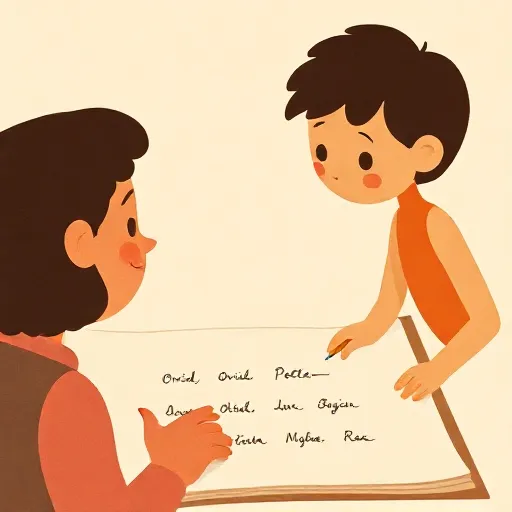
Lefèvre didn’t think moral philosophy was just about figuring out Aristotle’s original meaning. He wanted his students to use pagan wisdom as a tool for living a Christian life. In his commentary on Aristotle’s Nicomachean Ethics he placed side-by-side translations and added his own notae — short notes that pointed out examples from Roman poets. To illustrate temperance, he told the story of chaste Spartan virgins and the virgin daughter of Pythagoras, then remarked that the value of virginity is “not foreign” to Christians, who know the Virgin birth. A few lines later he might warn about the harpies in Virgil’s Aeneid as images of false virtue.
The aim was not to twist Aristotle into saying Christian things he never said. It was to show a student how to read: keep your own deepest commitments in mind, and let the ancient text sharpen your thinking without mastering it. At the end of his ethics introduction, Lefèvre insisted that Aristotle and Christianity agreed on the highest goal of a human life — contemplative happiness, the state of understanding divine matters. The road was different, but the destination looked the same.
Why Lefèvre Still Matters: Textbooks and the Search for Big Patterns

You’ve probably used a study guide that boils a whole chapter down to a single page of bullet points — or a video that explains a big idea with an analogy between something weird and something familiar. That’s precisely the kind of epitome Lefèvre was making 500 years ago. He didn’t invent the short textbook, but he turned it into an art. Later reformers like Peter Ramus would take up his habit of mapping every subject into branching charts, and printers would spread his editions of Hermetic and mystical works all over Europe.
More quietly, Lefèvre helped change how people thought about thinking itself. His obsession with analogies — with finding the same skeleton inside differently dressed bodies of knowledge — is an early version of something that later became the search for a “universal method.” When a science teacher tells you that the structure of an atom is a bit like a tiny solar system, you’re seeing the same instinct: trust that the mind’s patterns can match the world’s, and use one clear domain to illuminate another.
He never wrote a grand system. But he gave generations of students the confidence that they could go straight to the source and find their own way — and that if they watched carefully, the world’s deep structure might just start to show itself.
Think about it
- If you could learn a difficult idea either by reading the original thinker’s messy, rambling notes or by studying a perfectly clear summary written by someone else, which would you choose? Why?
- Lefèvre believed analogies could reveal secret links between math, nature, and God. Can you think of a moment when a comparison between two very different things helped you understand something much bigger?
- When a teacher tells you to “just read the original text,” what do you gain that a summary never gives? What might you lose?