
The 700-Year Fight to Explain Aristotle’s Strangest Book
The Book Everyone Wanted to Read (But Couldn’t Agree On)

In the second century CE, the doctor and philosopher Galen (129–c. 216) wrote a guide to one of Aristotle’s most famous works. He insisted the guide should not be shown to complete beginners. It was for students who had already read the book with a teacher or had worked through simpler explanations. Galen’s warning hints at something that would become obvious over the next several hundred years: Aristotle’s little book was not easy. It was so hard, in fact, that it launched a tradition of arguing about it that lasted nearly a millennium.
The book was called the Categories. Written by Aristotle (384–322 BCE), it tries to sort everything you can say about a thing into ten kinds. A horse is a substance; four-footed is a quantity; brown is a quality; and so on. But what was Aristotle really doing? Was he talking about words, about thought, or about the world itself? Ancient readers could not agree. And their disagreements spawned something huge — an explosion of commentaries: books that walk through a text line by line, quoting a short passage (called a lemma) and then explaining it.
The First Commentators: Defenders, Attackers, and a Mysterious Title

When interest in Aristotle revved up again in the first century BCE, no one quite knew what to do with the Categories. According to some later sources, a scholar named Andronicus of Rhodes (first century BCE) placed it at the very start of Aristotle’s works, treating it as a beginner’s toolkit. That decision helped make it the first book of philosophy, but not everyone accepted Andronicus’s take.
The first person known to have written a full, word-by-word commentary was Boethus of Sidon (first century BCE). He tackled the whole book, responding to critics called the Stoics. The Stoics argued that the Categories was just about language, and that as a book about words, it was incomplete. Boethus pushed back: no, the book is about the basic structures of reality, not just sentences. His reply set the terms for a fight that would last centuries. Another thinker, Athenodorus (first century BCE), wrote a direct attack titled Against Aristotle’s Categories. The title alone tells you how seriously people took this scrap of text.
Even the name of the book was up for grabs. Some called it On the Genera of Being, others preferred On the Ten Genera. One label, Introduction to the Topics, tied it to another Aristotle work on argument. The title Categories only won out after a long dispute. The early readers did not inherit a settled textbook; they inherited a riddle.
Alexander of Aphrodisias: The “Most Authentic” Interpreter

By the late second and early third century CE, the job of explaining Aristotle had become a public office. When the Roman emperor Marcus Aurelius set up philosophy chairs in Athens, the holders were supposed to lecture on the founder’s texts. One of them was Alexander of Aphrodisias (around 200 CE). He called himself a didaskalos — a teacher. And he threw himself into the task with extraordinary energy.
Alexander wrote commentaries on many of Aristotle’s treatises, and also hundreds of short problem-and-solution essays. His goal was to clarify Aristotle’s thinking without mixing in his own opinions — or so he said. He treated Aristotle as an authority whose views were closer to the truth than those of any other philosopher. Later writers called him “the most authentic interpreter of Aristotle.” That reputation stuck. But it also masked a shift: Alexander was the last great interpreter who tried to keep Aristotle purely Aristotelian. After him, the ambition changed. Commentators began to ask a very different question: not just what did Aristotle mean, but how does he fit with Plato?
Porphyry and the Dialogue of Harmony
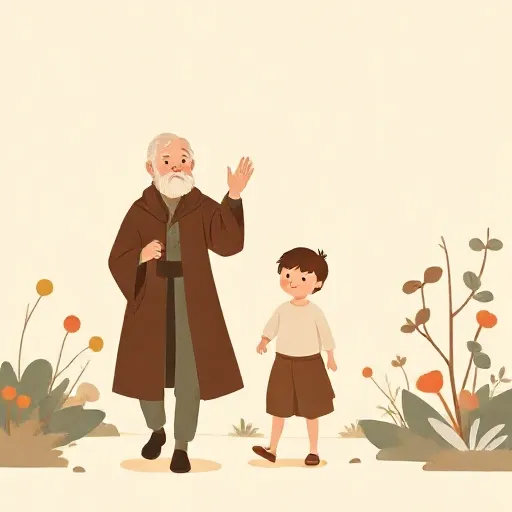
Porphyry (c. 234–305 CE) wrote two commentaries on the Categories. One was a massive, seven-book work that dived into every past controversy. The other was much shorter, arranged as a conversation between a teacher and a pupil. The dialogue format wasn’t a gimmick — it was a deliberate teaching tool. Students learned by seeing a question asked and answered, step by step.
Porphyry was not an Aristotelian purist. He was a Platonist, convinced that Plato’s philosophy was the ultimate truth and that Aristotle was its faithful descendant. For him, explaining the Categories meant showing that Aristotle was not at war with Plato. This was a huge change. Where Alexander had wanted to let Aristotle speak with his own voice, Porphyry wanted to tune that voice so it harmonized with a larger Platonist choir. He even wrote a short introduction called the Isagoge (“Introduction”) that helped beginners step into Aristotle’s logic. Over time, the Isagoge and the Categories became the first things any serious student of philosophy read. The curriculum was fixed: start with Aristotle’s logic, work up to his theology, and only then move to Plato. The commentary tradition had turned into a formal school.
Another Aristotle Puzzle: The Active Intellect

The Categories was not the only Aristotle text that drove interpreters into a frenzy. In his work On the Soul (De Anima), Aristotle argues that there is an intellect that is separate, unaffected, and unmixed. In another work, On the Generation of Animals, he says that an intellect enters from without. Ancient commentators called this the active intellect (in Greek, nous poiêtikos). But what was it? Was it a divine mind that touches every human, or was it the very core of our own soul?
Alexander of Aphrodisias had no doubt: the active intellect is God. It is the first cause of everything, the source of all thought, and when it “enters” us, we think because we connect to a single, immortal intelligence. That meant our own personal intellects die with the body — only the divine one lasts.
Three centuries later, Themistius (c. 317–388 CE) pushed back hard. In his paraphrase of the De Anima, he argued that the active intellect is the highest part of our own human soul. It is immortal, yes, but it is us — the part that makes us what we are. Curiously, he also held that there is only one active intellect shared by all people, and likewise only one potential intellect. What perishes is just the “common” or “passive” intellect, the part tangled up with the body. This was a rival reading that kept the active intellect human while still making it universal. The two positions tugged at the same few cryptic lines in Aristotle, and neither could be proven. The puzzle was alive.
Why a 2,000-Year-Old Argument Still Matters

Why should any of this matter to you, right now? Because every time you squint at a confusing sentence in a book, you are doing what those ancient commentators did. You bring your own questions, your own background, and your own idea of what the author “must have meant.” There is no purely neutral reading. The ancient debates over the Categories and the active intellect show that interpretation is never just about getting a text right; it is about what you think matters in the first place.
The commentators did not solve Aristotle once and for all. They kept the questions alive by arguing over them, writing new guides, and pointing out gaps in old ones. That is what a tradition of thinking looks like: not a set of final answers, but a long, vigorous conversation. And when you read something difficult today — a puzzling line in a poem, a strange rule in a game — you step into that same kind of conversation. The fight to understand never really ends, and that is exactly what makes it worth joining.
Think about it
- If you found an ancient book with a confusing sentence, would you rather trust a guide written by someone who insists the book must agree with a completely different author? Why or why not?
- The ancient commentators argued fiercely about what Aristotle meant, yet none of them could prove the others wrong. Does that make the argument pointless, or is the argument itself something valuable?
- Aristotle’s active intellect was said to be separate from the body and immortal. Think about your own mind: if that idea were true, how would it change the way you treat other people? Would it change anything about your own behavior?