Can a Sentence Really Say It’s False? The Logic of “True”
The Sentence That Can’t Make Up Its Mind

Imagine your friend looks you straight in the eye and says, “Right now, I am lying.” And that’s all she says. If she really is lying, then what she said is false — which means she is not lying. But if she isn’t lying, then her sentence must be true, so she is lying after all. You’re stuck in a loop.
This is called the liar paradox, and it’s been making thinkers scratch their heads for thousands of years. It seems like a silly word game, but it actually exposes a deep crack in how we understand truth. If the sentence “I am lying” can’t be true or false, then our everyday idea of truth has a glitch in it.
Philosophers and mathematicians have tried to patch that glitch by building formal rules for truth. Instead of just feeling what true means, they write down axioms — basic statements you accept as starting points — and see what follows. This project has led to surprising discoveries: not just about which sentences we can call true, but about the very power of language and even about math itself.
Tarski’s Ladder: Truth on Separate Floors

The first major fix came from the mathematician and logician Alfred Tarski (1901–1983). He noticed that the liar paradox happens because we let a sentence speak about its own truth or falsity. So his solution was to forbid that: split language into levels.
At Level 0 you have plain sentences like “The cat is on the mat.” At Level 1 you can talk about whether those Level‑0 sentences are true, using a new truth predicate — the word “true” applied only to sentences from the level below. But you can never say that a Level‑1 sentence itself is true; you would need Level 2 for that, and so on, like rungs on an endless ladder.
Tarski’s approach is called a typed theory of truth because truth is “typed” by level. A system like this can be built inside ordinary arithmetic. The rules say, for example, that an atomic number sentence “2+2=4” is true exactly when 2+2 does equal 4. Then more rules explain how truth combines: “A and B” is true exactly when A is true and B is true; “not A” is true exactly when A is false. These are called compositional axioms because they show how the truth of a complex sentence is composed from the truth of its parts.
Adding these compositional rules to Peano arithmetic (the basic math of whole numbers) gives a theory that mathematicians call T(PA). It’s neat, it’s safe from paradoxes, and it proves no false statements about numbers. But it has a built‑in limit: it can never tell you whether any of its own sentences are true. T(PA) can talk about the truth of plain arithmetic, but it cannot reflect on itself.
Kripke’s Loophole: Truth Without True‑or‑False Boxes
Another logician, Saul Kripke (1940–2022), thought Tarski’s ladder was too restrictive. In everyday talk we often say things like “Everything the mayor says is true,” which can circle back on itself — what if the mayor said “Everything I say is true”? That doesn’t automatically cause a disaster, but Tarski’s system wouldn’t allow it at all.
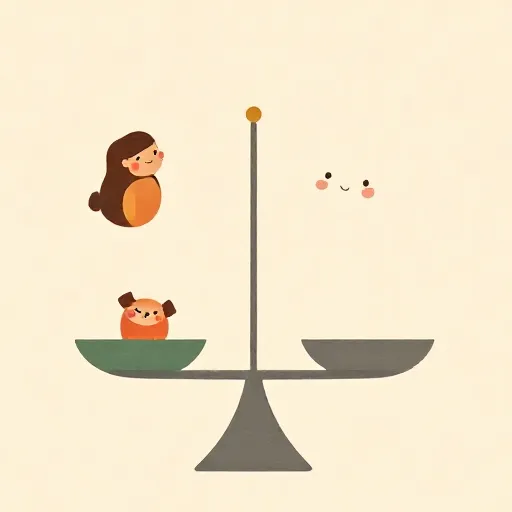
Kripke’s key move was to drop an old rule: that every single sentence must be true or false. He allowed sentences to live in a gray zone. The liar sentence “I am lying” is neither true nor false; it simply lacks a truth value. Once you allow that, a sentence can talk about its own truth without blowing things up, as long as it doesn’t claim something impossible about its own status.
Mathematicians turned Kripke’s idea into an axiomatic theory called KF (for Kripke‑Feferman, honoring Solomon Feferman (1928–2016), who gave the system its precise form). KF still uses all the compositional rules about how truth works with “and,” “or,” “not,” and quantifiers, but it handles self‑reference gracefully. For instance, KF can correctly say that the liar sentence is not true — and its negation is not true either. The system still runs on ordinary classical logic, but the truths it describes follow a more flexible pattern.
Here’s where things get exciting: KF is much more powerful than T(PA). It can prove mathematical facts about numbers that T(PA) cannot prove. In fact, it can prove that arithmetic itself is consistent (something that, famously, plain arithmetic cannot prove about itself). Truth in KF acts like a kind of mathematical fuel — it lets you reach conclusions that were out of reach before.
Does “True” Really Add New Knowledge?
You might think of truth as a lightweight thing — just a label you stick on sentences that match reality. Some philosophers, called deflationists, claim exactly that: truth has no depth; saying “‘Snow is white’ is true” is just a long way of saying “Snow is white.” If that’s right, adding a truth predicate to a mathematical theory shouldn’t let you prove anything new about numbers. Truth should be conservative — it shouldn’t add any extra power.
But T(PA) and especially KF are not conservative. They prove new arithmetic facts that the base theory alone cannot. So the truth predicate isn’t just a harmless sticker; it acts like a new tool that extends what you can do. This has pushed many philosophers to think that truth carries genuine explanatory power.
Deflationists reply that these “extra” theorems aren’t really about numbers — they are about the consistency of our system, which is a meta‑level fact. The debate is still open. What’s clear is that once you allow truth to talk about itself in a careful way, you seem to climb a ladder that reaches beyond the original theory, even if you never intended to.
Why This Matters Even When You’re Not Lying

Studying the rules of truth isn’t just a game for logicians. It sharpens our picture of what language can do — and what it can’t. Every time you form a sentence, you’re using a system that can tangle itself in the same loops that baffled Tarski and Kripke. Real languages don’t have built‑in level restrictions, so the liar paradox is always lurking under the surface.
The formal work on truth also gave mathematicians a new kind of confidence: they could prove that certain branches of mathematics are safe from contradictions, using truth‑theoretic reasoning. That’s a huge practical payoff from a puzzle that started with four words.
For a 12‑year‑old today, the takeaway is simple. Words are powerful, but they can be slippery. The next time you promise “I’m not lying!” or see a sign that says “Everything written here is true,” your brain might flash on the lesson: truth needs rules, and sometimes even the best rules let surprising things slip through.
Think about it
- Your friend says “I am lying right now” and nothing else. Can you decide whether she’s telling the truth? What would it take for you to feel sure?
- Imagine a video game where you can place a sign that says “This sign is false.” If a player clicks the sign, what should the game do — tell you it’s true, false, show an error, or something else? Why?
- If adding rules for truth allows mathematicians to prove new things about numbers, does that make truth more than just a handy word? Or could those new proofs have been discovered another way?