
Can a Sentence Say "I'M False" Without Breaking Logic?
The Note That Stumped a Kid

It’s a rainy afternoon and you’re bored. You grab a scrap of paper and write a single sentence: “This sentence is false.” Then you stare at it.
If the sentence is true, then what it says must be the case — so the sentence really is false. But if it’s false, then what it says is correct — so it must be true after all. Either way, it’s both true and false at the same time. Your head starts to ache. You’ve just stumbled into the Liar paradox, one of the oldest and most stubborn puzzles in philosophy.
Philosophers have wrestled with this riddle for more than two thousand years. Ancient Greek thinkers like Eubulides of Miletus (4th century BCE) already knew versions of it. The problem looks tiny — it’s only six words — but it forces us to ask hard questions about truth, language, and the rules of thinking itself.
How a Little Self-Reference Creates a Big Headache
To see why the Liar is so dangerous, we need a few basic ingredients. First, a truth predicate: a way of saying that a sentence is true. We do this all the time. If I say “Snow is white,” I am claiming something about snow. If you reply “That’s true,” you are using a truth predicate about my sentence.
Most people assume that truth follows a simple pattern: the sentence “Snow is white” is true exactly when snow is white. This idea is often called the T-schema, and it can be captured by two rules: if you have a sentence A, you can infer that “A is true” (this is called capture); and if you have “A is true,” you can infer A (this is release). Together they say that a sentence and the claim that it is true are logically interchangeable.
Next, we need self-reference: the ability of a sentence to talk about itself. Languages like English do this easily. The Liar sentence is “This very sentence is false,” or more precisely, “The sentence named L is false,” where L is just that sentence. When a Liar says of itself that it is false, capture and release get tangled.
Finally, most of us accept bivalence: the principle that every meaningful sentence is either true or false, not both and not neither. If we put these pieces together, we get a logical catastrophe. Suppose L is true. Then, by what it says, L is false. Suppose L is false. Then the sentence “L is false” is true, so L is true. So L is true if and only if L is false. Under bivalence, it must be one or the other — so it’s both. That’s a contradiction. In classical logic, a contradiction makes the whole system explode: from it you can prove any sentence at all (a rule called explosion, or ex falso quodlibet). The Liar paradox threatens to turn all reasoning into nonsense.
Something has to give. The question is what.
Tarski’s Tower: Ban Self-Truth to Save Logic

One radical answer came from Alfred Tarski (1901–1983). He argued that no language can safely contain its own truth predicate. If a language could apply “true” to its own sentences, Liar-like paradoxes would always sneak in. So Tarski proposed that we should never allow a truth predicate inside the same language it judges. Instead, we need a whole hierarchy of languages.
Imagine building a tower. The ground floor is a language with no truth predicate at all — it can talk about snow and stars, but not about truth. One floor up, you get a metalanguage that contains a truth predicate, but it can only apply to sentences of the ground floor. A third floor can talk about truth for the second floor, and so on. In this tower, a Liar sentence can’t be formed because you can’t attach a truth predicate to a sentence on the same level. The sentence “This sentence is false” is simply treated as ungrammatical, so the paradox never starts.
Tarski’s solution is logically clean and works perfectly for many formal languages. But it feels like using a sledgehammer to crack a nut. In everyday talk, we constantly say things like “What you just said is true,” even when we’re speaking the same language. Tarski’s hierarchy makes such ordinary remarks impossible. Moreover, as Saul Kripke (1940–2022) later pointed out, if two people — say Max and Agnes — each say something about the truth of the other’s statement, there’s often no way to assign them fixed levels without getting tangled. The tower looks too tall to live in.
Kripke’s Gap: Some Sentences Are Neither True Nor False

Kripke offered a different way out. He allowed a truth predicate inside the same language, but he made that predicate partial. In his picture, a sentence isn’t always forced to be either true or false. The Liar falls into a truth-value gap — it is neither.
Kripke showed how to build up the truth predicate step by step. Start with a language that has no truth predicate and decide which ordinary sentences are true and false. Then declare that the truth predicate itself will apply to sentences that have already been settled. You repeat this process over and over, adding more and more sentences to the “true” and “false” groups. At the end, some sentences — like the Liar — never get assigned; they remain in the gap. This construction is designed so that a sentence and the claim that it is true always have the same status (true, false, or neither). The truth predicate becomes transparent: it doesn’t change the facts, it just echoes them.
Kripke’s picture avoids contradiction without banning self-reference. But it comes with a cost. You can never truly say that the Liar sentence is not true, because if that were true, the Liar would be true and the gap would close, bringing back contradiction. The theory can’t express its own solution — that the Liar is neither true nor false — without falling apart. This weakness is often called a revenge problem. It leaves a strange silence at the heart of the account.
Priest’s Glut: True Contradictions Are Real

What if we took the opposite path? Graham Priest (born 1948) argues that the Liar shows us something shocking: some sentences really are both true and false. He defends a position called dialetheism — the view that there are true contradictions.
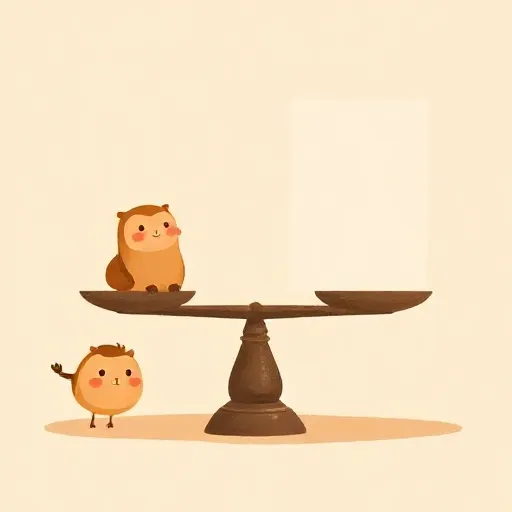
In Priest’s logic, called LP (the Logic of Paradox), bivalence still holds: every sentence is true, false, or both. But the rule of explosion is thrown out. A contradiction no longer lets you prove anything; it’s just a local oddity. The Liar is a sentence that is both true and false, like a truth-value glut, and the system carries on. Priest claims this is the only view that fully respects both the T-schema and bivalence. You don’t have to ban self-reference or hide the Liar’s status: you just accept that it’s true and false and learn to live with it.
Many philosophers find dialetheism hard to swallow. If “This sentence is false” is both true and false, does that mean we can never fully trust any statement? Also, a cousin paradox — Curry’s paradox — can still cause trouble if the conditional in the language is strong enough. Priest’s approach has to handle that separately, and the details are tricky. Still, dialetheism forces us to ask whether we really need explosion, or whether we just cling to it out of habit.
Why the Liar Still Matters Today

You might think the Liar paradox is a dusty puzzle for logicians. But it keeps popping up whenever language turns back on itself. Think of Pinocchio saying, “My nose will grow now.” If he’s telling the truth, his nose must grow — but then he was truthful, so it shouldn’t. If he’s lying, his nose grows, meaning he told the truth. Same loop. Every time a computer program tries to list all true statements and encounters a sentence that says “I am not on this list,” we face a Liar-like tangle. Even online comments that say “This post is false” create miniature logical storms in our heads.
The Liar matters because it forces us to examine the invisible rules we rely on every time we speak, argue, or think. Should we always demand that every statement is determinately true or false? Can we really live without contradictions, or do we sometimes need them? The debate between Tarski’s tower, Kripke’s gaps, Priest’s gluts, and many other proposals is still alive. Each solution reveals something deep about the way we use concepts like truth and proof.
When you scribbled that note on a rainy afternoon, you weren’t just playing with words — you were testing the foundations of logic. The sentence that says “I’m false” is a tiny knot that philosophy has not yet fully untied. And that’s exactly what makes it so fun to think about.
Think about it
- If someone tells you “I am lying right now,” are they telling the truth? What would you need to observe to decide?
- Can you imagine a world where a sentence can be both true and false at the same time? How would everyday life be different?
- Suppose you build a robot that must answer every question honestly, and someone asks it, “Will you answer ‘no’ to this question?” What should the robot do?