Are Numbers Real? The Fight Over What Math Is Actually About
The Mystery of the Apple Count

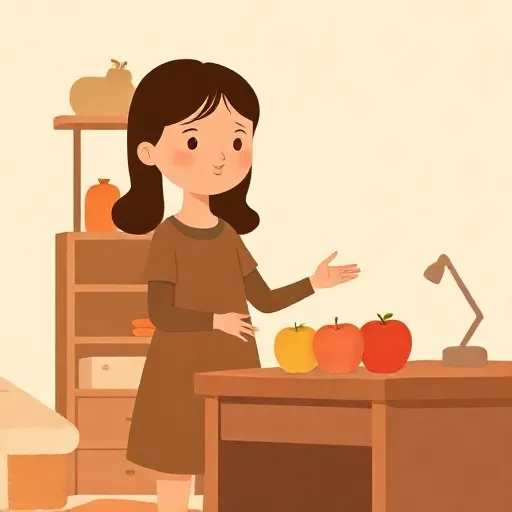
You count three apples. You can touch them, eat them, give them away. But where is the number three? It isn’t hiding inside the apples. It isn’t a puff of smoke. Yet you and everyone else seem to know what three is. This simple question has started one of the oldest fights in philosophy: what are numbers, really?
Some philosophers say numbers are as real as rocks—just in a realm we can’t visit. Others say they’re only symbols we shuffle like game pieces. A few even claim numbers exist only in your mind. Each side has strong arguments, and the debate is still wide open. Let’s explore the big ideas, one by one.
The Platonist Dream: Numbers Really Exist

Imagine a perfect world where every shape is flawless and every number has a fixed, unchangeable spot. That’s platonism in math. The view is named after the ancient Greek philosopher Plato, who believed in a world of ideal Forms. A modern champion was the logician Kurt Gödel (1906–1978). He argued that numbers and mathematical truths exist independently of us. They aren’t physical, but they’re just as real.
Gödel thought we don’t learn math just by pressing buttons on a calculator; we have a kind of mathematical intuition, a mind’s eye that can glimpse this abstract world. Just as your eyes see a tree, your mind can “see” that 2+2=4. But there’s a sharp catch. Abstract objects aren’t in space or time, so how can our physical brains connect to them? This is the epistemological problem: if numbers are out there, detached from everything we can touch, how do we ever know anything about them? Platonism offers a beautiful picture, but it leaves a big puzzle about knowledge.
The Logicist Answer: All Math Is Just Logic
Around 1900, the German thinker Gottlob Frege had a bold plan: show that math is really logic in disguise. If that worked, numbers wouldn’t be mysterious objects at all—they’d be nothing but logical truths. This view is called logicism.
Frege set out to prove that all arithmetic could be boiled down to basic laws of logic. He came very close. But then disaster struck. The British philosopher Bertrand Russell (1872–1970) discovered a hidden contradiction in Frege’s system, now called Russell’s Paradox. Frege had assumed that for every property you can describe, there is a set of things with that property. That seems harmless, but it led to a nasty loop: consider the property “does not belong to itself.” If you ask whether the set of all such sets belongs to itself, you get a contradiction either way—like the barber who shaves everyone who does not shave themselves. The logicist project seemed ruined.
Decades later, a surprising twist revived the dream. Philosophers realized that Frege’s proof could be saved if you replace his dangerous law with Hume’s Principle. This principle says two collections have the same number if you can pair up their members exactly, one-to-one. If you have three apples, you can match each apple to the fingers on a three-fingered hand, with none left over. That idea is simple and doesn’t produce a contradiction. Using only Hume’s Principle and pure logic, you can derive all of basic arithmetic. This view is called neo-logicism. But the debate isn’t over: many philosophers doubt that Hume’s Principle is really just logic. So logicism is still on the table, but it’s a shaky one.
The Formalist Answer: Math Is a Symbol Game
What if math is just a game we invented? That’s formalism. The great German mathematician David Hilbert (1862–1943) didn’t think higher math described anything real. He saw it as a formal game: strings of meaningless symbols like ”+” and ”=” that we move according to fixed rules, much like chess pieces. For Hilbert, only simple arithmetic about counting had real meaning; everything else was a tool to get answers.
Hilbert wanted to prove this game was safe—that you could never reach a contradiction by following the rules. His plan, Hilbert’s program, was to use only safe, elementary arithmetic to show that higher math is consistent. But in 1931, Kurt Gödel struck a devastating blow. His incompleteness theorems showed that any mathematical system strong enough to handle basic arithmetic cannot prove its own consistency—unless it actually is inconsistent. So you can’t use arithmetic to guarantee the whole game is fair. Many saw this as the end of Hilbert’s dream. Still, some formalists today accept that math is a collection of formal systems, and we simply pick the ones that work best, like choosing the most interesting board game.
The Intuitionist Answer: Numbers Live in Your Mind
The Dutch mathematician L.E.J. Brouwer (1881–1966) took a completely different path. He insisted that mathematics is an activity of the mind, not a discovery of an external world. This view is intuitionism. Numbers are mental constructions—we build them one after another, in time. There is no finished, infinite set of all numbers lying around; we can only ever construct as many as we need, like building a staircase step by step.
Because of this, intuitionists reject certain logical rules that classical math takes for granted. The most famous is the law of excluded middle, which says every statement must be either true or false. In intuitionistic math, you cannot claim “there exists a number with some weird property” unless you can actually produce an example. Proofs that just show something must exist, without giving a recipe to find it, are thrown out. That makes intuitionistic math stricter—and quite different from the math you learn in school. Most mathematicians still prefer the classical approach, but intuitionism reminds us that math is a human creation, not a lifeless set of rules.
So, What IS the Number Three?

All these positions have strengths and weaknesses. But there’s a deeper puzzle. In the 1960s, the philosopher Paul Benacerraf asked: if numbers are objects, which object is the number three? In set theory—a common way to build math—you can define 3 in many different ways. One way says 3 is the set {∅, {∅}, {∅, {∅}}}. Another says 3 is the set { { {∅} } }. Both definitions work perfectly for arithmetic. So which one is really the number three? There seems to be no fact of the matter—it would be absurd to say one is correct and the other wrong. Maybe numbers aren’t objects at all.
This puzzle inspired structuralism, a popular modern view. According to structuralism, numbers are not individual things; they are places in a structure, like seats in a circle. A chair can be Seat 3 without that seat being defined by the chair. The number 3 is defined by its relationships—coming after 2 and before 4—not by what it’s made of. As long as something plays that role, it’s the “same” 3. This neatly dissolves the identification problem and also helps with the knowledge problem: we don’t need to grasp a mysterious object floating in platonic space; we only need to understand a pattern of relationships.
Why This Still Matters

The next time you solve a math problem, you might not wonder about the ultimate nature of numbers. But behind every equals sign is a centuries‑old debate. Philosophy of mathematics isn’t just an ivory‑tower puzzle; it shapes how we think about truth and reality. If numbers are inventions, then math is a powerful human tool. If they are real but abstract, then our minds can touch something beyond the physical world. And if they are only patterns, then math is the study of pure structure.
No single answer has won, and that’s okay. The fight over what numbers are keeps philosophy alive. So next time you count your change or share apples with a friend, you can smile knowingly: you’re holding a mystery that the greatest thinkers still argue about.
Think about it
- If a friend says “the number 7 is real, but not like a chair—it’s real in a different way,” would you agree? What could that different way be?
- Imagine a computer program that follows all the rules of arithmetic perfectly but has never seen a physical object. Does it “know” what numbers are?
- Suppose we meet an alien civilization that uses a math system where some statements are neither true nor false but “undecided.” Would their math be just as valid as ours? Why or why not?