
Are Numbers as Real as Your Left Foot?
Is the Number 3 Out There, or Just in Your Head?

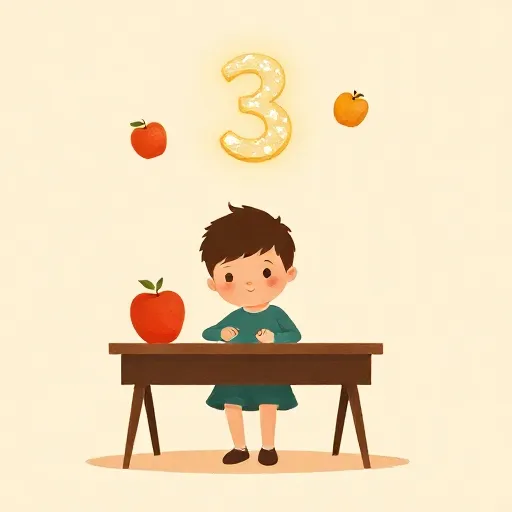
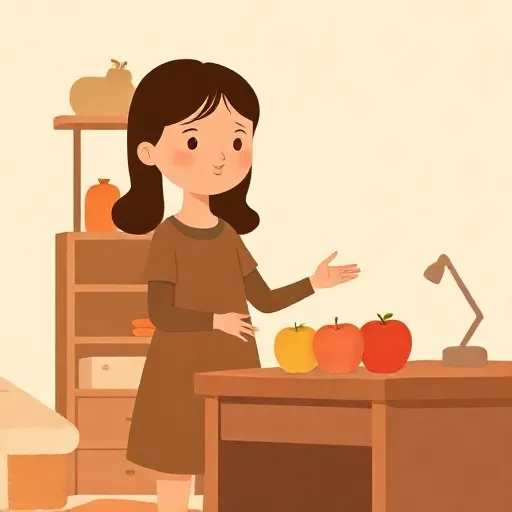
In 1884, German mathematician and philosopher Gottlob Frege (1848–1925) asked a strange question. You can see three apples, hold three pencils, or clap three times. But can you ever hold the number 3 itself? If you search your room, you will find objects — books, socks, a lamp. The number three, however, seems nowhere to be found. So where is it, and does it even exist?
Many philosophers answer that mathematical objects like numbers, sets, and functions are real, but not in the way your left foot is real. They call this view mathematical platonism (named after the ancient Greek philosopher Plato, though his ideas were different). Platonism says three things:
- Existence. There are mathematical objects.
- Abstractness. Mathematical objects are abstract: they are not made of matter, do not exist anywhere in space or time, and cannot push or pull anything. They are causally inert.
- Independence. Mathematical objects are not created by our language, thoughts, or practices. They would exist even if no human ever thought about them.
So according to platonism, the number 3 is an abstract object that exists independently of us, just not in the physical world. It is more like a law of nature than a rock. This idea might sound wild, but it has powerful arguments behind it and sparks fierce debate.
The Fregean Argument: Words That Need Things

Why would anyone believe in invisible numbers? One of the strongest reasons comes from the way we talk about mathematics. Suppose your friend says, “The Eiffel Tower is in Paris.” If that sentence is true, there must be an Eiffel Tower. The truth of the statement depends on an object existing out in the world.
Now consider: “Eleven is prime.” Most mathematicians accept this as true. But what makes it true? The sentence seems to be about the number 11, just as the first sentence is about the Eiffel Tower. It has a singular term — “eleven” — that appears to pick out a specific thing. For the sentence to be true, that thing must exist and must have the property of being prime.
This is the heart of what philosophers call the Fregean argument. It rests on two premises:
- Classical Semantics. The language of mathematics works much like ordinary language. Singular terms (like “eleven”) aim to refer to objects, and quantifiers (“there are infinitely many primes”) range over objects.
- Truth. Most sentences accepted as mathematical theorems are actually true.
If both are correct, then mathematical objects must exist. And because we cannot bump into the number 11 anywhere in space, they must be abstract. So we get the first two parts of platonism: Existence and Abstractness.
Some thinkers, called nominalists, reject this reasoning. They argue that mathematical statements can be true without real objects. Perhaps “eleven is prime” is just a convenient way of saying something about physical groups of things, or about rules of our language. Platonists reply that this is a desperate move — it twists the plain meaning of sentences to avoid an honest conclusion. The debate is still very much alive.
The Problem of Knowing the Invisible
Even if platonism seems logically tidy, it runs into a serious puzzle: how could we ever know anything about these abstract objects? Imagine a friend who lives in a sealed glass box. You can never see inside, hear inside, or interact with anything inside. Yet he claims to know everything about a magical city within. You would rightly ask: how?
This is the core of the epistemological objection raised by philosopher Paul Benacerraf (born 1931) and later sharpened by Hartry Field (born 1946). Their argument goes like this:
- Mathematicians are reliable: when they accept a mathematical statement, it is almost always true.
- For our belief in mathematics to be justified, it must be possible — at least in principle — to explain that reliability.
- If platonism is true, this reliability cannot be explained. Abstract objects cannot cause anything. They can’t bump into your brain or send signals. So there seems to be no way for our thoughts to “track” the truths about them.
If the three premises are correct, then platonism undermines our justification for believing mathematics at all — a disastrous result.
Platonists have offered responses. Some say we do not need a causal connection; we can access mathematical truths through pure reason, much like we grasp logical principles. Others argue that a minimal explanation of reliability is enough: perhaps we evolved to think in mathematical patterns because they are useful, and the truth of those patterns is a basic fact that needs no further grounding. But many philosophers remain deeply unsatisfied. The epistemological puzzle is one of the strongest reasons to doubt full-blooded platonism.
Are Numbers Just Holes in a Pattern?

There is another famous challenge, also from Benacerraf, but this time about what numbers even are. If numbers exist as abstract objects, then which objects are they? In set theory, mathematicians represent natural numbers using sets. For example, the number 3 might be the set of all three-membered sets, or it might be a particular sequence of empty sets and brackets. The problem is, there are many equally good ways to do this. No mathematical argument can settle which set 3 “really” is.
Benacerraf drew a striking conclusion. The natural numbers have only structural properties. All there is to being the number 3 is having certain relationships to other numbers: it succeeds 2, it is half of 6, it is prime. Nothing about it matters beyond its place in the sequence. But if an object has only structural properties — if its entire identity is just a role in a pattern — then it is not really a full-blooded object at all. It is more like a hole in a structure, or a position on a chessboard.
Think of a knight in chess. A knight is not defined by the wood or plastic it is made of; it is defined entirely by its permitted moves within the game. Numbers may be like that: they exist as positions in an abstract structure, but they are not independent objects in the robust way that your left foot is.
Many contemporary philosophers embrace mathematical structuralism, the view that mathematics is the study of structures, and numbers are just places in those structures. This still says something abstract exists, but it denies the strong independence claim of classical platonism. It is a way of being a realist without treating numbers like mysterious floating crystals.
A Lighter Kind of Platonism: Numbers as Shadows of Language
If the strongest objections hit only full platonism, maybe we can keep the existence of numbers while dropping the idea that they are just like physical objects. Some philosophers explore a middle ground: lightweight object realism.
Consider an example. When two lines are parallel, we say they have the same direction. Does the direction exist? In a sense, yes — you can refer to it and say true things about it. But the direction is not a separate object floating around in space. Its existence is grounded in the line itself. Similarly, the number 3 might exist, but only because there are groups of three things and our language allows us to talk about those groups in a certain way. The number is a semantic value — something our language refers to — but it is not a mind-independent entity that sits in a heavenly realm.
This view can accept Counterfactual Independence: even if no humans had ever existed, the truths of mathematics would still hold (they are rooted in logical possibilities, not in us). But it denies Robust Independence, the idea that numbers are metaphysical equals of rocks and planets. As the philosopher Michael Dummett (1925–2011) suggested, mathematical objects may be thin in a way that physical objects are not — they make no demands on any particular region of space, yet they are still real.
Such approaches try to solve the epistemological puzzle: we come to know numbers not by some psychic connection to a distant realm, but by mastering the language we use to count, measure, and reason. Numbers are real, but they are our numbers, arising from practices of thinking about the world. This middle path is attracting more and more attention in contemporary philosophy of mathematics.
Why It Matters: Counting on the Real World

You encounter mathematical objects every day. When you score points in a video game, use a recipe in the kitchen, or watch a bridge hold cars, you are relying on numbers and their properties. If numbers were just imaginary, why should they work so perfectly for building machines, predicting eclipses, or sending rockets to Mars? Platonism offers an elegant answer: mathematics works because it describes a genuine reality, as real as gravity. Discoveries in math are like discoveries of new continents — they were always there, waiting.
Yet the puzzle remains. If numbers are not physical, how do they reach into the physical world? A mathematical equation can describe the arc of a basketball shot with incredible accuracy. But the number 3 never threw a ball. The power of mathematics feels almost magical, and philosophers want to understand whether that magic is a real connection between worlds or just a triumph of human invention.
The debate between platonists, nominalists, and the many thinkers in between is not just about dusty abstract theories. It is about what exists, how we know anything, and why our universe seems to be written in the language of mathematics. Next time you solve a math problem, you might pause and wonder: am I exploring an invisible realm, or am I playing a game my brain made up? Either way, the question is one of the deepest you can ask.
Think about it
- If you met an alien from another galaxy, do you think their multiplication table would be the same as ours? Why or why not?
- Imagine a world where counting is impossible — you can never say how many things there are. Could such a world exist? What would that mean for the reality of numbers?
- Can you think of something else that seems real but you can’t touch, like friendship or the rules of chess? Is that a good analogy for numbers, or are numbers different?