
Who Decides What's True in Math? The Rebel Who Said: You Do
The Rebel Who Got Kicked Out of Mathematics

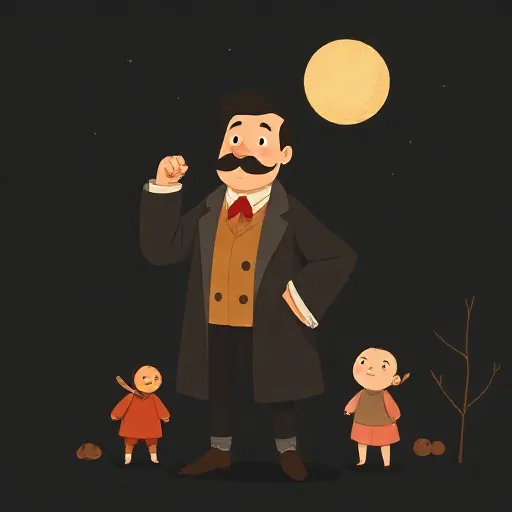
Picture a tense board meeting in 1920s Germany. Two of the world’s greatest mathematicians are on opposite sides of a war about what mathematics actually is. One of them, David Hilbert (1862–1943), is the most powerful mathematician alive. He wants the other man thrown off the editorial board of Mathematische Annalen, the field’s most important journal.
The man he wants expelled is Luitzen Egbertus Jan Brouwer (1881–1966), a Dutch mathematician who had already done brilliant work in topology—the study of shapes, spaces, and how they stretch and connect. But around 1913, Brouwer began arguing for a radical new philosophy of mathematics called intuitionism. Hilbert saw it as a threat to everything mathematicians had built. Their clash became known as the Grundlagenstreit—the “foundations battle”—and it split mathematics in two.
Brouwer lived his whole life as an independent mind. He studied at the University of Amsterdam, earned his PhD in 1907, and became a full professor by 1912. At age 24, he wrote a strange little book called Life, Art and Mysticism whose solipsistic ideas—the view that only your own mind certainly exists—already hinted at where his thinking would go. He built a hut in the Dutch village of Blaricum where he welcomed famous mathematicians, and he never stopped believing he was right, even as he grew more isolated. He died in a car accident at age 85, still holding fast to his philosophy.
What If Numbers Only Exist Inside Your Head?

Most people assume math is something you discover. The Pythagorean theorem was true before Pythagoras was born, and it would be true even if no humans existed. This view is called Platonism—after the ancient Greek philosopher Plato—and it treats mathematical objects as real things sitting in a kind of invisible world. Hilbert and nearly all working mathematicians held something close to this view.
Brouwer said something startling: math doesn’t exist “out there” at all. It happens entirely inside your mind. He called mathematics “a languageless creation of the mind.” The words and symbols you write down in math class are just tools for communicating ideas; the actual mathematics is the mental activity itself.
Where does this mental activity begin? Brouwer believed the most basic thing your mind does is notice time passing. He called this the first act of intuitionism. Imagine a single moment of your experience splitting into two: what just happened (held in memory) and what is happening now. One thing becomes two. This “two-ness”—this empty pattern of one giving way to another—is, Brouwer argued, the seed of all mathematics. From it you get the natural numbers: 1, then 2, then 3, each built by recognizing one more.
This has a huge consequence: infinity is never finished. There is no completed set of “all numbers” sitting somewhere. There is only the ongoing process of counting—what philosophers call a potential infinity. You can always add one more, but you never hold the whole list at once.
The Rule Brouwer Refused to Follow
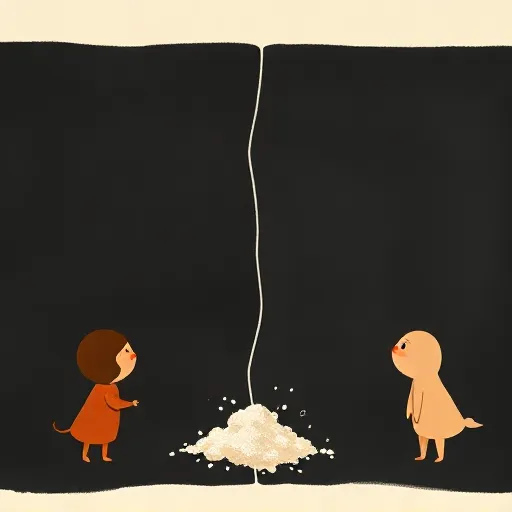
Here is a logical principle you have probably never questioned: for any statement, either it is true or its negation is true. “It is raining” is either true or false. There is no third option. This is called the law of the excluded middle, and classical mathematicians use it all the time.
Brouwer rejected it outright.
Why? Because in intuitionism, knowing a statement is true means having a proof of it—a mental construction that establishes it beyond doubt. This idea was later spelled out by Brouwer’s student Arend Heyting (1898–1980) in what is now called the Brouwer-Heyting-Kolmogorov interpretation, or BHK-interpretation. It says: to claim “A or not-A,” you need either a proof of A or a proof that A is impossible. What if you have neither?
Brouwer pointed to open problems in mathematics. Take the original Goldbach conjecture—the claim that every number greater than 2 is the sum of three primes. No one has proved it true, and no one has proved it false. So, right now, an intuitionist cannot say “Goldbach is true or Goldbach is false.” The statement simply has no truth value yet. It is like asking whether there is life on a planet in a distant galaxy—you cannot answer until you have evidence one way or the other.
To make this vivid, Brouwer constructed weak counterexamples. Imagine defining a real number that equals 0 if Goldbach is true and equals some tiny positive amount if Goldbach is false. Is that number equal to zero? You cannot say yes, and you cannot say no—not yet. So the statement “this number is zero or it is not” cannot be asserted. Classical mathematics depends on being able to assert exactly that kind of statement for every real number. Brouwer showed that this confidence rests on sand.
Choosing Numbers, One at a Time, Forever
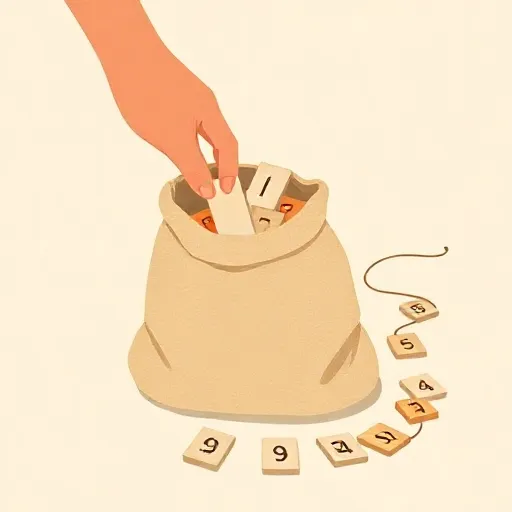
The most radical part of Brouwer’s philosophy comes from his second act of intuitionism. He argued that mathematicians can create choice sequences—infinite lists of numbers generated by free choice, one element at a time, without following any fixed rule.
Think of it like this: you are asked to name a number, then another, then another, forever. You can follow a pattern (2, 4, 6, 8…), or you can pick randomly (7, 42, 1, 99…), or you can switch between the two whenever you feel like it. The sequence is never complete—it is an ongoing process. Brouwer used choice sequences to represent real numbers, the numbers that make up the continuum—the smooth, unbroken number line.
This leads to astonishing results. Using what are called continuity axioms, Brouwer proved that every function from real numbers to real numbers is continuous—meaning no jumps or gaps. Classical mathematicians accept functions like “output 0 if x is a rational number, output 1 if x is irrational,” which jumps at every single point. In Brouwer’s system, you cannot define such a function, because you cannot always decide whether a given real number is rational or not. The continuity axiom essentially says: to compute a value from an infinite sequence, you can only look at a finite chunk of it—so the function must be continuous.
This is where intuitionism becomes truly incompatible with classical mathematics. It is not just a stricter way of doing what mathematicians already do; it produces different theorems entirely. Brouwer also proved a fan theorem, which recovers some classical results in altered form—for example, showing that every continuous function on a closed interval is uniformly continuous. The intuitionist does not lose all of analysis, but they must rebuild it on new foundations.
The Creating Subject and the Tick of Mathematical Time

In 1948, Brouwer introduced a striking idea: the Creating Subject—an idealized mind that carries out all mathematical activity. This is not any particular person with a name and a birthday. It is more like the pure capacity for mathematical thought, with all human limits stripped away: no memory lapses, no distractions, no errors.
The Creating Subject highlights something unique about intuitionism: truth has a temporal aspect. A statement becomes true when it is proved, at a specific moment in time. Before that proof exists, the statement has no truth value at all. This is very different from Platonism, where mathematical truths are timeless—true before anyone proved them and true even if no one ever does.
From this idea, philosophers later derived a principle called Kripke’s Schema. It says, roughly, that for any statement A, there exists a choice sequence that acts as a kind of truth indicator—producing a 1 exactly when A gets proved. This formalizes the intuitionistic idea that truth and proof are tied together, unfolding in time like the pages of a book being written rather than read.
The Creating Subject also solves a puzzle about intersubjectivity—the question of how different people can share the same mathematical ideas. If all mathematical thought happens inside the one Creating Subject, communication is no mystery. There is only one mind doing the thinking. As the philosopher Michael Dummett (1925–2011) later argued, this points toward a whole theory of meaning built on proof rather than truth—a philosophy where understanding a mathematical statement means knowing how to recognize a proof of it when you see one.
So, Do You Discover Math or Invent It?

The battle between Brouwer and Hilbert was never fully settled, but it changed mathematics permanently. Intuitionistic logic, first formalized by Heyting, became the foundation for all of constructivism—a broad family of mathematical philosophies that insist you must be able to construct something before you can claim it exists. Today, constructivism shapes computer science, where algorithms are essentially constructive proofs, and it influences how some mathematicians approach the deepest questions about their field.
But the deeper question is one you face every time you solve a math problem. When you figure out that 12 × 12 = 144, does it feel like you discovered something that was always true, waiting for you to stumble upon it? Or does it feel like you built the answer yourself, step by step, using rules your own mind understands?
Brouwer would say it is the latter. Math class is not archaeology—digging up truths buried long ago. It is architecture. And you are the builder.
Hermann Weyl (1885–1955), one of the great mathematicians of the twentieth century, was so moved by Brouwer’s ideas that he wrote, in German, that he was giving up his own attempt and joining Brouwer. Even Kurt Gödel (1906–1978), a lifelong Platonist who believed mathematical objects really existed, treated intuitionism as a serious and powerful alternative. The door Brouwer opened is still open. No one has managed to close it.
Think about it
- If a mathematical truth exists before anyone proves it, where exactly does it exist? Can you point to it the way you can point to a rock or a tree?
- Imagine a computer generates an infinite sequence of random numbers. Does that sequence count as a mathematical object, or does it only become one when a human mind starts thinking about it?
- If all of math is a creation of your mind, why do two people in different countries always get the same answer to “what is 11 × 11”? Does that tell you something about discovery, or about how human minds work?