
Is Math Just Logic in Disguise? The 200-Year Battle
Kant’s Puzzle: Can You Know 7+5=12 Without Looking?

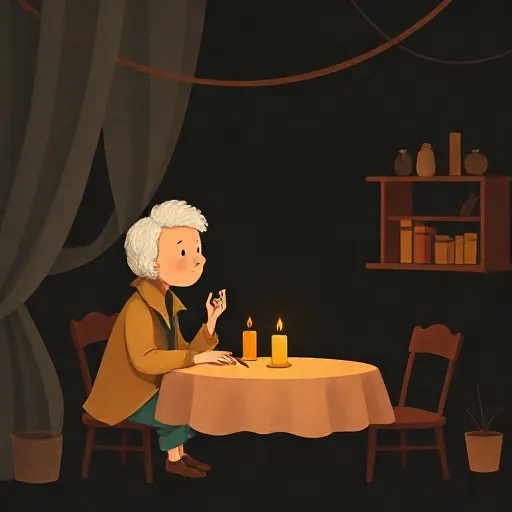
In 1781, the philosopher Immanuel Kant (1724–1804) sat in his study in Königsberg, raindrops tapping the window. He was thinking about a simple equation: 7+5=12. It seems obvious. But where does this truth come from? Is it just a matter of definitions, or does it tell us something new about the world?
Kant had a surprising answer. He argued that statements like 7+5=12 are synthetic a priori.
Synthetic means the predicate (what you say about the subject) isn’t already contained in the subject—you learn something new.
A priori means you don’t need to check the outside world to know it; you can figure it out just by thinking.
So, Kant thought, arithmetic gives us real information about reality, yet we can discover it without looking through a telescope or counting apples. How? Because, he said, our minds are built with a pure inner sense of time. That sense of moments passing in order lets us count, add, and grasp that 5 and 7 always make 12. Geometry, he thought, works similarly through our built-in sense of space.
For Kant, this meant mathematics and metaphysics both stood on the same special ground: they were synthetic a priori. It was a powerful picture of how we could know deep truths without leaving our armchairs.
Frege’s Big Bet: Building Numbers from Pure Logic
A hundred years later, a mathematician at the University of Jena had a bolder idea. Gottlob Frege (1848–1925) believed that Kant was wrong about arithmetic. He thought every truth about numbers could be proved using nothing but logic and explicit definitions. This view became known as logicism.
Frege was not alone in wanting to free arithmetic from geometry and intuition. The trend, called the arithmetization of analysis, had already been pushed by mathematicians like Richard Dedekind (1831–1916). Dedekind insisted that the foundations of real numbers must be a purely arithmetical and perfectly rigorous foundation for the principles of infinitesimal analysis, never leaning on pictures of space or time. Frege shared that ambition but wanted to go all the way: to show that arithmetic itself is simply logic in disguise.
To pull this off, Frege had to define numbers without pointing to any physical objects. He started with zero.
Zero, he said, is the number of things that are not identical to themselves. Since everything is identical to itself, nothing falls under the concept “not self-identical.” So the number of such things is exactly zero.
Next came the trick for getting all the other natural numbers. Frege defined what it means for one number to be the successor of another:
The number 1 is the number of all things equal to zero (and zero is the only such thing).
The number 2 is the number of all things equal to 0 or 1.
The number 3 is the number of all things equal to 0, 1, or 2 — and so on.
This is often called Frege’s trick: each natural number simply counts all the numbers that come before it. Because the series of numbers is never-ending, this guarantees there are infinitely many.
To express these ideas with perfect precision, Frege created a formal system that talked about extensions (something like classes or sets). The centrepiece was his Basic Law V, which said that the extension of two concepts is the same if and only if exactly the same things fall under them. It seemed a harmless logical truth.
The Bomb in the Mail: Russell’s Paradox

In 1902, as Frege was preparing the second volume of his life’s work, he received a letter from a young English philosopher, Bertrand Russell (1872–1970). Russell had discovered a hidden crack in Frege’s elegant system—a crack so deep that it made the whole structure collapse.
The problem can be illustrated with a story. Imagine a library that contains catalogs listing other catalogs. The head librarian decides to create a master catalog that includes every catalog that does not list itself. Should the master catalog list itself?
If it does list itself, then by its own rule it shouldn’t.
If it doesn’t list itself, then according to its rule it should.
Either way, you get a contradiction.
Russell realized that Frege’s Basic Law V allowed exactly this sort of vicious circle. Using only the law, you could form the class of all classes that do not belong to themselves. That class belongs to itself if and only if it doesn’t. The logic explodes.
Frege saw that the foundation-stone of his whole project had shattered. In the afterword to his book, he wrote, “Hardly anything more undesirable can befall a scientific writer than to have, at the completion of his work, one of the foundation-stones of his edifice shattered.” Russell’s paradox had shown that Frege’s logicism, as he had built it, was inconsistent.
A Second Chance: Neo-Logicism and Hume’s Principle

Frege’s dream seemed dead. But in the 1980s, a group of philosophers led by Crispin Wright and Bob Hale tried to revive it. They noticed something Frege himself had used but then set aside: a much simpler principle that could still do the heavy lifting. Today it is called Hume’s Principle.
The idea is beautifully concrete. Suppose you want to know whether the number of forks on a table equals the number of knives. You don’t need to count; you just try to pair each fork with a different knife. If you can match them up one-to-one with nothing left over, the two numbers are the same.
In Frege’s language: the number belonging to concept F equals the number belonging to concept G if and only if there is a relation that pairs the Fs one-to-one onto the Gs.
From Hume’s Principle, together with second-order logic, you can derive all the basic laws of arithmetic—the Peano axioms—following a plan that closely mirrors Frege’s own. This result is known as Frege’s Theorem. Neo-logicists argue that if Hume’s Principle is analytic (true just by the meaning of “number”), then arithmetic really is analytic too.
But problems pile up. Is Hume’s Principle genuinely logical? It promises a number for every concept—even “object identical to itself,” which gives you a gargantuan infinite number beyond all the familiar natural numbers. Some philosophers worry that such lavish ontological commitments (things you have to believe exist) are too heavy for pure logic to carry.
There is also the “Bad Company” objection: other abstraction principles that look very similar to Hume’s Principle would assign different numbers to infinite collections. Why should we trust Hume’s Principle rather than one of its rivals? And if we try to restrict it only to finite concepts, we lose the neat, simple statement that made it attractive in the first place.
Why It Matters: The Fight Over What Math Really Is

So, is arithmetic just logic? The neo-logicist revival gave the idea new life, but the debate is far from settled. Some modern thinkers have explored fragments of Frege’s original system that stay consistent, while others have tried altogether different routes—like using modal logic to talk about possible objects and possible numbers. Each approach has to answer hard questions: What counts as logic? Can logic alone force something into existence? How do we know that our chosen principles won’t hide another Russell-style bomb?
This isn’t just dusty history. When you solve a math problem, you might be uncovering a deep, necessary structure woven into thought itself—not just pushing symbols around by rules we invented. That would mean mathematical truth is as solid as anything can be. But if the logicists are wrong, math might be more like a powerful game whose pieces we define, with no obligation for reality to obey. The answer touches what “certainty” means and whether numbers are truly discovered or simply crafted.
The puzzle that began in Kant’s rainy study, and that broke Frege’s heart in 1902, is still alive in today’s seminar rooms. And every time you stare at an equation, you are standing at the edge of that same question.
Think about it
- If a computer could prove that 2+2=4 from pure logic alone, would the number 2 feel less “real” to you than a chair? Why or why not?
- Imagine a new branch of math where the rules allow the statement “0=1” to be true. Could that system still be useful? What would that say about the link between logic and mathematical truth?
- Why do you think it took thousands of years for people to accept that negative numbers or zero are legitimate numbers, if arithmetic is all just logic? What got in the way?