Is Math Finished, or Are There Questions We’ll Never Answer?
A Rulebook That Can’t Answer Everything

It’s 1931 in Vienna. A quietly intense mathematician named Kurt Gödel (1906–1978) is about to publish a paper that will shake the foundations of mathematics.
Math class feels like a world of right and wrong answers. You learn rules, apply them, and get results. For centuries, mathematicians dreamed that all of arithmetic could be captured by a perfect rulebook — a handful of basic statements called axioms that you accept without proof, and then every other true fact about numbers could be proved from them. The most famous such rulebook for arithmetic is a system called Peano arithmetic, or PA for short.
Gödel showed the dream was impossible. He proved two incompleteness theorems. The second one says, roughly, that PA cannot prove its own consistency — the statement that PA never leads to a contradiction. Now, consistency is a perfectly ordinary statement about numbers (with some clever coding, it can be turned into an arithmetic sentence called Con(PA)). Yet, if PA is in fact consistent, it cannot prove Con(PA). Even more, under reasonable assumptions, PA cannot prove the opposite either. That makes Con(PA) an independent statement — it, and its negation, can’t be decided by PA’s basic rules. It’s a true sentence that the rulebook can’t reach.
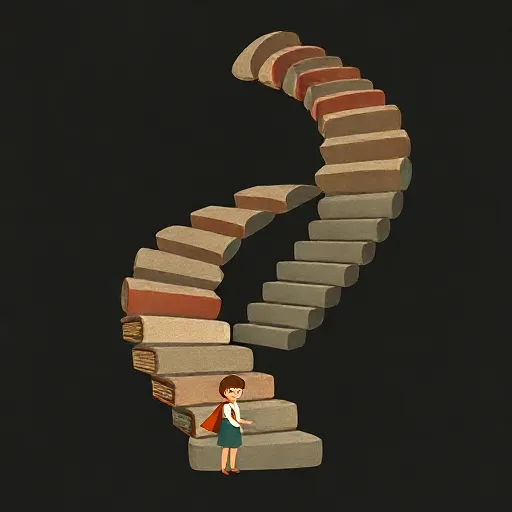
Climbing the Never‑Ending Ladder

Gödel’s discovery left mathematicians with a puzzle: what do you do with an independent statement? One natural move is to turn the unreachable truth into a new axiom. If you add Con(PA) to PA, you get a stronger system that can prove the old system’s consistency. But then the second incompleteness theorem strikes again — the new, beefed‑up system can’t prove its own consistency. So you add that, and climb higher.
Gödel himself pointed out a route. Instead of just adding consistency statements, you can climb the hierarchy of types: the natural numbers (level 0), sets of numbers (level 1), sets of sets of numbers (level 2), and so on. The axiom system for level 2 can settle the statement that level 1 couldn’t — it proves Con(PA). But level 2 can’t prove its own consistency; you need level 3 for that. The pattern continues. For every problem there is a solution, and for every solution there is a new problem.
In set theory, this hierarchy becomes the universe of all sets, built up from the empty set by repeatedly taking power sets. The familiar axioms of set theory (called ZFC) sit at a fairly low level. Many mathematicians hoped that by moving far enough up the ladder, we might eventually catch every mathematical truth — not all at once, but as a growing family of systems. The hope was that the only undecidable questions would be these “boring” consistency sentences.
That hope did not last.
The Case of the Missing Size
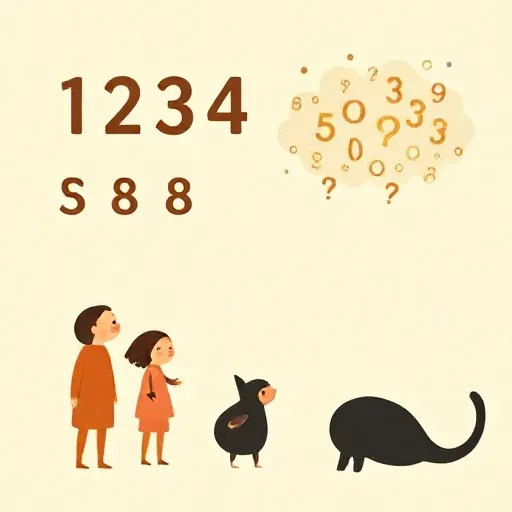
One famous question that exposed the problem is the continuum hypothesis, or CH. The counting numbers (1,2,3,…) are countable — you can, in principle, list them. The real numbers (all the decimals on a number line) are uncountable — any list will miss some. So the real numbers are a bigger infinity. CH asks: is there a set whose size is strictly between the two? Cantor guessed “no,” but nobody could prove it using standard set theory (ZFC).
The answer came from two groundbreaking techniques. In 1938, Gödel invented the method of inner models. He defined a special, thin universe called L (the constructible universe) where CH is true. That showed you can’t disprove CH from ZFC — if ZFC is consistent, so is ZFC plus CH. In 1963, Paul Cohen invented a technique called forcing to build a model where CH is false. Together, these results proved that CH is independent of ZFC: you can’t prove it, and you can’t disprove it, from the standard axioms of set theory alone.
CH wasn’t the only statement of this kind. Another, called PM (about how wild certain sets of reals can be), was also investigated. But here the independence behaved differently: adding PM to ZFC actually makes the theory stronger — it requires climbing the ladder to a higher level, while adding its negation leaves you at the same strength. That’s like Con(PA) all over again, but now with a “natural” mathematical statement instead of a coded logic puzzle.
So some undecidables are like forks in the road where both paths stay level (like CH), and others are jumps where one path leads up the strength ladder. Mathematicians wanted new axioms to settle the jumpers.
The Super‑Rules of Infinity
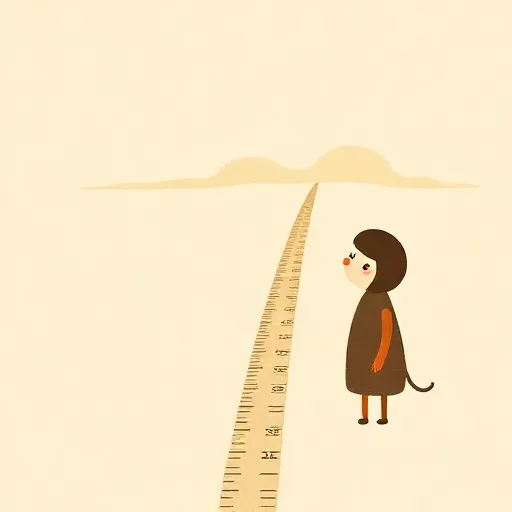
If standard set theory isn’t enough, where do we find the next axioms? The most promising candidates are large cardinal axioms. These say that there exist enormous sets — levels of infinity so vast that they tower above ordinary sets. The simplest of these is an inaccessible cardinal, a set so huge that it forms a new mini‑universe of set theory. Stronger large cardinals include Mahlo cardinals, measurable cardinals, Woodin cardinals, and more. Each one asserts the existence of a critical point for an elementary embedding — a kind of mirroring between the whole universe of sets and a smaller one — which implies the lower levels exist.
What makes large cardinal axioms special is order. When mathematicians compare theories by their strength (roughly, which systems can interpret or translate the statements of others), large cardinals fall into a neat, well‑ordered hierarchy. Every “natural” large cardinal axiom is either weaker, stronger, or equivalent to every other one. They form a single, ascending ladder of consistency strength.
Even more striking, large cardinal axioms act as a universal yardstick. To see how strong a new mathematical theory is — say, a rulebook for a weird kind of geometry — researchers often translate it into a theory of sets and then match it against a large cardinal. Many times, ZFC plus the weird theory turns out to be mutually interpretable with ZFC plus some large cardinal axiom. The large cardinal then gives a precise measurement of how far up the ladder that weird theory really sits. This works across completely different areas: analysis, combinatorics, even parts of arithmetic. Without large cardinals, we often have no other way to compare these strengths.
But do these super‑rules of infinity actually describe the true mathematical universe? That’s the live question.
Why the Adventure Never Ends

Some philosophers and mathematicians think we can’t be sure about any axiom beyond the most basic ones. They see the independence results as proof that mathematics branches into many equally legitimate worlds — one where CH is true, another where it’s false — and you just pick the one you like. On that view, large cardinal axioms are just another choice, not a discovery.
Others argue that large cardinals are not arbitrary. Their tidy hierarchy, their ability to organize theories from distant fields, and the fact that they extend the natural “more sets exist” idea all make them good candidates for truth. Gödel himself believed that as we learn to see the set‑theoretic universe more clearly, we might eventually accept certain large cardinal axioms as self‑evident.
So the next time you solve a math problem, remember that even the rules you’re using sit on top of a deep, unfinished foundation. Mathematicians are still exploring which new axioms to add. The hunt for the next rung on the ladder is an open, creative project — and it’s the reason why math, far from being a closed book, is an endless frontier.
Think about it
- If you could add one new rule to arithmetic to make it more interesting, what would it be? How is that like adding an axiom?
- Some people say that if a math question can never be answered from the rules we trust, then it doesn’t have a real answer — it’s just a choice. Do you agree? Why or why not?
- Mathematicians often trust large cardinal axioms because they bring order to many different areas. Could a false idea still be useful? How should we decide when an unprovable idea is worth believing?