
Can Mathematics Prove Everything? Why Kurt Gödel Said No.
1900: A Grand Promise and a Shaky Foundation
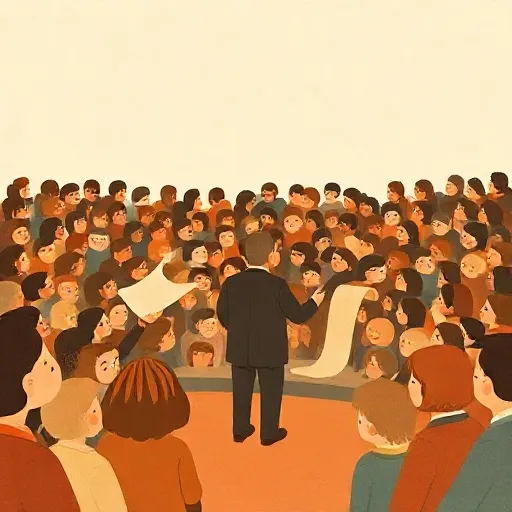
In August 1900, Paris buzzed with mathematicians from all over the world. David Hilbert (1862–1943), one of the most respected mathematicians of his time, took the stage. He announced a list of 23 unsolved problems that he believed would shape the future of mathematics. Among them was a dream: to prove that mathematics is both complete and consistent. In a complete system, every true statement can be proved with perfect logic. In a consistent system, you can never prove a contradiction — you can’t show that two plus two equals four and also that it doesn’t.
Hilbert and many others imagined a giant rulebook that could handle all of math, leaving no loose ends. They thought they were building a fortress of certainty. But three decades later, a quiet, young logician named Kurt Gödel (1906–1978) pulled out the foundation stones. He showed, with ironclad reasoning, that Hilbert’s dream was impossible — and he did it by turning mathematics inside out.
What Makes a System “Formal”? Let’s Play a Game.
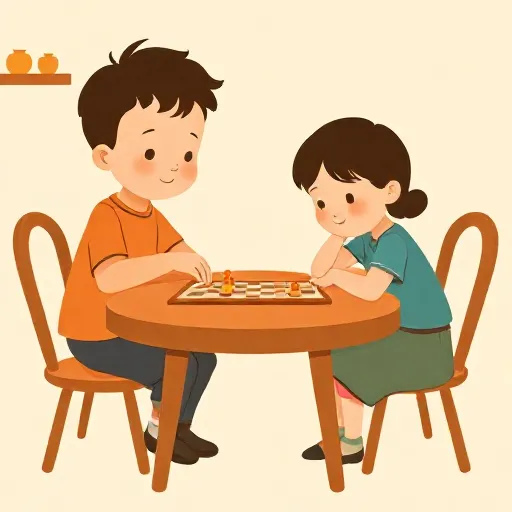
To see what Gödel did, you need to know what a formal system is. Think of a board game. You have some starting pieces (like the tokens on a board) and a rulebook that says exactly how you can move. In math, the starting pieces are called axioms — basic statements you take as true without proof. The rulebook gives you rules of inference, which let you combine axioms and already-proven statements to prove new ones, called theorems. The whole point is that every step can be checked by a simple machine; no guesswork, no intuition — just pure rule following.
A formal system is complete if, for any statement you can form in its language, either the statement or its opposite is provable. It is consistent if you can never prove both a statement and its negation. An inconsistent system is useless: from a contradiction, you can prove anything, even that one equals zero. So Hilbert wanted a system that was consistent (no falsehoods) and complete (every truth can be proven).
Mathematicians had built formal systems for basic arithmetic — the study of adding, multiplying, and reasoning about numbers. Systems like Peano Arithmetic (PA) had a finite set of axioms about zero, the “successor” function (which gives the next number), addition, and multiplication, plus a scheme for induction. They seemed strong enough to capture all ordinary number truths. Many assumed PA was both consistent and complete. Gödel would prove them wrong.
How to Catch a System in a Loop: Gödel’s Sneaky Trick

Gödel’s first brilliant move was to turn formulas into numbers. He assigned a unique code number (now called a Gödel number) to every symbol, formula, and proof inside a system. In effect, he made math talk about itself. Then he built a formula that states, “There is no proof of the formula with Gödel number x.” He set x to be the very formula’s own number. The result was a sentence G that, in effect, says: “G is not provable in this system.”
Now think: if G were provable, then the system would prove that G is not provable — a contradiction. So G cannot be proved, as long as the system is consistent. What about the negation of G? If you could prove that G is false, then the system would claim there is a proof of G, which would mean the system proves a false statement — it would be unsound (it would prove a falsehood). If we assume the system is sound — it only proves true statements — then G cannot be disproved either. So G is an undecidable sentence: neither provable nor refutable inside the system. And, under the soundness assumption, G is actually true, even though it can never be proved within that system.
This is Gödel’s first incompleteness theorem: any consistent formal system that contains enough arithmetic to do basic number theory is incomplete. There will always be statements — a Gödel sentence — that hang in the air, true but unprovable. Note that the theorem doesn’t say the sentence is absolutely unprovable; if you move to a stronger system, you might prove it there. But that stronger system will have its own Gödel sentence. No single formal system can ever capture all arithmetic truths.
The System Cannot Prove Its Own Consistency

Hilbert wanted not just completeness but also a proof of consistency — a guarantee that mathematics would never explode into contradictions. Gödel’s second theorem pulled that hope away, too.
Inside a system that can do enough arithmetic, you can express a sentence Cons(F) that says, “This system is consistent” (roughly, “There is no proof of a contradiction”). Gödel showed that if you could prove Cons(F) inside the system itself, you could reconstruct the reasoning of the first theorem and prove the Gödel sentence G — which you just saw is impossible. So Cons(F) cannot be proved inside the system, provided the system really is consistent. In other words, a consistent formal system cannot prove its own consistency.
This doesn’t mean consistency can never be proved; you can prove it from a stronger system. But then you need to trust that stronger system’s consistency, and so on. There is no ultimate self-certifying foundation. Asking a system to vouch for itself is like asking a person to be the sole judge of their own honesty — the answer can’t settle the question. Some philosophers still debate whether the sentence Cons(F) really “means” that the system is consistent in every sense, but the basic shock remains: within the system, the most natural statement of its safety is unprovable.
Why It Still Matters Today

Gödel’s theorems don’t just belong to dusty logic books; they shape how we think about minds, machines, and the limits of knowledge itself.
First, they settle an old question: is there a single, complete rulebook for all of mathematics? The answer is no. Even for basic number truths, any fixed formal system will leave gaps. This tells computer scientists something stark: there is no algorithm that can decide, for every mathematical statement, whether it is true. The dream of a universal truth machine evaporated.
Some thinkers, like philosopher J.R. Lucas and physicist Roger Penrose, have gone further. They argue that Gödel’s theorems show the human mind is not a machine. A computer can be captured by a formal system; the machine would be stuck on a Gödel sentence that we humans can see is true. So, they claim, our minds outrun any program.
But this argument is fiercely contested. To “see” that the Gödel sentence is true, you must first know the system is consistent — and that may be far from obvious. As philosopher Paul Benacerraf pointed out, it’s consistent with all the facts that a human mind is a Turing machine, just one that can’t fully inspect its own programming. So the debate between mechanism and anti‑mechanism is very much alive, and Gödel himself refused to declare a winner.
More personally, the incompleteness theorems are a humbling reminder. No matter how clever you are, there will be truths within reach that you can’t capture with a fixed set of rules. But that’s not a reason to stop asking questions; it’s an invitation to keep building new systems, discovering new axioms, and never thinking you’ve reached the final answer. Even when some doors seem locked from the inside, the adventure doesn’t end.
Think about it
- If a friend told you they built a supercomputer that can solve every math problem, and then showed you a sentence the computer said was “true but I can’t prove it,” would you believe the computer is broken, or that it discovered its own limit?
- Imagine you design a video game with rules so complex that even you can’t predict whether the game could crash. Would you release it, hoping no one finds a bug? How is that like what mathematicians face when they trust a formal system?
- Could there be truths about the universe that no human mind — not even the most brilliant future scientist — can ever grasp? Why or why not?