How Much Infinity Do You Really Need to Prove Something?
Euclid’s Embarrassment: A Postulate That Wouldn’t Be a Theorem
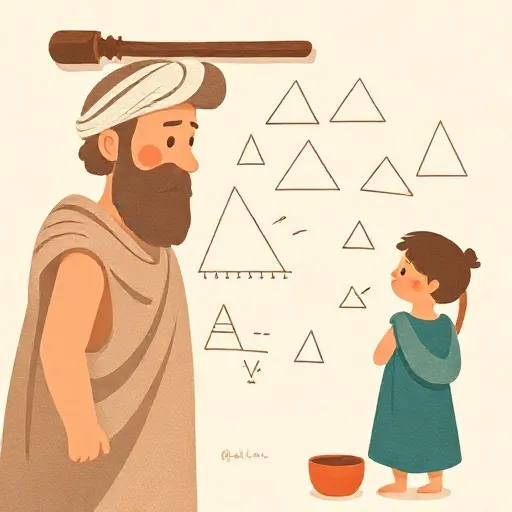
Around 300 BCE, Euclid wrote a book that would shape math forever. He gave five starting rules, or axioms, for geometry. Four seemed clean and obvious. The fifth — the parallel postulate — felt like a messy guess. It said that if you have a line and a point not on it, exactly one parallel line passes through that point.
Mathematicians for centuries tried to prove it from the other four axioms, turning it from a postulate into a theorem. They failed. In the 1800s, we found out why: there are perfectly good geometries — now called non-Euclidean — where the first four axioms hold but the parallel postulate does not. The fifth axiom was truly independent; you had to assume it if you wanted Euclidean geometry.
This wasn’t just a historical oddity. It was the first whisper of a much bigger idea: some math facts require extra assumptions, and you can find out exactly which ones. That idea grew into something called reverse mathematics.
Turning Theorems Inside Out: The Reverse Idea
Normally, math works one way: you start with axioms, then prove theorems. Reverse mathematics flips the arrow. It asks: if a theorem is true, what axioms must be true for it to work? The goal is to find the minimal set of rules a theorem depends on — no more, no less.
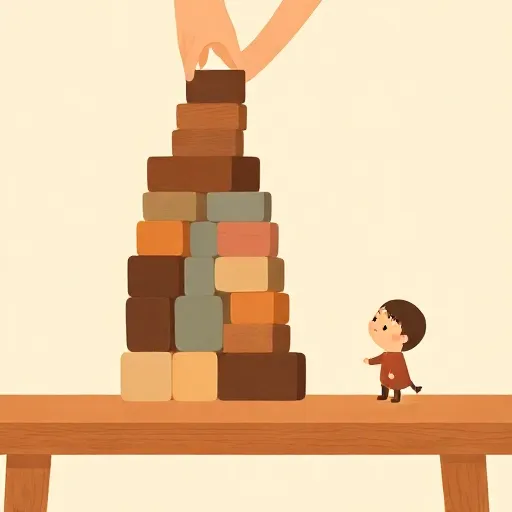
Imagine you’re building a LEGO set. You follow the instructions and build a spaceship. Reverse mathematics asks: if I only give you the pieces that are necessary to make this spaceship, which ones are they? Maybe the laser cannon requires the long blue brick, but the rear fins can be swapped with other pieces. In math, “pieces” are axioms.
The method is this: take a theorem T. You already know that some base theory B (a few weak axioms) can prove T if you add a stronger axiom S. Reverse mathematics tries to prove, from B+T, that S must hold. That shows T and S are equivalent given B. Euclid’s parallel postulate and the Pythagorean theorem are equivalent, given the other four postulates — one implies the other, and vice versa.
This approach needed a base theory. In the 20th century, mathematicians settled on a system called second-order arithmetic. It talks about natural numbers and sets of natural numbers, which can code real numbers, continuous functions, and much of “ordinary math.” The weakest useful base theory in that language is called RCA₀.
Math’s Secret Ladder: The Big Five Systems
RCA₀ (the “R” stands for “recursive,” an old word for computable) is the ground floor. It lets you prove that computable sets of numbers exist — roughly, the sets a computer could list given enough time. Many basic results about real numbers, like the intermediate value theorem, can be proved in RCA₀ itself.
But many classical theorems cannot. When logicians started investigating, they found that most theorems from ordinary mathematics land at one of four higher levels, each obtained by adding a new set-existence axiom to RCA₀. Together, these five systems became known as the Big Five.
The first step up is WKL₀, which adds weak König’s lemma. This says every infinite tree of binary sequences has an infinite path. It acts like a compactness principle, and it is equivalent to the Heine–Borel covering theorem, the separated Hahn–Banach theorem, and Gödel’s completeness theorem for first-order logic. Surprisingly, WKL₀ is “conservative” over RCA₀ for statements about just the natural numbers — it doesn’t prove anything new about numbers, though it does prove new things about sets.
Next comes ACA₀, for arithmetical comprehension. This says you can form the set of all numbers satisfying any arithmetical condition (one without quantifiers over sets). ACA₀ is exactly strong enough to prove sequential completeness of the real line: the least upper bound principle, the Bolzano–Weierstrass theorem, and the Cauchy convergence theorem. It also proves that every countable vector space has a basis, and that every countable field has an algebraic closure.
Further up is ATR₀, which allows arithmetical transfinite recursion — building sets by iterating an arithmetical operation along any countable well-ordering. This unlocks the perfect set theorem (every uncountable closed set contains a copy of Cantor’s perfect set) and the comparability of countable well-orderings.
At the top sits Π¹₁-CA₀, which adds comprehension for Π¹₁ formulas (formulas with one universal set quantifier). This is needed for the Cantor–Bendixson theorem (every closed set decomposes into a perfect set and a countable set) and other deep results in descriptive set theory.
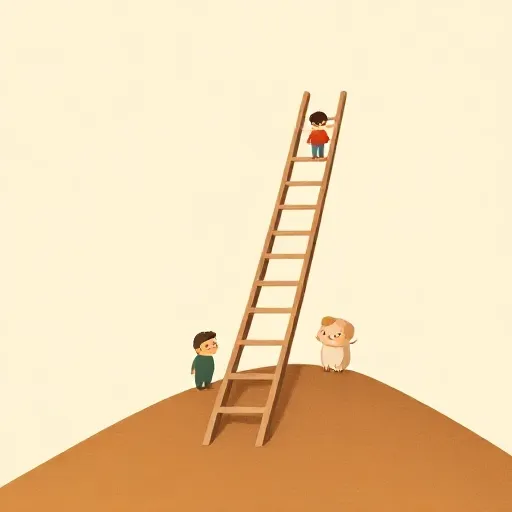
Each rung on this ladder is provably stronger than the one below: some theorems can only be proved once you climb high enough.
What a Computer Can’t Do, and Why It Matters

RCA₀ captures exactly the mathematics that stays within the computable world. In its smallest model, called REC, every set is computable. But many theorems of analysis state the existence of limits, least upper bounds, or convergent subsequences. In RCA₀, some of those objects don’t exist because they are non-computable.
Consider the halting problem: the set K of all computer programs that eventually halt. K is not computable: no computer can decide membership in K. In RCA₀, K does not exist as a set. But the sequential least upper bound principle, when added to RCA₀, allows you to prove K exists — and in fact, that principle is equivalent to ACA₀. So the jump from computable mathematics to sequential completeness is exactly the jump that lets you get the halting problem.
This creates a tight link between proof strength and computability. Reverse mathematics doesn’t just classify theorems; it measures their degree of non-computability. Specker’s recursive counterexample to the monotone convergence theorem (1949) was an early warning: a computable, bounded increasing sequence of rationals with no computable limit. To prove the limit exists in full generality, you must step outside the computable universe.
When Infinity Stacks on Infinity: Going Higher

ACA₀ lets you apply an operation finitely many times. ATR₀ lets you do it transfinitely — repeating a definition along any countable well-ordering. This is a huge leap. A well-ordering is a linear order with no infinite descending chains. Proving that two given well-orderings are comparable (one is isomorphic to an initial segment of the other) is equivalent to arithmetical transfinite recursion over RCA₀.
Results like the perfect set theorem depend on this ability to iterate into the transfinite. The theorem says that every uncountable closed set of real numbers can be split into a perfect set (which is like a fractal, containing a copy of itself) and a countable part. That theorem is not provable in ACA₀; it needs ATR₀.
Going further, Π¹₁-CA₀ can handle the Cantor–Bendixson theorem, which fully pinpoints the structure of any closed set. This level requires being able to form sets defined by a Π¹₁ condition — roughly, a condition that itself talks about “all paths” through a tree. It’s the kind of second-order infinity that feels far from grade-school counting, yet it’s sometimes required to settle questions about the real numbers we use every day.
Why Should a 12-Year-Old Care? Because Math Is a Choice

You’ve probably never questioned whether the intermediate value theorem is “true.” It feels solid. But reverse mathematics reveals that even basic theorems rely on choices — choices about what sets exist and how much infinity we accept. If you stick to fully computable mathematics (only RCA₀), some results just aren’t available. To get them, you must grant the existence of certain non-computable sets.
This doesn’t mean the theorems are false. It means they live at different logical levels, and mathematicians who adopt different foundational rules (like constructive mathematicians or finitists) may have to give up some theorems or find clever workarounds. Reverse mathematics gives us a map of exactly what you lose or gain when you change the rules.
It also sharpens an ancient question: are there different equally valid geometries? Yes — Euclidean and non-Euclidean. Are there different equally valid mathematics? Reverse mathematics shows us a whole hierarchy of possible “universes” of sets, each supporting a different lot of theorems. You can explore them like parallel worlds, each with its own internal logic.
So next time you see a theorem about limits, or about infinite trees, you can ask: what is the minimum infinity this proof actually uses? That’s the puzzle reverse mathematics solves — and it’s one of the deepest puzzles around.
Think about it
- If a computer can’t detect whether a sequence has a limit, does that mean the limit isn’t real, or just that our machine isn’t smart enough?
- Some mathematicians say the parallel postulate is “true” in Euclidean geometry and “false” in others. Can a mathematical statement be both true and false in different contexts, or is there one real mathematical universe?
- Suppose you had to do all your math without ever assuming an infinite set exists. What familiar facts about numbers or shapes might you have to give up?