Did We Invent Math, or Was It Always There?
A strange question in math class
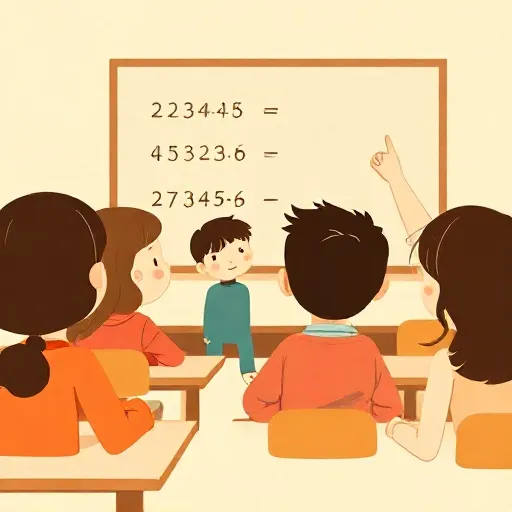
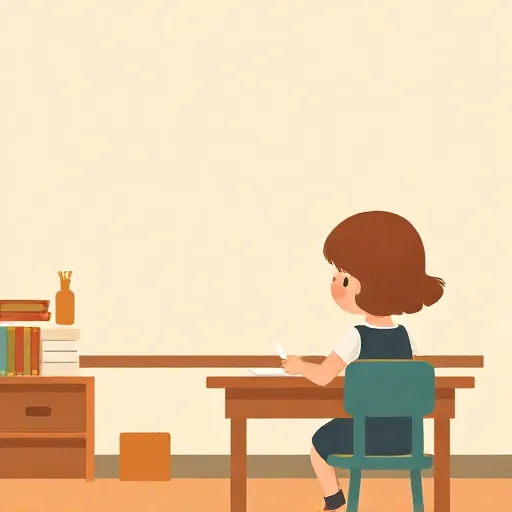
Picture this. It’s a Tuesday morning, and your math teacher writes “1 + 1 = 2” on the board. She asks, “Is this something you discover, like finding a new planet, or something you invent, like the rules of chess?” The classroom gets quiet. It feels like a fact about the universe, like gravity. But what if it’s not?
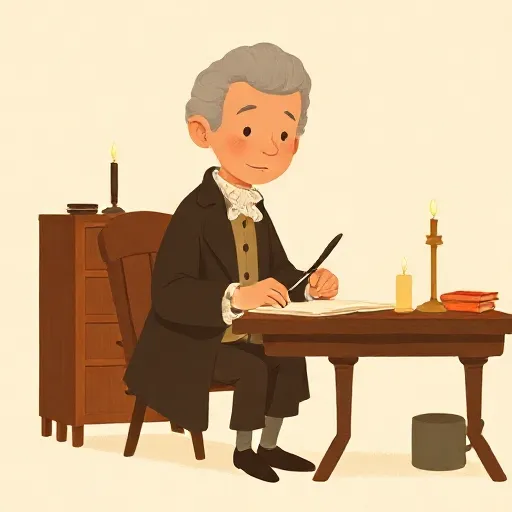
That question drove one of the most unusual thinkers of the twentieth century, Ludwig Wittgenstein (1889–1951). He started by designing airplane engines, then turned to philosophy and began picking apart everything people thought they knew about language, logic, and math. He ended up with a shockingly simple claim: mathematics is a human invention — a toolbox we built, not a hidden kingdom we explore.
To understand why he said that, we have to look at how he saw ordinary sentences first.
How words paint the world
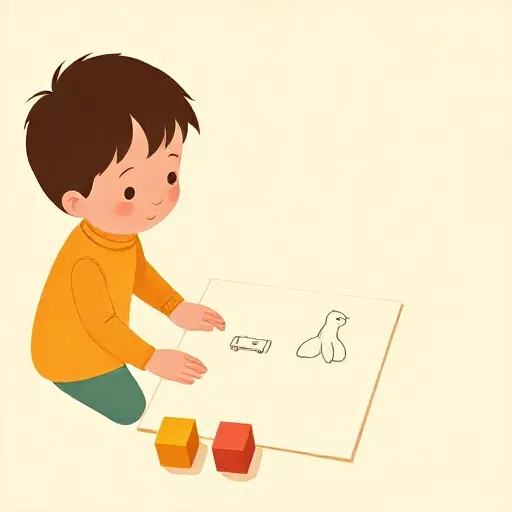
In his first big work, the Tractatus Logico-Philosophicus (1921), Wittgenstein said that a genuine proposition — a meaningful sentence about the world — works like a map or a picture. You have words (like “cat” and “mat”), and you arrange them into a sentence (“The cat is on the mat”). That arrangement matches a possible arrangement of objects in the world. If the cat really is on the mat, the sentence is true. If not, it’s false. This is called the correspondence theory of truth: truth is matching reality.
But he then asked: what about sentences like “2 + 2 = 4”? Do they paint a picture of some invisible mathematical objects? He thought not. Instead, he called mathematical equations pseudo-propositions — they look like statements about facts, but they don’t point to anything outside themselves. They are more like rules in a game.
Think of it this way. If I say “a knight moves in an L-shape,” I’m not describing a real horse; I’m telling you a rule of chess. Once you know the rule, you don’t go looking in the world to see if it’s true. You just follow it. For the early Wittgenstein, “2 + 2 = 4” is the same kind of thing: a rule that shows that the expression “2 + 2” means the same as “4.” It doesn’t describe a fact, and it’s not true or false in the way “the cat is on the mat” is. It’s simply correct within the system of arithmetic.
We invent the rules, then follow them
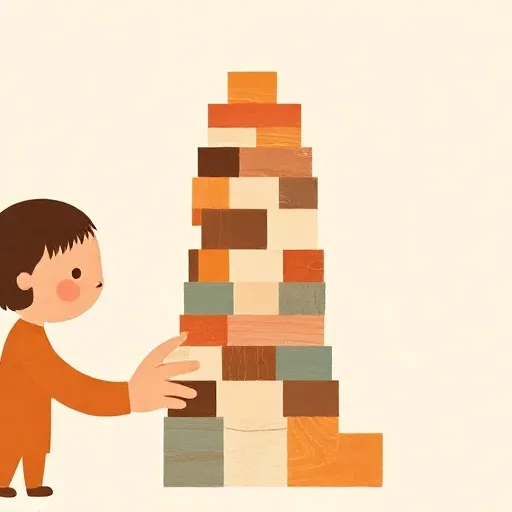
In the years after the Tractatus, Wittgenstein’s view deepened. He became fascinated by the idea that we literally make mathematics. He wasn’t just saying we invent the symbols like ”+” or “7.” He was saying we invent the whole game, including what counts as a correct move.
This is a strong version of formalism. A formalist says that math is a calculus — a set of symbols and rules for pushing those symbols around, like a very precise board game with numbers. You start with some chosen rules (axioms) and a method for proving new arrangements correct (proofs). There’s no need to look outside the game. The meaning, if you can call it that, comes only from how the symbols connect to each other inside the system.
Wittgenstein went further. He claimed there are no infinite mathematical extensions — meaning, no completed, endless lists like “the set of all natural numbers” that somehow exist as a finished thing. When we say “there are infinitely many even numbers,” we aren’t describing a giant scroll with every even number already written down. We are giving a rule: start with 2 and keep adding 2, and never stop. The infinite is a possibility of going on, not a completed object.
That idea had big consequences. If there’s no completed infinite set, then a sentence like “all numbers have property P” can’t be checked by inspecting an infinite list. It only makes sense if we have a decision procedure — a step-by-step recipe that guarantees a yes-or-no answer. An expression without a known recipe isn’t a genuine mathematical proposition at all. It’s a meaningless string of symbols.
Consider a famous unsolved problem, like Goldbach’s Conjecture (every even number greater than 2 is the sum of two primes). Plenty of mathematicians think it’s true. Wittgenstein would say: until you have a proof or a method to decide it, that sentence isn’t a real proposition of any existing mathematical calculus. It’s a stimulus, a nudge to try to build a new game, not a statement with a hidden truth value waiting to be discovered.
The argument against invisible mathematical objects
This view clashes head-on with a common belief called Platonism in philosophy of math. Platonists say that mathematical objects — numbers, triangles, sets — exist in an abstract realm, and we discover truths about them, like explorers mapping a new continent. Wittgenstein thought this picture was deeply misleading. Not just false, but a kind of “alchemy” that tricks us into treating human conventions as if they were timeless facts.
His argument was simple: if you want to know what “2 + 2 = 4” means, watch how someone calculates it. You’ll see them moving marks on paper according to rules. There’s no moment where they peek into a ghostly world of numbers. As he put it in one lecture, arithmetic doesn’t talk about numbers; it works with numbers. The numeral “3” is not a label for a mysterious object; the numeral just is the number, used in a certain way.
He pushed this even into the territory of irrational numbers, like π. To a Platonist, π is a single definite infinite decimal expansion that exists fully formed. To Wittgenstein, π is a rule for generating digits — a recipe, not a completed infinite string. There is no “whole infinite expansion” to compare against. When you calculate the next digit of π, you aren’t uncovering something that was already there; you’re extending the mathematics itself.
This anti-Platonism didn’t mean he thought math was just random scribbling. The rules are stable, teachable, and extraordinarily useful. But their stability comes from our shared practices, not from a separate reality.
The strange case of the missing application
Late in his life, Wittgenstein added a crucial new ingredient: extra-mathematical application. A sign-game — pushing symbols around — only counts as genuine mathematics if those symbols are also used in non-mathematical life, such as in science or everyday counting. If a symbol never leaves its paper world to help us measure, predict, or build, it’s like a game piece that can’t be used in any real board game.
This helped him criticize parts of set theory, especially the work of Georg Cantor (1845–1918). Cantor had created a theory of different sizes of infinity — some infinities are bigger than others. Wittgenstein thought the claim that “the set of real numbers is larger than the set of natural numbers” was a “puffed-up proof.” He argued that Cantor’s famous diagonal argument does not prove a difference in size between two completed infinite collections; it proves a difference in kind: one kind of collection can be listed by a rule, another cannot. Inflating that into a claim about cardinal numbers, he said, was a “skew form of expression” that gives people a giddy feeling of paradox.
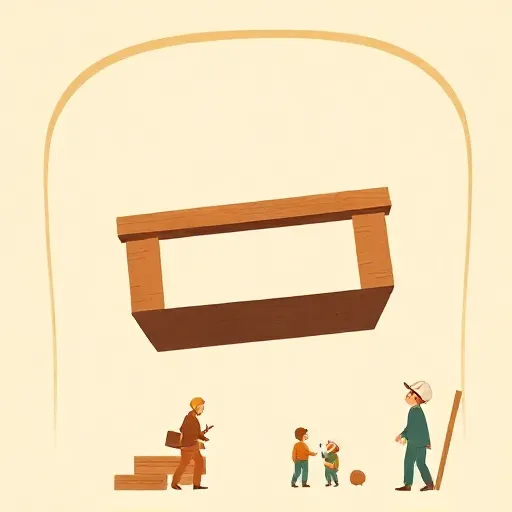
But his deeper complaint was: what is this new claim used for? If a carpenter told you “this beam supports the ceiling,” you’d expect to see it holding something. Wittgenstein looked at statements like “2^ℵ0 > ℵ0” and saw a piece of architecture “hanging in the air,” not anchored in any practice. He thought that if mathematicians focused on clarity rather than on building ever more elaborate games, they would stop being charmed by such results and simply walk away.
Why this still messes with your head

All this matters when you sit down to do your math homework. Think about it: when you solve for x in an equation, do you feel like a detective finding a hidden truth, or like a craftsperson following a well-designed recipe? Wittgenstein’s answer can feel liberating — it says math is something we build together, and we can ask why we built it that way. But it can also feel unsettling, because it challenges the idea that mathematical facts are timeless and independent of us.
You don’t have to agree with Wittgenstein. Many mathematicians and philosophers push back. They say our best scientific theories rely on math that seems to work whether we like it or not — electrons don’t care about our rules. Still, Wittgenstein forces us to look closely at what we actually do when we count, calculate, and prove. He asks whether the phrase “mathematical truth” might just be shorthand for “proved in a game we invented.”
In the end, the question from that Tuesday morning math class never quite goes away. Whether you think you’re mapping a hidden continent or constructing a mighty castle, the boards and chalk of mathematics are in your hands.
Think about it
- If all humans vanished tomorrow, would the statement “7 + 5 = 12” still be true? Why or why not?
- Imagine you invent a new board game, and later someone discovers a clever winning strategy. Did the strategy exist before it was found, or was it created in the moment of discovery?
- Does it matter whether math is invented or discovered? If it were just an invention, would it still be as useful for building bridges and predicting eclipses?