Can Numbers Actually Explain Why Things Happen?
The Strawberry Puzzle
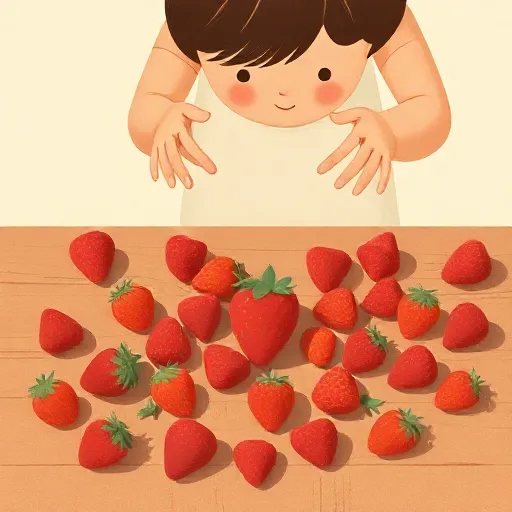
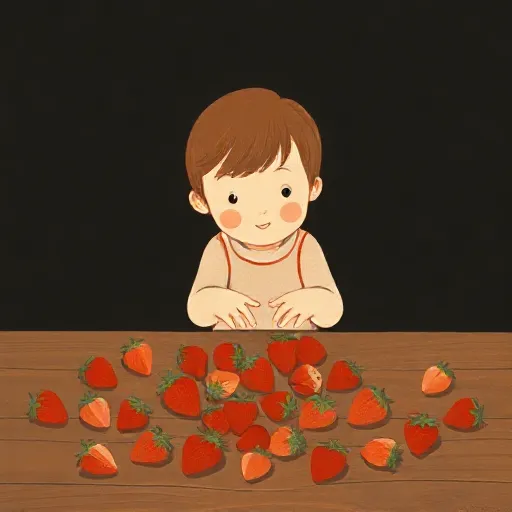
Take 23 strawberries. Try to split them evenly among three friends. No matter how you arrange them, one strawberry is left over. Why? The immediate answer seems to come from mathematics: 23 is not divisible by 3 without a remainder. But does this math fact actually explain what’s happening, or is it just a fancy way of saying “you can’t do it”?
This question isn’t only about fruit. It leads to a deep puzzle that has occupied philosophers for centuries: can mathematics itself explain the natural world, or does it only help us describe and track what’s going on? To get there, we first need to understand what we usually mean by explanation.
Why Do Things Happen? The Search for Causes
Most of the time, when we explain something, we point to a cause. The window broke because a ball hit it. The plant grew because it got water and sunlight. These are causal explanations: they tell you what made something happen. For hundreds of years, many philosophers have argued that all genuine explanation works this way. Aristotle (384–322 BCE) thought that scientific knowledge required knowing the cause of a thing. Much later, philosophers like Carl Hempel (1905–1997) said explanations are logical arguments that use laws of nature, often about causes. Wesley Salmon (1925–2001) put causes at the center, insisting that an explanation must identify the physical mechanism that brought the event about.
In causal explanations, mathematics is usually a helpful tool. It lets us describe causes precisely, like the equations that show how gravity makes Halley’s Comet return every 75 years. But on this view, the math itself is not the cause — it’s more like a language for tracking causes. The real explainers are things like forces, collisions, and energy. So, math seems to be just a servant, not the master, when it comes to understanding why the world works the way it does.
Math That Explains Without Causes

But then we meet some puzzling cases where math appears to do the explaining all by itself, without pointing to a physical cause. Take the bridges of Königsberg. In the 18th century, the city of Königsberg had seven bridges connecting four pieces of land. People wondered: could you walk a route that crosses every bridge exactly once? The mathematician Leonhard Euler proved it was impossible. His explanation didn’t involve any cause — no force, no mechanism. It relied entirely on the abstract structure of the bridge network: the pattern of connections made a single circuit mathematically out of reach.
Another famous example involves periodical cicadas, insects that spend most of their lives underground and emerge only every 13 or 17 years, depending on the species. Why these specific numbers? A widely discussed explanation is that 13 and 17 are prime numbers. Prime-numbered life cycles make it harder for predators with shorter cycles to synchronize with the cicadas’ appearances. Again, the prime numbers themselves are not a cause — they don’t push or pull on the cicadas. Yet they seem to explain the pattern in a way that a purely causal story might miss.
Other cases include the hexagonal shape of honeycomb cells (a shape that uses the least wax for a given volume) and soap films that minimize surface area. In each, the mathematics of optimization or impossibility does explanatory work that feels different from tracking a physical mechanism.
The Big Fight: Does Math Really Explain?
Philosophers are split on whether these cases count as genuine explanations. One side, led by contemporary philosopher Marc Lange, argues that they are explanations by constraint. The mathematics doesn’t cause the outcome, but it shows that the outcome had to be the way it is, given the rules. Just as a law of nature makes a falling apple inevitable, a mathematical truth can make the impossibility of splitting 23 strawberries into three equal groups inevitable. Lange says these explanations are non-causal, but they’re still real explanations.
The other side, following Salmon’s causal tradition, insists that without a cause, you don’t have a true explanation. Maths, they say, merely represents physical features. The fact that 9 × 9 = 81 can explain why you can arrange 81 stamps into a 9 by 9 array — but does it explain why you have 81 stamps in the first place? No. If we allow any math fact to count as an explanation, we risk making explanations too cheap. A critic might say the bridges case works because the geometry represents the actual layout of the city; the math itself adds nothing over and above the physical situation.
A more subtle approach uses counterfactuals: “If 23 had been divisible by 3, then we could split the strawberries.” But 23 isn’t divisible by 3, so this forces us to imagine an impossible world. Is that a fair test? Some philosophers, like Alan Baker, use such countermathematicals to argue that certain math truths make a genuine difference to the real world. Others find the whole idea of impossible worlds too mysterious to be useful.
Why It Matters: Are Numbers Real?
This debate isn’t just a game — it has huge consequences for what we think exists. One of the most exciting arguments in philosophy is the explanatory indispensability argument. It goes like this: if mathematical objects like numbers and sets are indispensable to our best scientific explanations, then we ought to believe they really exist, just as we believe in electrons and black holes. The cicada case is a prime example (pun intended): the best explanation of the life-cycle length seems to require prime numbers. So, according to this argument, we should be platonists — believing that numbers are real, abstract objects, not just marks on a page.
Opponents, called nominalists, think numbers are useful fictions. They argue that every mathematical explanation can be rewritten in purely physical terms, or that the math is just a way of representing patterns that exist in the concrete world. For instance, maybe the cicada explanation only works because the numbers correspond to actual ecological constraints; the primes themselves aren’t doing any extra work. The fight over mathematical explanation thus becomes a fight over the very nature of reality: is the world built on a hidden mathematical scaffolding, or is math just a brilliant human invention?
The Puzzle on Your Table
So next time you’re dividing strawberries with your friends and end up with a leftover, you’re not just face-to-face with a math problem — you’re staring at a philosophical question. Does the number 23 really explain why you can’t split them evenly, or is it just a convenient label? The answer might change how you see everything, from the honey on your toast to the orbit of a planet.
Understanding this debate helps you appreciate what scientists and mathematicians are really doing. When they claim to explain a phenomenon, are they uncovering causes, or are they revealing necessary constraints that couldn’t be otherwise? And if numbers truly explain the world, then every time you do math, you’re touching something as real as the ground beneath your feet. That’s a pretty big reason to care about what’s left over on your plate.
Think about it
- Could the number 3 ever be the reason why something happens in the real world, or is it always just a human invention we use to describe things?
- If a scientist used a complicated math equation to predict an earthquake, would that be enough to explain the earthquake, or would we still need to know about the moving tectonic plates?
- Imagine a world where the rules of math were different — say, 2 + 2 equaled 5. Could such a world exist? Why or why not?