Why Do Things Happen? Aristotle’s Four Hidden Causes
It’s Raining, But Why?
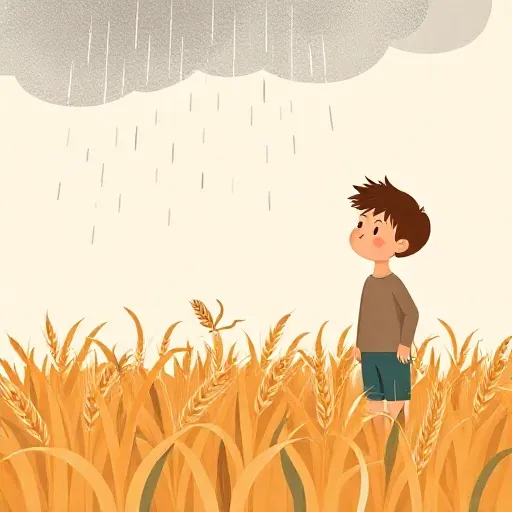
You and a friend are standing at the edge of a field when a sudden shower soaks the ground. “Look,” your friend says, “it’s raining so the corn will grow.” Is that really why it rains? In ancient Greece, a philosopher named Aristotle (384–322 BCE) would have shaken his head. He spent his life asking why questions — and he thought that most people answer them far too simply.
Aristotle noticed that the earlier thinkers who came before him, like Empedocles (c. 490–430 BCE), fumbled when they tried to explain natural events. They might say that rain falls because warm air cools into water, or that teeth grow sharp by some blind material push. But they never had a complete picture. To Aristotle, they were like untrained boxers who occasionally land a punch by luck. They lacked a real theory of causality — a map of all the different ways a thing can have a cause.
So Aristotle built one. He said that a full answer to “why?” can involve not one cause but four, each playing a different role. And if you skip any of them, your explanation is incomplete.
The Four Hidden Answers
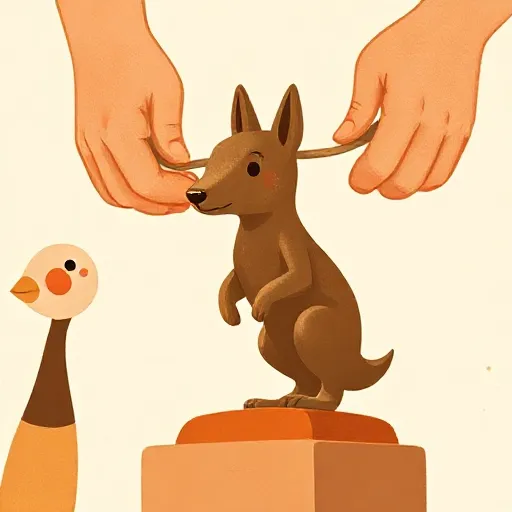
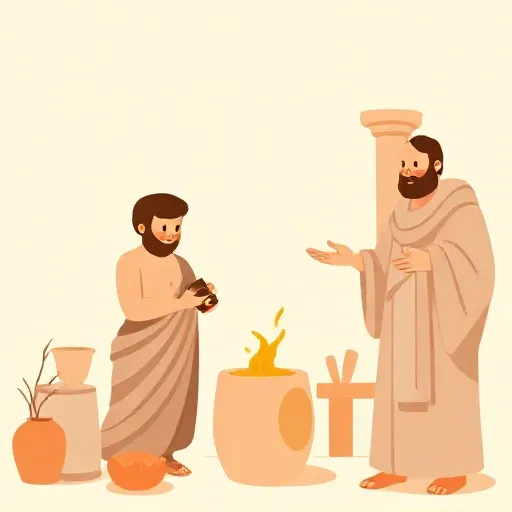
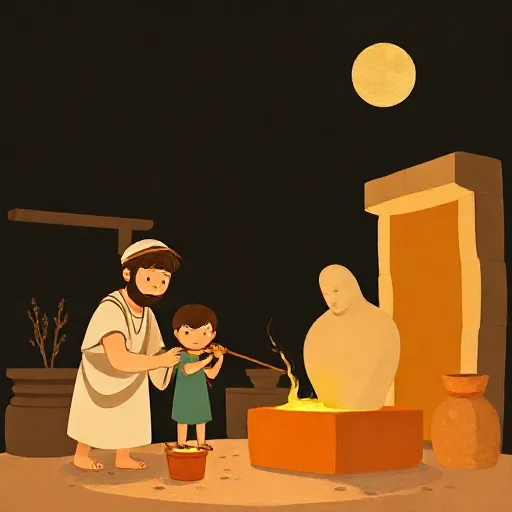
To see how this works, step into a bronze sculptor’s workshop. A craftsman is making a statue of a horse. If you ask, “Why does this statue exist?” Aristotle would offer not just one reply but four, each calling out a different kind of cause.
First, the material cause: what the statue is made out of. Here that’s the bronze that was melted and poured into a mold. Without bronze, no statue.
Second, the formal cause: the shape or design that makes the statue what it is. It’s the arrangement of bronze into the form of a horse, not just any lump of metal. Aristotle called this the essence — the “what-it-is-to-be” a horse statue.
Third, the efficient cause: the source of the change that brought the statue into being. You might think this is the sculptor. But Aristotle pointed deeper: what really explains the statue is the art of bronze-casting that the sculptor has mastered. The knowledge of how to cast bronze is what drives the process — not the sculptor’s personal wishes or a label like “daughter of some other person.” Those are just coincidental causes, extra descriptions that don’t actually explain the statue’s creation.
Fourth, the final cause: the purpose or goal for which the statue is made. The sculptor makes a model, prepares a mold, melts bronze — all for the sake of the finished statue. The end result explains why each earlier step happened the way it did. Aristotle called this end the telos.
These four kinds of cause can work together to give a full explanation. And notice something important: the final cause doesn’t need to involve anyone’s personal desires or intentions. The art itself is directed toward an end. This means we can use the same pattern to understand natural things like teeth or rain — without pretending nature has a mind.
The Teeth That Know Their Job
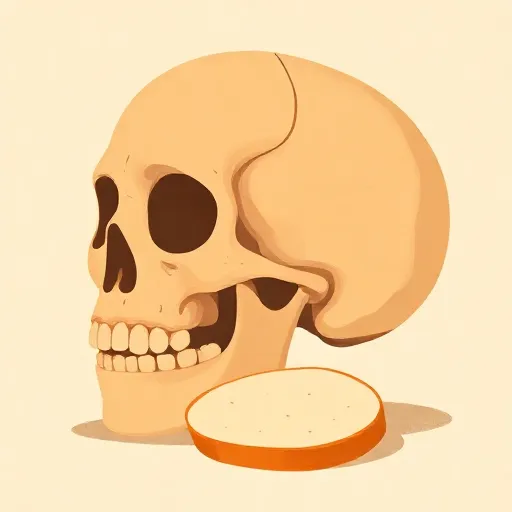
Not everyone in Aristotle’s time agreed that purposes belong in nature. Some said that everything happens by material necessity: warm air rises and cools, rain falls, and if that happens to water the crops, well, that’s just a lucky coincidence. The same goes for your teeth. By sheer material processes, front teeth happen to grow sharp and back teeth happen to grow flat. If that arrangement helps you bite and chew, it’s a happy accident — nothing more.
Aristotle challenged this view with a simple observation: the pattern is too regular to be a coincidence. Again and again, animals grow sharp incisors in front and broad molars in back, and that arrangement suits their needs perfectly. If it were just accident, we would expect frequent mismatches — teeth that don’t work for the animal’s diet. But we don’t see that. The regularity calls for an explanation, and “luck” is no explanation at all.
So Aristotle introduced the final cause as the missing piece: teeth grow the way they do for the sake of biting and chewing — that is, for something that is good for the animal. The goal isn’t just any last step; he insisted that only the best outcome counts as a true end. In a living thing, something is good either because the animal cannot survive without it, or because the animal thrives with it. The final cause thus answers why the parts are formed in a reliable, beneficial way.
Material processes still matter. The teeth won’t grow unless the right materials are available. But those materials are hypothetically necessary — necessary if the end is to be achieved. The purpose sets the requirement for which materials must come together. The material cause depends on the final cause.
It Takes a Human to Make a Human
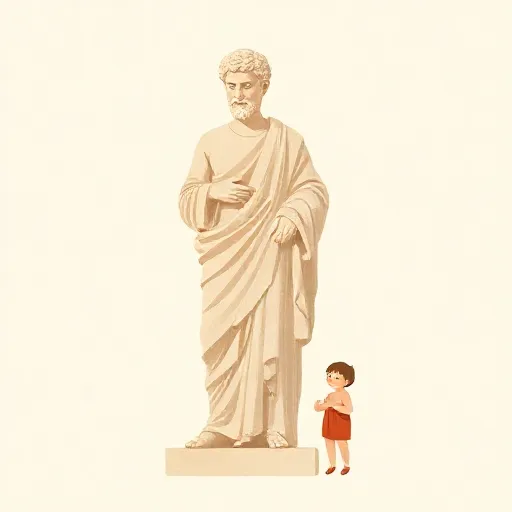
When you ask why a baby grows into an adult, Aristotle would again look to the end. He had a favorite slogan: it takes a human being to generate a human being. On the surface, that just says human parents produce human children. But the idea runs deeper.
A fully developed human being is not only the final outcome of growth; it is also the form that guides the entire process. In Aristotle’s biology, the father supplies the form (the human blueprint) and the mother supplies the matter. The formal cause and the final cause often coincide: what it is to be a human is the same as the fully realized state that development aims at. This full-grown human is also, in a sense, the ultimate efficient cause — because only an already finished human being can set the process in motion.
Aristotle criticized Empedocles for getting this backward. Empedocles said the human spine is divided into vertebrae because of the twisting and turning that happens in the womb. That, Aristotle argued, explains nothing. Why does the fetus twist at all? And why are the vertebrae arranged in a way that lets us stand and bend? To answer those questions, you have to look at the role the spine plays in the life a fully grown human being. The end product — the complete human — has explanatory priority over the steps along the way. Generation happens for the sake of the finished creature; the grown human is not just a byproduct of the building process.
This doesn’t mean the efficient cause is useless. But its explanatory power depends on the final cause. We understand the steps only when we know what they are for.
When an Eclipse Has No Purpose
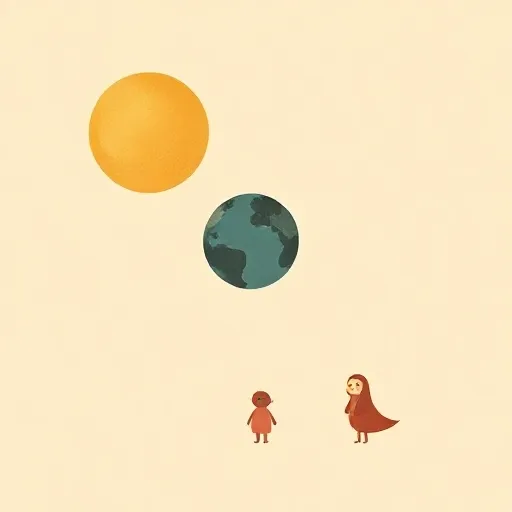
You might now think that Aristotle stuck a final cause on everything. He didn’t. Some events happen without any goal. His favorite example was a lunar eclipse.
When the moon goes dark, it isn’t trying to achieve something. It is simply deprived of light because the Earth moves directly between it and the sun. The efficient cause is the interposition of the Earth — that’s the most precise description of what makes the eclipse happen. The moon doesn’t “acquire” a shape in that moment, so there is no formal cause in the way a statue has one. And strictly speaking, the eclipse doesn’t have its own material cause; instead, the moon serves as the subject that undergoes the privation of light. No final cause is needed, or even present.
This shows that Aristotle’s four-cause framework isn’t a rigid checklist you have to force onto every phenomenon. Instead, it’s a set of tools you reach for when an explanation demands them. In the study of living things, final causes are central. In the study of heavenly phenomena, they may be absent. The job of the natural scientist is to figure out which kinds of causes the case requires.
Why This Still Matters

More than two thousand years after Aristotle, scientists still debate whether nature contains real purposes. Biologists speak of the “function” of a heart or a wing, but some argue that’s only a convenient shorthand — really, those parts are just the result of random variation and selection by the environment. Others reply that you can’t fully explain a living thing without talking about what it is for. The deep question Aristotle raised — can there be genuine goal-directedness in a world made of matter? — hasn’t been settled.
But Aristotle’s four causes aren’t just for scientists. Every day, you apply a little of each without realizing it. When you ask why your phone exists, you might mention its glass screen (material), its sleek shape (form), the factory workers (efficient), and the purpose it serves — communication, games, videos (final). When you puzzle over why a friend acted a certain way, you look for the goal behind the behavior.
Aristotle’s lesson is that “why?” is a bigger question than it first appears. By learning to spot the different layers of an answer, you’re thinking like a philosopher — looking not just for the nearest cause, but for the full story.
Think about it
- If a bird builds a nest that keeps its eggs safe, does that mean nests have a purpose? Or could it be that only the birds who built better nests survived by luck, with no purpose involved at all?
- Take an ordinary object — a pencil, a chair, a bicycle. Which of the four causes would you give if someone asked you why it exists? Could you give all four? Which one seems most important?
- Can earthquakes or volcanic eruptions have a purpose in the same way that teeth do, or are they more like a lunar eclipse? How would you decide?