Did We Invent Geometry, or Did We Discover It?
A Strange Kind of Math Class
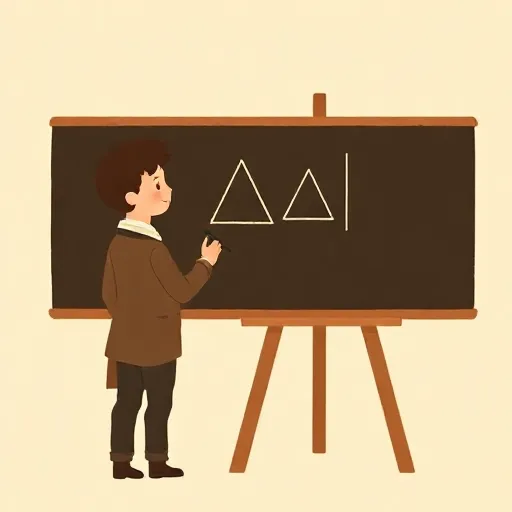
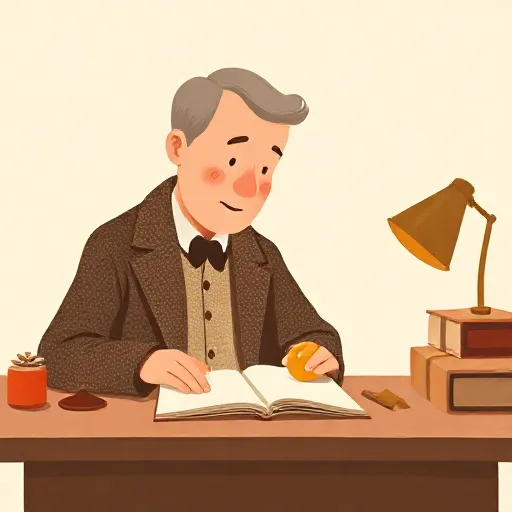
In 1880 a young French mathematician named Henri Poincaré (1854–1912) solved a difficult problem about differential equations. To do it, he used a geometry most people thought was just a mathematical toy. In this strange geometry the angles of a triangle don’t add up to 180 degrees, and lines that start out parallel can eventually cross. Almost nobody believed that kind of space could have anything to do with the real world. But Poincaré began to wonder: what if the geometry we learn in school isn’t the only possible one—and what if it isn’t forced on us by nature?
When Our Rules Failed
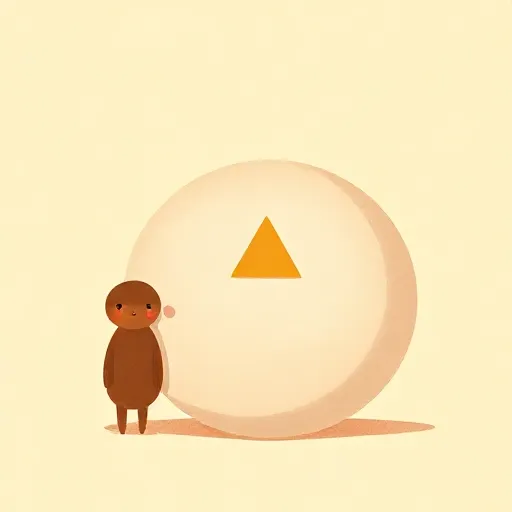
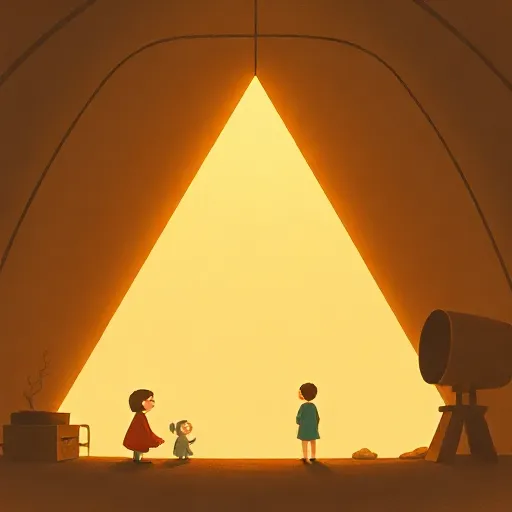
For two thousand years everyone assumed that the rules of Euclidean geometry—straight lines, flat planes, triangles always giving 180 degrees—were the unshakable truth about space. The philosopher Immanuel Kant (1724–1804) had even argued that the Euclidean shape of space was built into the human mind, something we can’t experience without. Then, in the 19th century, mathematicians like Lobachevsky, Bolyai, and Riemann showed they could build perfectly consistent non‑Euclidean geometries where the old rules didn’t hold. Suddenly there were rival descriptions of how lines and shapes could behave. The question was no longer “Which geometry is right?” but “How could we ever tell, since we can’t step outside space to measure it?”
The Geometry Choice: Not Fact, Not Fiction
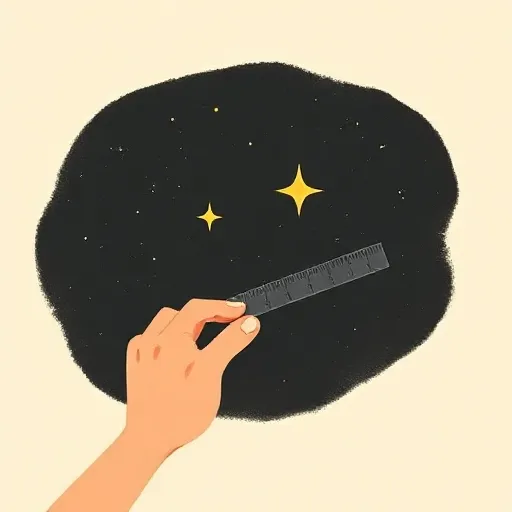
Poincaré gave an answer that startled both scientists and philosophers. He argued that the geometry of physical space is a convention—a rule we decide to use, not a hidden fact waiting to be discovered. Your first reaction might be, “But we can test it with experiments!” Poincaré said no. Every measurement you make involves physical objects: rulers, light rays, your own movements. You always observe how those things behave, not space itself. If an experiment didn’t match Euclidean geometry, you could adjust the physics you believe—for example, change your ideas about how rulers bend or how light travels—and keep the geometry. So no single experiment can force you to pick one geometry over another.
But Poincaré didn’t say we just flip a coin. The choice is guided by experience. We pick the geometry that makes the laws of nature as simple as possible. There are only three geometries that allow you to move a rigid object around without squashing it: the flat geometry of Euclid, the sphere‑like geometry of Riemann, and the saddle‑shaped geometry of Lobachevsky. Of these, Euclidean geometry is the one where translations—sliding an object straight from one place to another—are interchangeable, meaning the equations stay short and tidy. For that reason, it’s the most comfortable. We choose it not because it’s “true,” but because it’s useful.
A Tower of Ideas
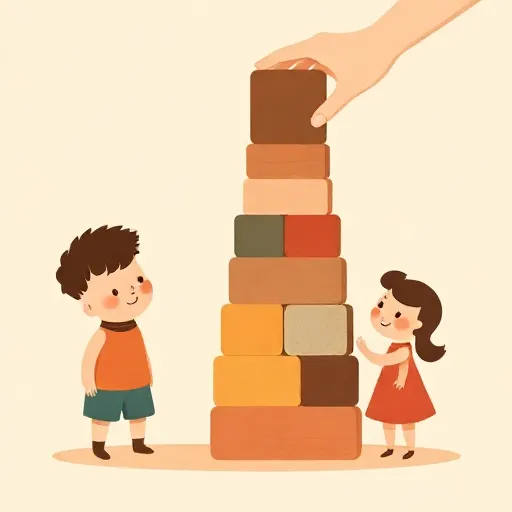
Poincaré saw the sciences as a stack of building blocks. At the bottom lies arithmetic, where mathematical induction lets us make claims about all numbers without having to check them one by one. On top of arithmetic sits geometry, then classical mechanics, then experimental physics. Each level needs the earlier ones—you can’t measure an orbit without geometry, and you can’t do geometry without adding and multiplying. But each level also adds something new that the lower one doesn’t contain.
He sorted the “new things” into different kinds of hypotheses. A verifiable hypothesis is a testable guess that experiments can confirm. An indifferent hypothesis is an invisible mechanism we imagine to help us think—like picturing heat as the jiggling of tiny molecules. A natural hypothesis is a deep assumption we can’t check directly, such as the belief that very distant objects barely affect what’s happening here. And an apparent hypothesis is a disguised definition: it looks like a claim about the world, but it’s really a rule we’ve agreed to follow. Geometry, Poincaré said, is the greatest example of that last type.
What Science Really Captures: Relationships, Not Things
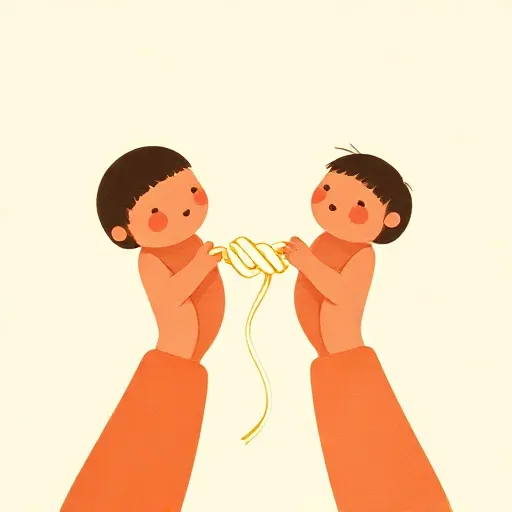
So if geometry is a human choice, does that mean science is just a game? Poincaré didn’t think so. He believed that while we never reach the secret inner stuff of the world, we do capture something real: the relationships between things. Over time, scientific theories change. The model of the atom from 1900 looks very different from today’s model. But certain relations—like the mathematical shape of a law that connects force, mass, and acceleration—stay put across all those makeovers. Poincaré called this the “something” that survives. It’s not the furniture of the universe; it’s the pattern of the furniture. That view later became known as structural realism.
This middle path lets Poincaré reject two extremes. He says no to the pure rationalist who thinks all truth can be deduced from the mind alone. He also says no to the hard empiricist who thinks every piece of science comes straight from the senses. Science is a blend: experience hands us a tangled heap of facts; we organize it with choices, conventions, and deep assumptions that can’t be proven by staring at the facts.
Why It Matters Every Time You Choose a Map
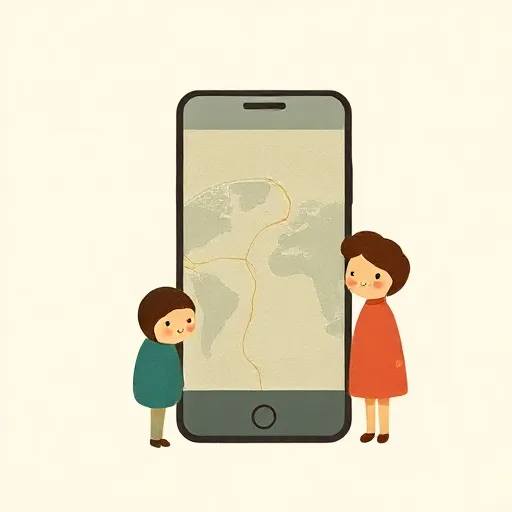
You use Poincaré’s idea all the time, maybe without noticing. When you open a map on your phone, you’re looking at a flat picture of a round planet. The map’s projection is a geometric choice: preserve shapes but stretch distances, or preserve areas but bend the lines. There’s no single “true” flat map of the Earth—only trade‑offs that make some jobs easier. The same logic shows up whenever you set up a coordinate system in a video game, or when you graph data and choose which axis means what. In all these cases, you aren’t discovering a pre‑existing layout; you’re building a useful one.
Poincaré’s big insight was that this isn’t a weakness of science—it’s how science works. By treating some things as conventions, we free ourselves to look for the deeper patterns that don’t change when our rulebook does. Einstein later said that Poincaré was right about geometry “in principle,” even though Einstein’s own general relativity would recast space and time in a way Poincaré didn’t fully reach. The conversation about where facts stop and choices begin is still alive, and it started with a mathematician who refused to pretend that geometry was either a gift from heaven or a snapshot of a hidden world.
Think about it
- If you could travel to a mysterious bubble universe where every physical experiment gave exactly the same results as here, could you ever prove whether its space was curved or flat? Why or why not?
- Is it better for science to have fixed rules—like geometry—that we never question, or should we keep open the possibility that even the most basic rules are just practical guesses?
- Can you think of something in your everyday life that works like a convention—something everyone treats as a settled fact, but might really be a choice made for convenience?