Is Math About Things or About How They Connect?
A Strange New Language for Mathematics
The year is 1945. Two American mathematicians, Samuel Eilenberg and Saunders Mac Lane, are hunched over a problem that feels irresistible. They aren’t trying to solve an equation or prove a theorem about triangles. They are trying to figure out why some mathematical maps feel oddly right, almost as if they were meant to be. The answer they produced — which they called category theory — didn’t just tidy up a corner of math. It launched a quiet revolution.
Before Eilenberg and Mac Lane, mathematicians mostly thought about objects: numbers, shapes, sets. The new idea was to stop staring at the things and start following the arrows between them. The arrows, called morphisms, are what really carry the story. And that shift of attention turned out to be like flipping on a light in a dark room.
What Is a Category? Forget the Things, Follow the Arrows

A category isn’t as scary as it sounds. Think of it as a network. You have a bunch of objects — these could be sets, spaces, or even logical statements. And you have morphisms, which are arrows pointing from one object to another. The arrows follow two simple rules.
First, arrows can be composed. If an arrow goes from A to B and another goes from B to C, there must be a composite arrow from A to C. Second, every object has a special lazy arrow, the identity morphism, which just points to itself. When you compose anything with an identity arrow, you get the original arrow back — like adding zero or multiplying by one.
Mathematicians quickly realized that hundreds of familiar structures fit this pattern. The category Set has sets as objects and functions between them as arrows. The category Grp has groups as objects and group homomorphisms as arrows. The same recipe works for topological spaces, vector spaces, and even for logical proofs, where objects are formulas and arrows are deductions. In each case, the objects get all the attention from outsiders, but the category forces you to notice the moves that keep the structure intact.
Functors: When Whole Worlds Get Mapped to Each Other

Once you have categories, the natural next step is to ask: how do you move between them? The answer is a functor. A functor is a map from one category to another. It sends every object of the first category to an object of the second, and every arrow to an arrow, while preserving two things: composition (the image of a composite is the composite of the images) and identity arrows.
Eilenberg and Mac Lane actually invented categories mainly to have a solid home for functors. The best-known example is the forgetful functor from Grp to Set. Groups are sets with extra structure — an operation, inverses, an identity element. The forgetful functor simply throws away that extra structure and hands you back the bare set. It’s like taking a car and returning only its list of parts, ignoring how they fit together. In the other direction, a free functor builds the most economical structure you can add to a bare set, turning it into a free group, a free vector space, or another free object. Functors let you travel between mathematical universes without getting lost.
Why “Natural” Matters: The Birth of a Big Idea
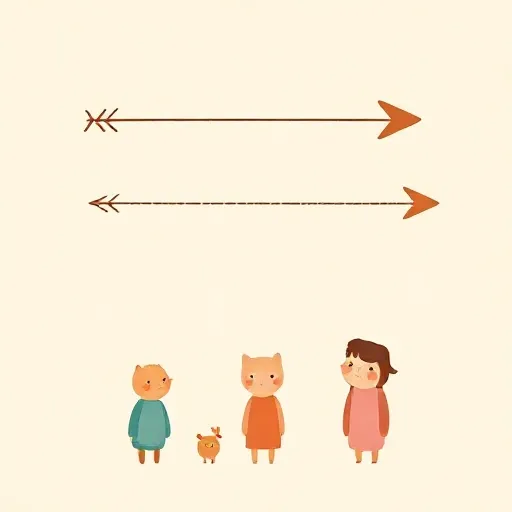
Eilenberg and Mac Lane’s deepest obsession wasn’t functors themselves — it was comparing them. Given two functors between the same categories, can you turn one smoothly into the other? The tool they developed is called a natural transformation.
Think of it this way: a functor paints one picture of a category inside another; a second functor paints a different picture. A natural transformation draws a family of arrows inside the target category that translate the first picture into the second, object by object, in a way that respects every arrow of the original category. The whole family has to fit together perfectly, like a zipper. That’s why the original paper was titled “General Theory of Natural Equivalences.” The feeling of naturality that mathematicians had sensed for years finally got a precise, algebraic definition. It turned out that many core constructions — from the way a set can be turned into a free group, to the way a space remembers its shape through homotopy — can be expressed as natural transformations.
Adjoints: The Art of Perfect Partners

Some functors feel like they were made for each other. Take the forgetful functor that turns a group into a set and the free functor that turns a set into a free group. They are not inverses — you can’t go there and back without changing what you have. But there is a precise way in which they are the best possible partners. This special bond is called an adjunction, and the two functors are adjoint to each other.
Here’s the intuition. Suppose you have a set X and you want to turn it into a group in the most general, no-extra-rules way. The free group F(X) does exactly that. And if you have a group G and you want to peer at its pure collection of elements, the forgetful functor U(G) does exactly that. The adjunction says: for any way of mapping the set X into some group’s underlying set, there is a unique group homomorphism from F(X) to that group that makes everything match up. In other words, F(X) is the best solution to the problem of “inserting” X into a group.
The same pattern shows up all over mathematics. Adjoints pop up whenever you have a construction of something “free” and something “forgetting.” They appear in logic too: the universal quantifier “for all” and the existential quantifier “there exists” can be seen as adjoints to a simple substitution operation. Mathematicians and logicians now treat adjoint functors as the skeleton key that unlocks the unity behind seemingly unrelated ideas.
A New Foundation? When Objects Are Just Nodes in a Network
Category theory was originally just a convenient language. But by the 1960s, thinkers like Alexandre Grothendieck and William Lawvere began to suspect it could be much more — perhaps a whole new foundation for mathematics, a rival to set theory.
In set theory, everything is built out of sets and the membership relation. An object is what it is made of. In category theory, an object is defined by its relationships — the arrows that go into it and the arrows that come out of it. You can’t even speak of the natural numbers as a single definite thing; there is a concept of natural numbers, and many different copies of that concept can live in different categories, each sharing the same pattern of connections. This is often called structuralism: the view that mathematical objects are positions in a structure, not independently existing bricks.
Not everyone agrees this is enough. Some philosophers worry that if objects have no inner nature and are only defined by their links to other objects, we lose a solid grip on what they are. They ask: can a web of relations hold itself up without anything at the center? Category theorists reply that a web is precisely the wrong metaphor — there is no center, and the whole network floats. It’s like a subway map: the important thing isn’t the exact geographic location of each station, but how the stations connect. The map works perfectly without telling you the color of the ticket hall.
This debate is still alive, and it has spilled into computer science, physics, and philosophy. Topos theory, a powerful outgrowth of category theory, lets mathematicians treat logic and geometry as two sides of the same coin. Some physicists even use higher-dimensional categories to try to understand the fabric of space and time.
Why This Changes How You See the World

You don’t need to study algebraic topology for category theory to touch your life. Whenever you use a social network link to find a friend-of-a-friend, whenever you navigate a game world where objects are defined by what they can do rather than what they look like, you’re slipping into a categorical frame of mind. The London Underground map, all straight lines and even spacing, doesn’t show real distances — it shows connections. That deliberate distortion is a categorical trick: it says relationships trump geography.
Category theory suggests a deep shift in attitude. Instead of asking “What is it made of?” you start asking “How does it relate to everything else?” That question works for numbers, for spaces, and maybe even for people. After all, much of who you are depends on the pattern of your friendships, your conversations, your place in a family tree. The old idea that a thing’s essence sits locked inside it might be only half the story. The other half is out there, woven into the network.
Think about it
- If a video game character were defined entirely by which other characters it could interact with and what moves it could make — with no “inside” description — would you still say the character is a real thing? Why or why not?
- Could a person’s identity ever be fully captured by a list of their relationships to other people? What might be left out?
- Imagine you redesigned your school so that subjects were described only by which other subjects they led to (math opens doors to physics, which opens doors to engineering). How would that change what it means to learn something?