
Can Numbers Touch the Real World? Hermann Weyl’s Impossible Question
The Boy Who Read Kant and Found a Problem

Hermann Weyl (1885–1955) was a German mathematician who never stopped asking what reality was made of. As a schoolboy, he read Immanuel Kant’s Critique of Pure Reason and was thrilled by the idea that space and time are not “out there” in the world by themselves — they are the way our minds shape experience. It felt like a secret code unlocking the universe.
But when Weyl arrived at university, he read a new book by David Hilbert that described geometry as a system of pure symbols and rules. Suddenly Kant’s picture looked shaky. If geometry could be built without relying on intuition, then maybe space and time were not just forms of the mind. Weyl felt his old beliefs crumble. He spent the rest of his life trying to answer a single deep question: can we ever touch reality directly, or do we only ever build it out of symbols?
What Is a Continuum? The Pencil That Refused to Be Made of Points

Early in his career, Weyl tackled one of the oldest puzzles in mathematics: the continuum — a smooth, unbroken stretch, like the flow of time or a line in space. Most mathematicians followed Georg Cantor and Richard Dedekind in building the continuum out of infinitely many individual points, like beads on a string. But Weyl thought this was nonsense.
He gave a famous example. Imagine watching a pencil lie on a table for a while. You experience a continuous stretch of time — the pencil is simply there, not flickering from one numbered instant to the next. If someone claimed that new moments of time could be inserted into your experience — moments in which the pencil might pop up near a distant star — you would laugh. Real experience does not work like that. For Weyl, the continuum was a fluid, living “flow,” not a collection of frozen points. Intuition — the direct, first‑person feel of things — tells you that the continuum cannot be chopped up without losing its soul. Yet mathematics, with its precise numbers, could only ever build a pale imitation of it.
Intuition versus the Game of Symbols: Weyl between Two Giants
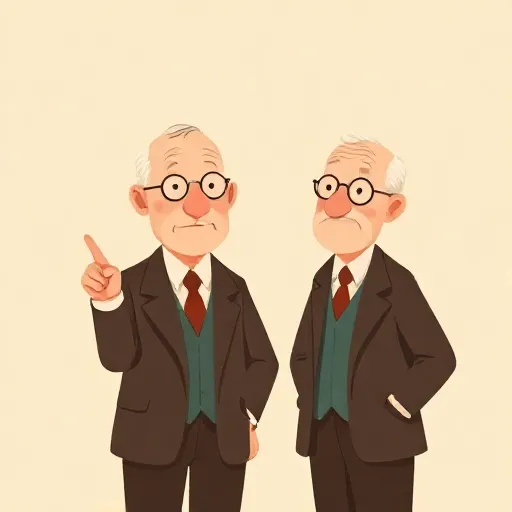
This struggle pushed Weyl into the fiercest debate of early 20th‑century mathematics. On one side stood L. E. J. Brouwer (1881–1966), the leader of intuitionism. Brouwer taught that mathematics is a creation of the human mind. The continuum is not an object we find; it is an ongoing, unfinished process — a “medium of free becoming.” For Brouwer, a statement like “every number is either positive or not” is not automatically true, because some numbers are still under construction.
Weyl was deeply attracted to this view. He even wrote that Brouwer’s theory “came closest, of all mathematical approaches, to capturing the essence of the continuum.” But on the other side stood Weyl’s own mentor, David Hilbert (1862–1943). Hilbert believed that if you set up precise rules for manipulating symbols, you could prove that mathematics is safe from contradictions. He called his program formalism. The important thing was not what the symbols meant in your head, but that they never produced a contradiction, like proving 1 = 0.
Weyl saw the power of both. Intuitionism felt true to experience; formalism promised to save the magnificent structure of modern mathematics. He famously compared them: intuitionism is idealism — reducing truth to what the mind can directly grasp. Formalism tries to “jump over its own shadow” and represent reality with pure symbols. Weyl concluded that if mathematics is just for its own sake, intuitionism is enough. But mathematics also serves the natural sciences, which deal with a world beyond our immediate grasp. For that, the symbol‑game of formalism is necessary.
The World as a Shared Dream: Ego, Thou, and the Outside

Weyl’s philosophy of mathematics grew out of a deeper vision of reality. He believed that the most certain thing is your own Ego — the “I” that experiences. You have direct, intuitive access to your own thoughts. From that, you recognize another person as a Thou — another conscious being like yourself. But the objective world, the physical universe of atoms and galaxies, is not directly known. It is radically outside, opaque. You must postulate its existence and then build a picture of it using symbolic construction.
Symbolic construction means this: you notice what stays the same when you change your viewpoint. Those invariant features become properties of the “things themselves.” Then you replace those things with symbols — numbers, equations — that you can manipulate without time corrupting them. In the end, science describes which symbolic patterns match the data of your consciousness. For Weyl, the claim that there is a world of real objects out there is not a fact you prove; it is an act of belief that makes science possible.
This idea made him comfortable with the bizarre findings of quantum mechanics. If the objective world can only be reached through symbols, then it is no surprise that electrons do not behave like tiny billiard balls. They are, at bottom, patterns in a symbolic theory that works.
Symmetry, Gauge, and the Force That Keeps You Whole

In physics, Weyl made a discovery that still shapes how we understand the universe. While trying to unify gravity with electromagnetism, he invented the idea of gauge invariance. Originally, he thought that the length of a measuring rod might depend on where it had traveled, and that this path‑dependence could explain electric forces. Einstein quickly objected: your clocks would keep different times depending on their history, but real clocks do not do that.
Weyl defended his idea for years, but when quantum mechanics arrived, he transformed it. In 1929, he noticed that Dirac’s equation for the electron had a remarkable property: you could multiply the electron’s wave function by a phase factor — a pure, complex number that acts like a local rotation — and the physics stayed the same, provided you also shifted the electromagnetic field in a precisely matching way. The electron’s “gauge” could change from point to point, and nature still worked perfectly. Weyl saw that this explained why electric charge is conserved, and that the electromagnetic force was the companion required by the symmetry of matter itself. Today, gauge invariance is the foundation of all the known forces except gravity; the Standard Model of particle physics is built on it.
Why It Still Matters: The Invisible Rules of Reality

Weyl never stopped circling back to his central question. Mathematics is an act of creative imagination, but it also seems to uncover real, hidden structures in the world. The gauge principle he perfected is not just a trick; it is a law that nature obeys — a law that lives in the symbolic constructions we build. Weyl’s life shows that the boundary between what we invent and what we discover is blurry. He taught us that the tools we use to describe reality are never a perfect mirror, yet they are the best we have. The symbols are not the thing itself, but they are our only way of touching the real.
Think about it
- If we can only know the world through symbols and models, how do we decide what is real and what is just a convenient story?
- Could there be a true fact about the universe that no system of symbols — no language or mathematics — can ever capture?
- Weyl thought that the continuum of time cannot be built out of separate instants. If you think about your own stream of consciousness, does it feel like a smooth flow, or like a series of snapshots?