Why Do Mathematicians Believe Things They Can’t Prove?
A Guess That Wouldn’t Go Away

In 1742, a German mathematician named Christian Goldbach wrote a letter to Leonhard Euler, the most brilliant mathematician of the time. He had noticed something odd. Every even number bigger than 2 could be written as the sum of two prime numbers. 4 is 2+2, 6 is 3+3, 8 is 3+5, 10 is 3+7 or 5+5. It worked for every even number he tried. But he could not prove it must always work. Euler couldn’t, either. That guess — now called Goldbach’s Conjecture — has been tested with computers up to four quintillion (a 4 followed by eighteen zeros). No exceptions have ever been found. Almost every mathematician believes it’s true, but no one has a deductive proof.
That is strange. Normally we think mathematics is all about proof. A proof starts from axioms — simple, accepted starting points — and moves step by step using rules of logic. If each step must follow from the last, the result is absolutely certain. The philosopher Imre Lakatos (1922–1974) called this the “deductivist style” and complained it makes math look like a museum of perfect, frozen truths. It hides the messy detective work that goes into discovering ideas. But the real puzzle isn’t how people find conjectures — it’s whether you can ever be justified in believing a mathematical claim without a deductive proof. Goldbach’s Conjecture shows mathematicians do exactly that.
The Problem with Counting Cases
Mathematicians have checked Goldbach’s hypothesis on case after case. That’s enumerative induction: if something holds for every example you look at, you start to believe it holds for all. In science, you’d call that strong evidence. In math, it’s not so simple. The nineteenth-century philosopher Gottlob Frege (1848–1925) pointed out that numbers aren’t like physical things. In a row of pebbles, position doesn’t change a pebble’s nature. But in the number line, where a number sits can change everything. Two numbers next to each other might be a square and a cube, a prime and a composite, or a number with completely different factors. So a pattern that holds for the first trillion numbers might suddenly fail at a number just a little bigger.
What’s more, all the numbers we can actually test are tiny — not just small but what one philosopher called minute. A minute number is one you can write down in ordinary decimal notation, even with exponents. Some mathematical properties behave perfectly for all minute numbers and then flip. We know, for example, that the estimate for how many primes there are below a given n eventually becomes an underestimate. The first number where that happens is mind-bogglingly large, but it’s out there.
There’s a twist, though. For Goldbach’s Conjecture, the hardest cases may actually be the small ones. Mathematicians noticed that the Goldbach partition function — the number of different ways an even number can be split into two primes — tends to grow as the numbers get bigger. For a number around 100,000, there are always at least 500 ways to write it as a sum of two primes. That suggests small numbers are the toughest tests, so looking at them is looking at the roughest ground. If the conjecture were false, you’d expect a counterexample early. The sample is biased, but it’s biased against the conjecture. That gives a bit more rational support, even though it’s not a deductive proof.
When Mathematics Leaves the Armchair
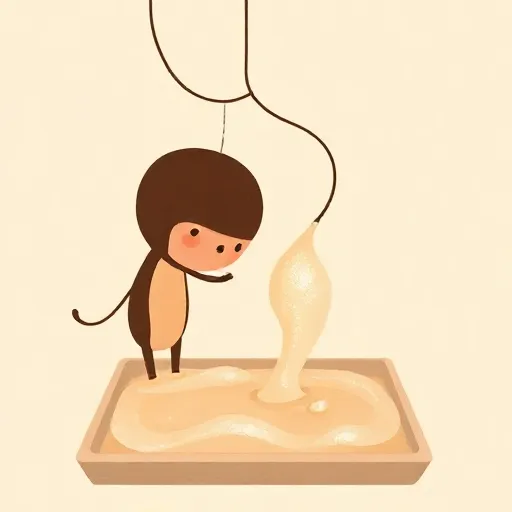
Sometimes mathematicians act a lot like scientists — they run experiments. In the nineteenth century, a Belgian physicist named Joseph Plateau wanted to understand how a soap film stretches across a wire frame. He dipped wire shapes into soap solutions and observed the delicate surfaces that formed. The surfaces naturally took the shape that minimized area. Those shapes gave mathematicians answers to minimum-surface problems that were too hard to solve with pure reasoning alone. This is experimental mathematics: using physical manipulation to discover and even justify mathematical truths.
Today, experiments mostly happen on computers. A mathematician might program a computer to search millions of cases or to test a conjecture like “every non-rational algebraic number is absolutely normal” (roughly, that its decimal expansion never favors one digit over the others). By checking thousands of digits of cube roots and square roots and running statistical tests, researchers gathered evidence for the guess. Yet critics note that gathering data this way is not a proof. The tricky question is whether these experiments ever play a role in justification — showing that a statement is likely to be true — rather than just in the fun part of finding things out in the first place.
The Machine That Saw Too Much
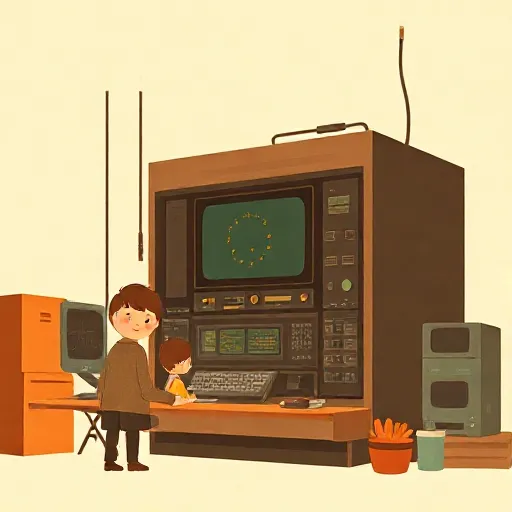
In 1976, Kenneth Appel and Wolfgang Haken announced a proof of the Four Color Theorem — the claim that any map can be colored with only four colors so that no two adjacent regions share the same color. Their proof relied on a computer checking thousands of individual map configurations. A human could spend many lifetimes and still not verify every calculation. The philosopher Thomas Tymoczko argued that this changes the kind of knowledge we have. A traditional proof is something a person can survey — you can hold the whole chain of reasoning in your mind. Because no single person can survey the computer’s work, our belief in the theorem depends on trusting the machine and its programming. That makes it more like empirical knowledge, not the perfect, mind-inspectable certainty we expect from deduction.
Not everyone agrees. Some say the computer is just a tool, like a very fast assistant. The method is still a deductive chain, even if our access to the result isn’t a pure act of mental intuition. Still, this example shows how even within deduction, practical reliance on computers can blur the line between purely rational proof and trust in our physical equipment.
Trusting Randomness

A few mathematical methods are deliberately probabilistic. They don’t claim to prove a result with perfect certainty. Instead, they show the result is true with an extremely high probability. In the 1990s, Leonard Adleman solved a version of the Traveling Salesman problem — the challenge of finding a route through a network of cities that visits each exactly once — using strands of DNA. The DNA was engineered so that different sequences coded for different paths. If a long enough strand appeared at the end, a path existed. If no long strand appeared, there probably wasn’t a solution. But there’s always a tiny chance the experiment missed the magic strand. The reasoning is framed in probabilities, not certainties.
A more common example is checking whether a number is prime. There are tests that pick a handful of random “witness” numbers smaller than the target. If none of them reveal a certain telltale property, the target is almost certainly prime. You can drive the chance of error down as low as you like, but never to zero.
Most mathematicians reject probabilistic methods as final justification. Don Fallis, a philosopher of mathematics, has argued this rejection is unfair — the features that worry people about probability-based proofs also show up in some conventional proofs the community accepts. But others reply that mathematics aims at more than bare truth; it wants explanation. A probabilistic test can tell you that a number is prime without helping you understand why. In special cases, though — like finding a counterexample to a famous conjecture — maybe the community would accept a high-probability result if the truth was too important to ignore.
Why Spotting Patterns Matters for You
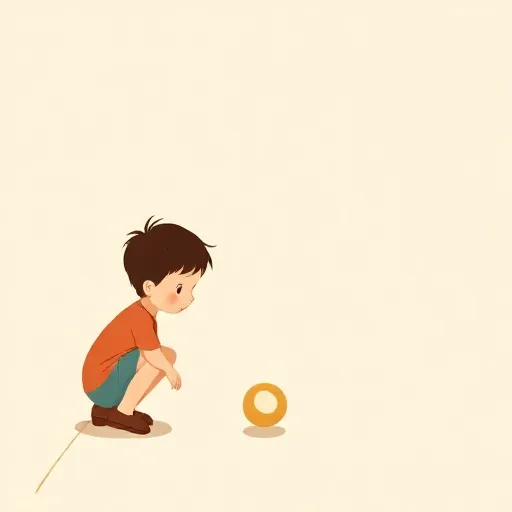
You don’t always wait for a deductive argument before you trust something. If you’ve dropped a ball a hundred times and watched it fall each time, you believe it will fall the next time. You’re using a kind of enumerative induction, just like the mathematicians who trust Goldbach’s Conjecture. The fact that even math, the kingdom of pure proof, leans on such reasoning suggests something deep: the line between “soft” everyday thinking and “hard” mathematical certainty is blurrier than we pretend.
Mathematicians haven’t stopped hunting for proofs. A proof is still the gold standard. But the presence of non-deductive methods — induction, computer experiments, probabilistic checks — shows that mathematics is a human activity, full of working guesses, practical trade-offs, and trust in patterns. Those patterns are everywhere, from your kitchen table to the farthest reaches of the number line.
Think about it
- If you notice a pattern that works every time you test it, is it reasonable to believe it without a proof? Can you think of a time when a trusted pattern fooled you?
- If a computer tells you a theorem is true but no human can check all the steps, should you feel just as certain as you would after reading a traditional proof? Why or why not?
- Imagine a medical test that is 99.9% reliable but never 100%. If math itself can’t always give 100% certainty, does it make sense to demand absolute proof in every part of life?