Can You Measure Goodness with a Math Equation?
What If the World Played by Different Rules?

In 1325, a young teacher named Richard Kilvington (c. 1302–1361) at Oxford University asked his students to imagine a completely empty space—a void, and to think about whether a stone dropped there would fall and how fast.
Most scholars at the time followed the ancient Greek thinker Aristotle. They would have said a void is impossible, so the question makes no sense. But Kilvington disagreed. He thought that as long as an idea does not involve a flat-out contradiction, you can explore it with logic and math. He called this way of thinking secundum imaginationem—reasoning “according to imagination.” A thought experiment is allowed, he said, as long as it is logically possible. Even if it could never happen in real life, you could still figure out what would follow from the rules of nature.
Kilvington also used a second tool: ceteris paribus, a Latin phrase meaning “all else being equal.” He would change only one or two factors in a situation and keep the rest the same, so he could see exactly what caused what. For example, suppose you are painting a wall white. If nothing else changes except the amount of paint, how does the whiteness grow over time?
These two habits—imagining hypothetical worlds and isolating single causes—let Kilvington search for hidden contradictions in ancient theories. He believed mathematics was the sharpest knife in the kitchen. With it, you could carve up puzzles about motion, infinity, goodness, and even God.
When Does a Change Begin? An Infinite Puzzle
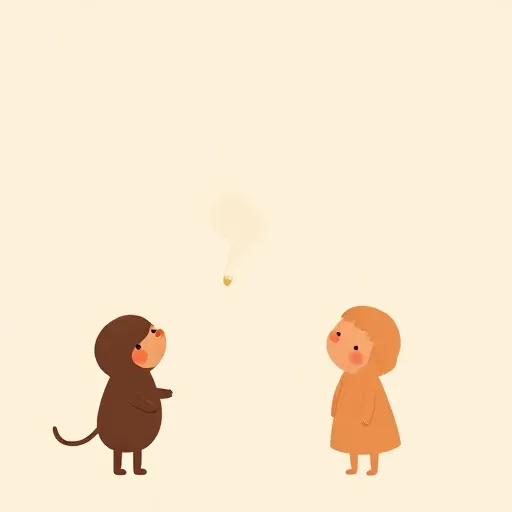
Take the whitening wall again. At what exact moment does it stop being its old shade and start becoming lighter? Kilvington applied his mathematical lens and concluded: there is no first instant of change.
Think about it this way. Whiteness, like heat or speed, is a continuous quality. It does not jump from one degree to another the way a digital clock flips to the next minute. Instead, it slides. So if you try to freeze time and point to “the very first moment” the wall is whiter, you will always find a tiny earlier moment that is already lighter. There is only a last instant before the change begins and a first instant after it finishes. This idea falls under what Kilvington called measurement by limits—figuring out the boundaries of processes.
He used three kinds of limit questions. When does something begin or end? (He called that incipit/desinit.) What is the first or last instant of a continuous process? And what is the greatest or least amount a power can handle—the maximum quod sic (the largest it can do) and the minimum quod sic (the smallest it can do), along with the maximum quod non (the largest it cannot do) and the minimum quod non (the smallest it cannot do)? These limits helped him understand everything from how a fire heats a piece of iron to how a person becomes more generous.
Behind all this lay a bold claim: a continuous thing, like a line or a span of time, is made of infinitely many smaller and smaller parts. Kilvington followed the thinker William of Ockham (c. 1287–1347) in holding that any continuum contains an actually infinite number of proportional parts—halves, quarters, eighths, and so on without end. It is not just that you can keep dividing forever. The parts are already there. That set up the next puzzle: if you can have actual infinities, can you compare them?
Infinity Is Not Just Big—It’s Strange

Most people think of infinity as an endlessly big number, but Kilvington treated it as a collection that could be measured against another collection. He proved that infinite sets can be equal in multitude while being unequal in magnitude.
Imagine a line segment. It contains infinitely many proportional parts: the whole line, its half, its quarter, and so on. Now take just the right half of that line. That half also contains infinitely many proportional parts. Kilvington would say the two collections are equal “in multitude” because you can pair each part of the whole line with a matching part of the half line—a one-to-one correspondence, like matching left shoes with right shoes. But the whole line is twice as long as the half line, so they are unequal in magnitude. Infinity, in other words, lets you be equal and unequal in different respects at the same time.
He even argued that not all infinities are the same kind. Created infinities, like the parts of a line or the moments of time, are only “relatively” infinite. God alone is absolutely infinite, and God’s infinity is qualitatively different—infinitely more perfect. So infinity was not just a math toy for Kilvington. It was a way to think about the difference between the world and its Creator.
That same mathematical daring pushed him to rewrite a famous rule of motion.
The Equation That Fixed Aristotle’s Mistake

For centuries, students learned Aristotle’s law of motion: speed is proportional to the force pushing something divided by the resistance holding it back. If you double the push, you double the speed—at least that’s how it was usually read. But Kilvington spotted a problem.
He carefully read the works of the Greek mathematician Euclid, who had defined operations on ratios. Euclid’s rule says that when you double a ratio, you actually square the fraction. For example, doubling the ratio 2 : 1 (which is 2) gives you 4 : 1 (2 squared, which is 4), not 4 : 2 (which would be 2 : 1 again). But Aristotle’s rule seemed to multiply the ratio by two, not square it. Kilvington realized you cannot have it both ways. If you keep force the same but halve the resistance, according to Aristotle speed doubles. But if you then double the force and keep the resistance halved, a simple multiplication would conflict with Euclid’s math.
Kilvington proposed a new rule. Speed, he said, corresponds to the proportion of the moving force to the resisting force, but not in a simple multiplication. If you double the force while keeping the resistance the same, the speed does double—but only in that particular case. If you also change the weight of the object, you have to take square roots and other operations to find the correct ratio. His approach gave a consistent mathematical description of slow and fast motions.
Crucially, he saw that any force greater than resistance—no matter how tiny the advantage—is enough to start and keep motion going. A feather of extra push over friction gets the crate sliding, even if it crawls at a speed less than one. Aristotle’s rule had struggled to explain very slow motion; Kilvington’s calculus made it natural. He tested the rule on cases like a stone falling through a vacuum, where there is no external resistance, and even on the Earth itself, imagining it might move toward its center of gravity.
Thomas Bradwardine (c. 1300–1349) soon used Kilvington’s arguments to write the famous On the Ratios of Velocities in Motions, and a whole school of “Oxford Calculators” carried the torch. Mathematics became the language of physics.
Measuring Good and Evil Like Heat and Cold
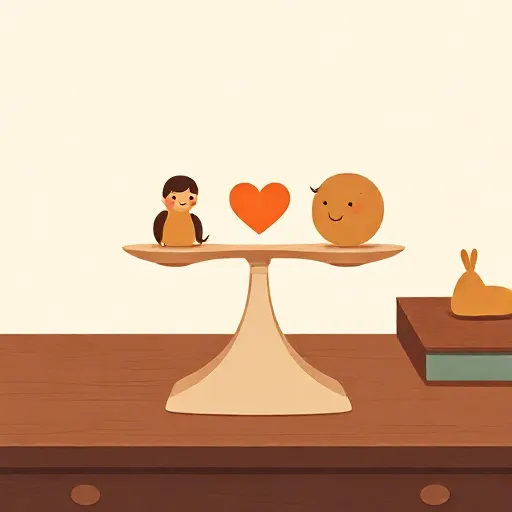
Kilvington did not stop at stones and walls. He took the same measuring tools into the realm of human character. In his lectures on Aristotle’s Nicomachean Ethics, he treated virtues and vices as real things (res)—not just ideas in your head, but qualities that can increase and decrease.
Courage, generosity, and justice, he said, belong to the same kind of reality as heat or whiteness. So you can speak of someone being a little braver or a lot more generous, and you can track that change over time. When you perform generous acts, your generosity grows. When you act greedily, your generosity shrinks. Kilvington used latitudes of forms—a way of measuring how intense a quality is—to chart these moral highs and lows.
But there is a limit, and it is different for each person. You can become more generous, but you cannot become infinitely generous. There is no single Platonic ideal of perfect generosity that fits everyone. Each human being has an extrinsic boundary: the highest degree of virtue they can reach, given their own nature and experiences. So you are not failing if you are not the bravest person in history; you are working toward your own maximum.
Prudence, the habit of making wise choices, became his centerpiece. Kilvington distinguished two kinds of moral knowledge. Scientia necessaria is universal knowledge, like “honesty is good”—you might learn it from a book. Scientia ad utrumlibet is particular, experience-based knowledge—knowing what to do right now, in this messy situation. He argued that only the second kind makes you truly prudent. A world-class logician who knows all the universal rules can still blunder into terrible choices. A prudent person, shaped by real-life moral practice, knows what to do when the rules do not spell it out.
Kilvington also dug into free will. He claimed the will is always active. It never switches off. Even when you are doing nothing, your will is in a state of non-velle (“not-willing”), which is a real act, not a pause. At every moment you can velle (will something), nolle (will-against something), or non-velle. The will is absolutely free when it comes to its own internal choices. With enough prudence, you move swiftly from hesitation to a good decision. But without prudence, you stay stuck in not-willing, unable to pick a path.
So morality was not, for Kilvington, a foggy realm of feelings. It was a measurable, dynamic process—one you could map with limits, degrees, and the tug-of-war between force and resistance inside your own soul.
Why a 14th-Century Calculator Still Inspires

You might never have heard of Richard Kilvington before, but his fingerprints are all over the way we think today. He belonged to a group of thinkers now called the Oxford Calculators, who turned physical questions into mathematical problems. Their work marked the beginning of a shift away from purely verbal explanations in science—moving toward formulas, measurements, and testable predictions. Later thinkers like Galileo built on these habits.
Kilvington’s method of asking “what if” under carefully controlled, imagined conditions is not so different from how a modern scientist designs a computer simulation or a thought experiment. His puzzles about infinity still echo in mathematics, from debates about the sizes of infinite sets to the weirdness of one-to-one correspondence. And his idea that morality can be studied with the same intellectual rigor as physics remains a live option in ethics. You do not have to agree with him to find his questions gripping.
The next time you wonder “How much?”—how much force, how much time, how much courage—you are stepping into Kilvington’s shoes. The next time you imagine an impossible situation just to see what might follow, you are doing secundum imaginationem. The world did not become too complicated for math; Kilvington believed math was made for exactly this kind of tangled, beautiful world.
Think about it
- If you could measure how brave you are, could you ever reach a point where you could not become braver? Or would there always be a new challenge?
- Imagine a door that is stuck because the wind outside presses it shut with exactly the same force you can push with. Kilvington would say that a tiny extra breath of effort would start it opening. Do you think that holds in real life? What counts as “tiny enough”?
- If your will is always active, even when you are doing nothing, does that mean you never truly take a break from making choices? What would that feel like in everyday moments?