
Can a Set Belong to Itself? The Puzzle That Nearly Broke Math
A Letter That Shook Mathematics

In June 1902, the British philosopher Bertrand Russell (1872–1970) sat down and wrote a short letter to the German logician Gottlob Frege (1848–1925). Frege had just spent years building a meticulous system that would reduce all of arithmetic to pure logic. Russell, who admired Frege’s work, had found a tiny crack in the foundations—a crack that made the whole grand structure collapse.
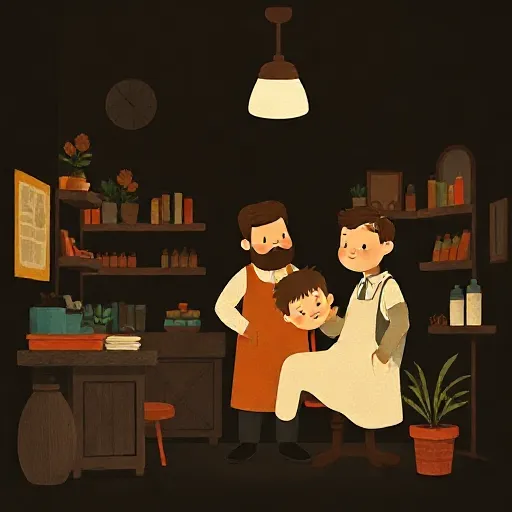
Russell’s letter described a simple puzzle. Imagine a small town with a barber who shaves everyone who does not shave themselves, and only those people. So, does the barber shave himself? If he does, then according to the rule he doesn’t (because he only shaves those who don’t shave themselves). If he doesn’t, then he must (because he shaves everyone who doesn’t shave themselves). Either way, you land in a contradiction. The barber can neither shave nor not shave himself.
Now replace “shaves” with “contains as a member.” Instead of a barber, imagine a set R that contains all sets that do not contain themselves. Does R belong to itself? If it does, then by its own definition it should not contain itself. If it doesn’t, then by definition it should contain itself. This is Russell’s paradox, and it showed that the most natural idea about what a set is leads straight to a logical explosion.
What’s a Set, and Why Do We Even Need Them?

To see why Russell’s letter was so devastating, you need to know what sets were supposed to do. A set is simply a collection of things. The set of your socks, the set of prime numbers, the set of all planets in the solar system—each is a set. Around the late 1800s, mathematicians realized that almost every mathematical object could be built out of sets.
The mathematician Richard Dedekind (1831–1916) showed how to define real numbers (all the numbers on the number line, including irrationals like π and √2) using sets of rational numbers (fractions). He imagined a “cut” that splits the rationals into two groups: those less than the target number and those greater than or equal to it. That cut is a pair of sets, and the real number is identified with that pair. The definition works perfectly—as long as you trust sets.
Frege and Russell went even further and built the natural numbers (0, 1, 2, …) out of sets. The number 3, for example, was the set of all sets that have exactly three members. Starting from the empty set (0), you could build every counting number as a set. So the entire staircase of mathematics—from counting to calculus—could rest on the single idea of a set.
The Naïve Idea That Almost Worked
The simplest picture of sets says: for any property you can describe, there is a set containing exactly the things with that property. If you say “red things,” you get the set of all red things. If you say “prime numbers,” you get the set of all primes. This is called the axiom of comprehension. It sounds harmless. In the late 19th century, it was the working assumption behind Frege’s and Cantor’s systems.
But Russell’s paradox shows it can’t be right. The property “x does not belong to x” seems perfectly clear—just like “x is red.” Yet trying to collect all sets that satisfy it leads to a contradiction. The set R can’t exist without breaking the rules of logic. The axiom of comprehension, so innocent-looking, allows a monster.
Other paradoxes reinforced the worry. Georg Cantor (1845–1918), the founder of set theory, had shown that the set of all subsets of any set is always strictly bigger than the set itself (this is Cantor’s theorem). But what about the set of all sets? If the “set of all sets” existed, its power set would have to be bigger than itself—impossible. Around 1900, it became clear that the naïve approach to sets was dangerously broken.
Zermelo’s Fix: Building Sets Step by Step

In 1908, Ernst Zermelo (1871–1953) proposed a new set of rules that tamed the paradoxes. His system, later refined by Abraham Fraenkel (1891–1965) and others into ZFC (Zermelo-Fraenkel set theory with the Axiom of Choice), is still the standard foundation for mathematics.
The central image of ZFC is the cumulative hierarchy. Start with the empty set at stage 0. At stage 1, you collect all subsets of the empty set (that’s just the empty set and nothing else). At each next stage, you add all subsets of the sets you already have. The levels climb up forever, building larger and larger sets. There is no final “top” stage with a set of all sets.
Instead of the dangerous axiom of comprehension, Zermelo introduced the axiom of separation. You can’t collect all objects with a property out of thin air. You can only take an already existing set and carve out the elements that satisfy a property. The Russell monster R would require the universal set of all sets—and in ZFC, that doesn’t exist. The paradox vanishes.
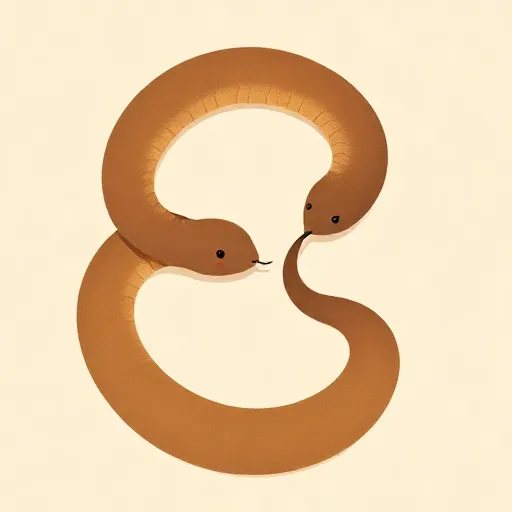
The axiom of foundation adds another guardrail: no set can contain itself, directly or indirectly. Membership always flows downward through the stages, so there is no looping snake of self-containment.
Other Ways to Tame the Paradox

ZFC isn’t the only answer. Russell himself proposed type theory, which prevents paradox by labeling every object with a “type” level. A set can only collect objects from the level just below it, so a set can never ask whether it belongs to itself—the question is simply not allowed by the grammar. Type theory is still alive today, especially in computer science.
Another approach, developed by John von Neumann (1903–1957) and others, separates sets from proper classes. Sets are collections that can be members of other collections. Proper classes (like the class of all sets) are too big to be treated as ordinary members. The Russell class exists as a proper class, but you can’t put it inside another set, so the paradox doesn’t bite.
Then there is Quine’s New Foundations (NF), which allows a universal set but restricts comprehension in a different, trickier way: only definitions that can be “typed” in a certain sense are allowed. NF has its own strange beauty, but ZFC remains the most widely used.
Why This Matters in Your Own Life

When you add two numbers on your phone or watch a computer render a 3D game, you are unknowingly relying on the fact that mathematicians patched the set-theoretic hull a century ago. Without a consistent foundation, the math that lets you send texts, fly planes, or predict the weather could be full of hidden contradictions.
But the deeper reason to care is that Russell’s paradox teaches you to be careful about self-reference. A rule that refers to itself can tie logic into a knot. You see echoes of this puzzle when you ask, “Is the statement ‘this statement is false’ true or false?” or when you design a computer program that tries to check its own code. The solution Zermelo and others found—build things one layer at a time, never looping back—is a trick that works far beyond mathematics.
Think about it
- Can you think of a situation in everyday life where a rule that applies to itself would cause a contradiction?
- If a friend claimed that the set of all sets that you can imagine does exist, how would you explain why it’s a problem?
- Do you think it matters whether numbers are “really” built out of sets, or is it just a useful way to make math consistent?