
Can You Pick Without a Rule? The Surprising Power of a Choice
A Young Mathematician’s Risky Rule

It is 1904. A German mathematician named Ernst Zermelo (1871–1953) sits in his study in Göttingen. He wants to prove something bold: that every set, no matter how large or tangled, can be lined up in a neat sequence from first to last — even an infinite set. This property is called a well‑ordering, and Zermelo believes it is the key to comparing sizes of infinite collections.
But his proof hits a wall. He needs to reach into an endless collection of non‑empty sets and pull out one element from each — all at the same time. The sets are not numbered; there is no obvious rule for which element to pick. Still, Zermelo writes down a new axiom that says the selection simply can be made. He calls the objects he picks a covering; today we call the rule a choice function. The Axiom of Choice (often called AC) is born.
What It Actually Means to Choose All at Once
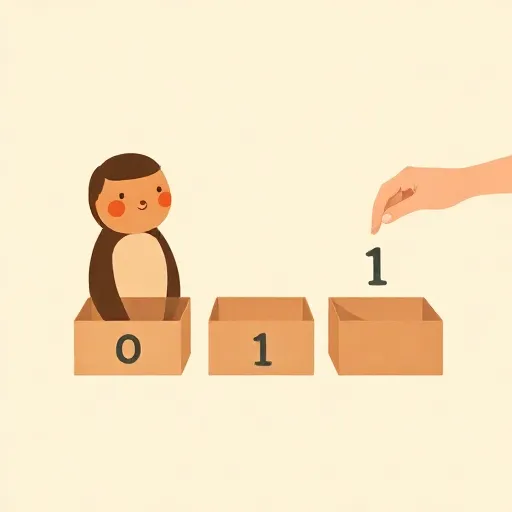
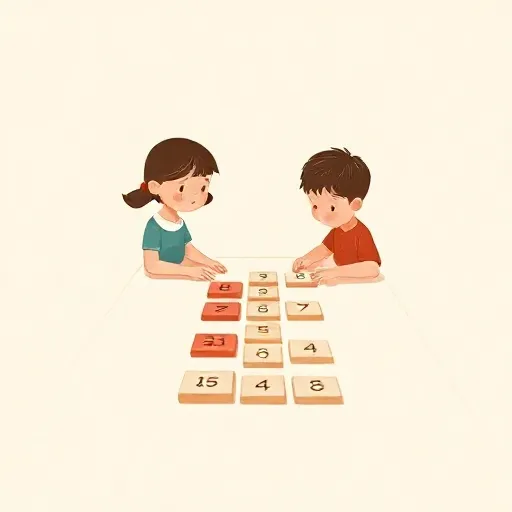
Imagine three boxes. The first holds only a red marble, the second only a blue marble, the third holds both. A choice function is simply a rule that says: from box one I take the red, from box two the blue, and from box three either the red or the blue. As long as you pick one thing from every box, you have a choice function.
Now make it harder. Suppose you have a gigantic, perhaps infinite, collection of non‑empty sets. The Axiom of Choice says there is always a choice function — a way to pick one member out of each set — even if you can’t write down a tidy rule like “take the smallest number.” It doesn’t give you a formula; it just guarantees that the picking is possible.
An easy case: if every set in your collection is a pair of real numbers, you can choose the smaller number from each pair. That’s a well‑defined choice function. But what if the collection is something messy, like all non‑empty sets of real numbers? Suddenly there’s no obvious rule. The Axiom of Choice confidently asserts that a choice function still exists, lurking somewhere.
The Fight That Shook Mathematics

Zermelo used the axiom to prove his Well‑Ordering Theorem: every set can be arranged so that each non‑empty part has a first element. This gave every set a cardinal number — a precise way to talk about its size. But mathematicians immediately pushed back.
The loudest critics were three French mathematicians: René‑Louis Baire (1874–1932), Émile Borel (1871–1956), and Henri Lebesgue (1875–1941). They argued that mathematics should be constructive: you may say an object exists only if you can write down a unique description of it. The Axiom of Choice tells you that a choice function exists, but it gives absolutely no recipe for building one. To Baire and his friends, that was not real mathematics — it was wishful thinking.
Zermelo replied in a 1908 paper. He reformulated the axiom without directly talking about “choices,” using the idea of a transversal — a set that meets every disjoint set in the family at exactly one point. That version, he wrote, had a “purely objective character.” Still, the argument was far from over. The great logician Bertrand Russell (1872–1970) called AC the Multiplicative Axiom and recognized it as essential for multiplying infinite cardinal numbers.
As the debate dragged on, more and more important theorems turned out to depend on AC. The famous mathematician David Hilbert (1862–1943) treated it as an indispensable tool, using a version of it in his proof theory. For many working mathematicians, the axiom was simply too useful to discard.
The Sphere That Doubles Itself

Even those who used AC began to squirm when Stefan Banach (1892–1945) and Alfred Tarski (1901–1983) published a shocking result in 1924. They showed that, if you accept the Axiom of Choice, you can take a solid ball, split it into a finite number of pieces, and then rearrange those pieces — just by rotating and moving them without stretching — into two solid balls each the same size as the original. One ball becomes two, with nothing added.
This is the Banach–Tarski paradox. It does not describe anything you could ever do with a physical knife, because the pieces are wildly scattered and have no measurable volume. It is a purely mathematical result. But it made many people wonder: is the Axiom of Choice playing a dangerous trick on us?
Around the same time, other strange consequences appeared. For instance, AC lets you prove that some sets of real numbers are non‑measurable — you can’t assign them a sensible length or size in the usual way. These weird outcomes deepened the suspicion that the axiom might not be entirely safe.
Gödel, Cohen, and the Great Independence

For decades, no one knew whether the Axiom of Choice could be proved or disproved from the rest of the standard Zermelo–Fraenkel (ZF) axioms for set theory. Was it true, false, or completely undecidable?
Kurt Gödel (1906–1978) settled half the question in the late 1930s. He built a special universe of constructible sets — sets that can be defined by a formula — and showed that inside that universe, AC holds. This meant that AC cannot be disproved from ZF; if ZF is consistent, adding AC will never produce a contradiction.
The other half had to wait until 1963, when Paul Cohen (1934–2007) invented the powerful forcing method. He constructed a model of ZF in which AC failed — specifically, he built a universe where a countable collection of pairs of real numbers had no choice function. That proved that AC cannot be proved from ZF either. Together, Gödel and Cohen showed that the Axiom of Choice is independent of the other axioms. You can accept it or reject it; either way, you get a workable set theory, but the two worlds are deeply different.
When Choosing Forces You to Take Sides

In 1975, the Romanian mathematician Radu Diaconescu discovered a surprising link. If you work inside a certain kind of set theory with a sensitive logic, the Axiom of Choice actually forces the law of excluded middle — the principle that for any proposition (A), either (A) is true or (A) is false. That is a logical rule, not a set‑theoretic one. How can a statement about sets force a rule about truth?
The proof is clever but understandable in spirit. Imagine you want to know whether a statement (A) stands or falls. You build two sets that are almost identical, but their tiny difference depends on (A). By applying the Axiom of Choice in the right way, you can “choose” an element that reveals which side of the fence you must stand on: if the choice works one way, (A) must be true; otherwise, not‑(A) must hold. So from a principle about picking items from sets, you get the classic and sometimes controversial logical rule.
Yet some constructive mathematicians — like Errett Bishop (1928–1983) — still use a form of AC while rejecting excluded middle. How can that be? The trick is that they reject the principle of Extensionality of Functions. Think of two ways to describe the same collection: “rational featherless biped” and “human being.” A function that counts words in the description gives 3 for the first and 2 for the second, even though the two descriptions point to the very same things. If functions on concepts can care about how a set is presented, the proof that AC forces excluded middle breaks down. So you can keep a constructive version of AC and still have a world where not every statement is forced to be true or false.
Why a Century‑Old Rule Still Matters to You

You will never meet a Banach–Tarski sphere in your kitchen. But the story of the Axiom of Choice is not just museum furniture. It shows that even the simplest‑sounding permission — “you may pick one from each” — can change the whole landscape of mathematics, create bizarre objects, and force us to decide what it means to say something really exists.
Every time you make a choice without a clear formula — which movie to watch, whether to take the umbrella — you act a little like Zermelo. You assume a selection is possible even when you can’t spell out the rule. Most of the time, that’s harmless. But when the choices are infinite, the stakes are cosmic. The Axiom of Choice reminds us that existence and definability are not the same thing. Some philosophers think that’s the deepest lesson of all.
Think about it
- Suppose you have an infinite row of shoes. You can easily pick the left shoe from each pair. Now suppose you have an infinite row of identical socks. Can you pick one sock from each pair without a rule? What would it mean to say you “can” do it?
- The Axiom of Choice proves that every set can be well‑ordered, but that order might be impossible to describe. Should mathematicians accept the existence of something they can never write down or picture?
- When you choose what to eat for breakfast, is there always a reason you pick toast over cereal, or could the choice happen without any rule — just a pure, groundless “pick”? How would that connect to the idea of a choice function that no formula can express?