
Would You Pay a Million Dollars to Flip a Coin?
A Coin-Flip Game with No Price Tag

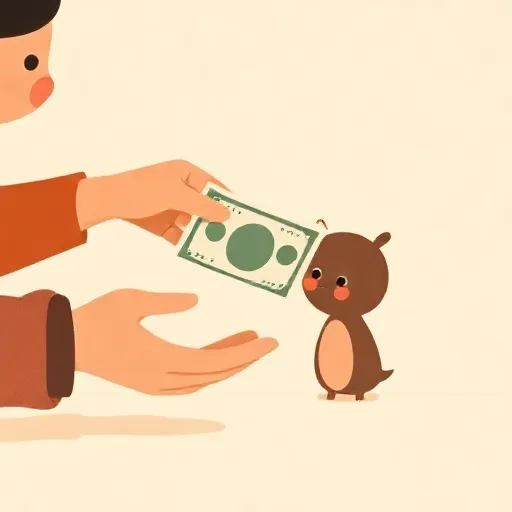
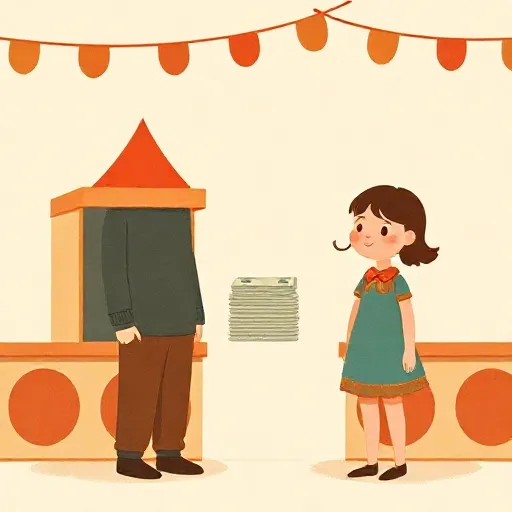
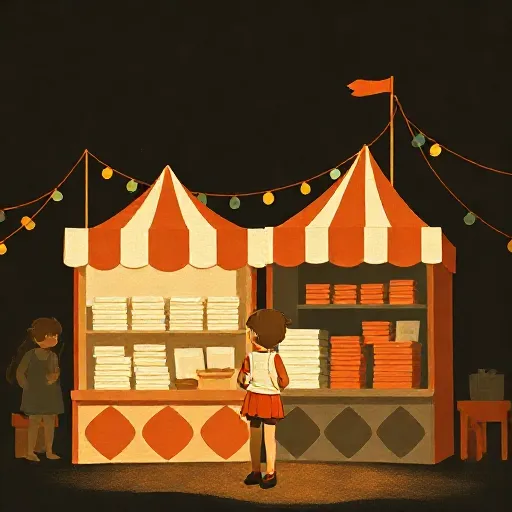
Imagine a friend offers you this bet: “I’ll flip a fair coin until it lands heads. If heads comes up on the very first toss, I’ll give you $2. If it takes two tosses (first tail, then head), you get $4. Three tosses: $8. And so on—the prize doubles every time.” She asks, “How much would you pay me to play this game?” You might think: it sounds risky, but the prize could be huge. To figure out a fair price, you could calculate the expected value—the average amount you’d win if you played thousands of times.
For this game, there’s a 1/2 chance you win $2, a 1/4 chance you win $4, a 1/8 chance you win $8, and so on. Multiply each prize by its probability and add them all up: (1/2 × 2) + (1/4 × 4) + (1/8 × 8) + … = 1 + 1 + 1 + … forever. The sum never stops—it’s infinite. Mathematically, the expected value is infinite. So a person who always chooses the option with the highest expected value should be willing to pay any price, even a million dollars, to play. But that seems absurd. No sensible person would hand over their life savings for this gamble. This is the St. Petersburg paradox, named after the journal where Daniel Bernoulli published it in 1738, but it was already puzzling thinkers years earlier.
The First Fix: How Happy Would It Make You?
The paradox first reached the wider world through a letter from the Swiss mathematician Nicolaus Bernoulli (1687–1759) to a friend in 1713. But it was Gabriel Cramér (1704–1752) and Nicolaus’s cousin Daniel Bernoulli (1700–1782) who offered a clever solution. They realized that the paradox uses money as if each dollar buys the same amount of happiness. In real life, that’s false. If you have nothing, $10 means a huge boost in your well-being. If you already have $1,000, an extra $10 barely registers. This idea is called diminishing marginal utility: the more you have, the less each additional unit matters to you.
Cramér suggested that the “moral value” (what we now call utility) of money doesn’t grow in a straight line. He proposed that the utility of money might be the square root of its amount. So $100 is only twice as useful as $25, not four times. Daniel Bernoulli went further, arguing that utility increases with the logarithm of wealth. Under either function, the expected utility of the coin-flip game becomes finite—around 2.9 “utils” for Cramér’s square root. That means a rational person would only pay a small, finite amount to play. The paradox seemed solved: the game’s infinite money expectation was a mathematical trick, because money itself doesn’t measure true value.
The Paradox Returns: Unlimited Happiness

But the story doesn’t end there. In the 20th century, philosophers noticed a flaw. If the prize is not dollars, but something that does keep adding the same amount of happiness no matter how much you have—like direct shots of pure pleasure—then the paradox comes roaring back. Imagine you could hook up to a machine that delivers exactly 2^n units of utility (the feeling of satisfaction itself), with no diminishing returns. The expected utility of this new version is again infinite. So rational choice still demands you pay any amount to play. This modern version proves that the original paradox isn’t just about money; it’s about how we handle infinite possibilities.
This version of the game is not just a fantasy. The mathematician Robert Aumann (born 1930) noted that experiences like entering a monastery, climbing a mountain, or making a world-changing discovery might produce ever-increasing satisfaction without a cap. If such things are possible, then expected utility can be infinite again.
Two Big Ideas to Tame Infinity
If infinite utility is the problem, then maybe the solution is to deny that anything can have infinite value. The economist Kenneth Arrow (1921–2017) argued that rational people must have bounded utility functions—their happiness can never go above some maximum. This idea comes from a rule in decision theory called the continuity axiom. In simple terms: if you prefer prize A to B to C, there should be some probability mix of A and C that is exactly as good as B. But if C is infinitely good, no such mix exists: you’d always prefer even a tiny chance of C over a sure B. For preferences to make sense, nothing can be infinitely valuable. So a bounded utility function cuts off the infinite tail of the game, making expected utility finite.
Another popular idea is to ignore very small probabilities. The 18th-century naturalist Georges-Louis Leclerc (Buffon, 1707–1788) said that a reasonable person treats outcomes with odds less than 1 in 10,000 as “morally impossible” and simply disregards them. In the coin-flip game, the chance of the coin showing tails 14 times in a row is less than 1 in 16,000, so if we ignore those, the expected value is finite. The contemporary philosopher Nicholas J. J. Smith refined this into the Rationally Negligible Probabilities (RNP) principle: for every lottery, there’s some probability so tiny that you don’t have to consider it. However, critics point out that this rule feels arbitrary—why 1/10,000 and not 1/9,999? And if you ignore all tiny probabilities, you might also ignore every single possible order of a shuffled deck of cards, even though one of them must occur.
Lara Buchak offers a related twist: instead of ignoring small probabilities outright, give them even less weight than usual. In her risk-weighted expected utility theory, a probability of 1/8 might be squared to 1/64 when calculating value, making rare outcomes nearly invisible. This too reins in the infinite expectation, though it has its own difficulties—like the possibility of being tricked in certain betting setups.
Even Stranger: When Better Games Aren’t Worth More
The St. Petersburg paradox has spawned even weirder puzzles. Consider the Petrograd game: it’s exactly the same, except you always get $1 more than in the original. Clearly this game is better—every single outcome gives you an extra dollar. Yet both games have infinite expected utility, so the standard rule can’t say one is worth more than the other. A defender of expected utility theory must find a way to compare games that both have infinite value.
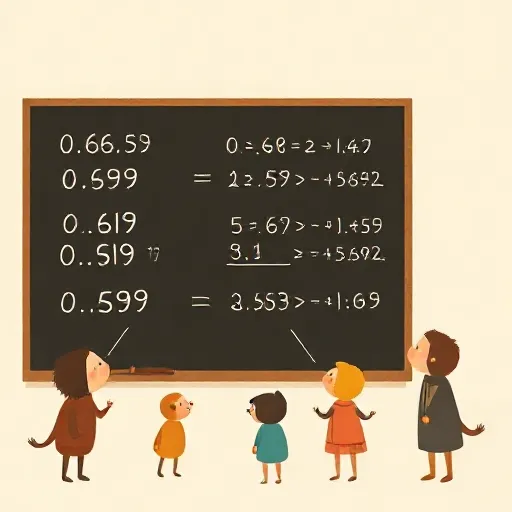
Then there’s the Pasadena game, invented by philosophers Alan Hájek and Harris Nover. Here, the coin-flip game alternates between winning and losing: if heads comes on an odd-numbered toss, you win; if on an even toss, you lose. The prize is not simply $2^n, but ($2^n)/n. When you sum the expected value in the order the coin flips happen, the series adds up to about 0.69 (the natural logarithm of 2). But mathematics tells us that if you rearrange the terms of this infinite sum, you can get any number at all—or even positive infinity or negative infinity. So what is the game’s true value? It seems to depend on the order in which you add the outcomes, which is absurd. This suggests that expected value calculations themselves might be unreliable for some infinite games.
Why Your Ice Cream Choice Might Depend on This
You might think these puzzles are just mind games for mathematicians. But the philosophers Michael Smithson and Alan Hájek have shown that the St. Petersburg paradox is “contagious.” If there’s even a tiny chance—say, one in a billion—that a simple choice like pizza vs. Chinese food could somehow lead to a St. Petersburg-style gamble, then the expected utility of that ordinary choice becomes infinite too. You could be paralyzed, unable to decide what to eat, because every option seems infinitely valuable once you factor in the tiniest possibility of something like the Pasadena game. This contagion problem means that if we can’t solve these paradoxes, the entire idea of maximizing expected utility might be in trouble.
For almost three hundred years, philosophers and economists have tried to patch the cracks. Some say we must accept that utility is bounded. Others rewrite the rules for dealing with probabilities. A few even argue that expected utility theory should be replaced by a different decision rule entirely. The debates sparked by a simple coin-flip game are far from over—and they touch every choice you make, from small purchases to life-changing gambles. The next time you flip a coin to make a decision, you’re part of a conversation that began centuries ago and still has no final answer.
Think about it
- If you were offered a bet where you had a tiny, one-in-a-trillion chance of becoming infinitely happy, would you trade everything you own for that chance? Why or why not?
- Is there ever a probability so small that you should just ignore it—like the risk of a meteor destroying your house tonight? What makes a probability “too small to matter”?
- Can you imagine two choices where you’re certain A is better than B, but you can’t put a number on how much better? How would you decide between them?