Are You Really Fair, or Just Good at Pretending?
The $10 Challenge: What Would You Do?
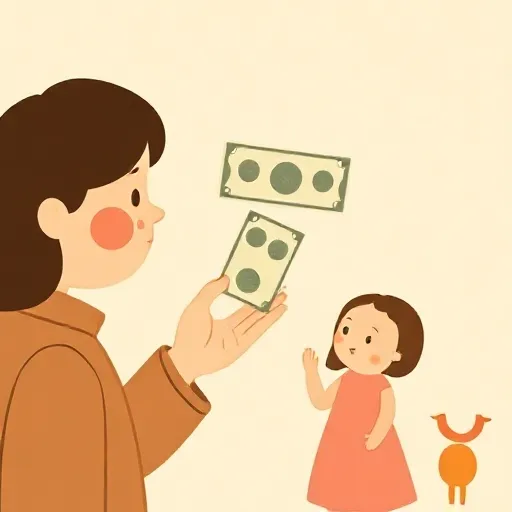
Imagine you walk into a quiet room. A researcher slides ten crisp dollar bills across the table and tells you the rules. You are the offerer. You must choose some amount — from zero to all ten dollars — to give to a stranger in the next room. That person, the responder, will then see your offer. If they accept, both of you keep what you agreed on. If they reject it, nobody gets anything. Then the game is over.
This is the ultimatum game, first studied in 1982. A simple prediction comes from standard economic thinking: offerers will keep almost everything, maybe offering just one cent. After all, from the responder’s point of view, even a penny is better than nothing. Rejecting would be irrational.
But that is not what happened. When researchers actually ran the experiment, offers clustered around an even 50/50 split. Many offerers gave away five dollars. And responders often rejected low offers — they would rather walk away with nothing than accept what they saw as unfair. Something more than pure self-interest was clearly at work.
The Hidden Loophole: When Fairness Depends on What Others Know

Early researchers thought a fairness motive explained these results. Offerers wanted to do what was just, and receivers wanted to punish injustice. But then came a wave of clever follow-up experiments that complicated the story.
Scientists tweaked what the responder knew. In some trials, the responder was told the total amount of money the offerer had to divide; in others, they were kept in the dark. If people acted mainly from a desire to be fair, this change shouldn’t matter. But it did. Offerers gave less when they knew the responder didn’t know the full picture. When the amount was $80, for example, average offers dropped from about $30 to $23 simply because the responder was uninformed.
Other twists painted the same picture. When a researcher added a label saying “this is fair,” the average offer went down, not up. It seemed many people weren’t aiming to be fair so much as to appear fair — and a label let them get away with giving less. As one team put it, “It seems that offerers only made equal offers when it was worth their while to appear fair.”
Similarly, when dictators (in the related dictator game, where the receiver has no power to reject) were given a secret “exit option” to keep $9 and never face the recipient, a sizable number took it. They chose to hide from the judgment of a stranger rather than share.
The Dictator Game: Giving Without a Threat
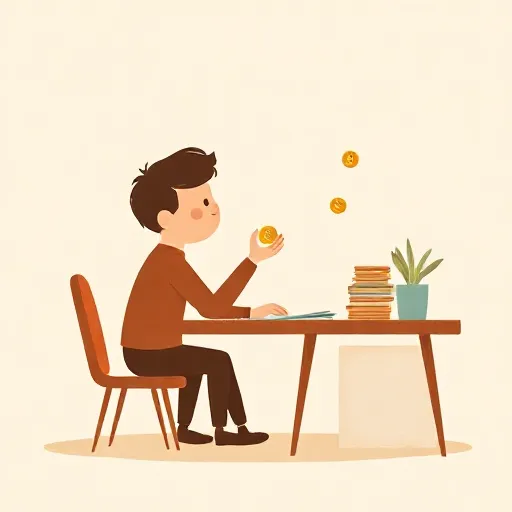
The dictator game strips away all strategic pressure. The dictator simply chooses how much of $10 to give to a passive recipient. No one will ever know the choice, and there are no comebacks. Pure self-interest would say “keep everything.” But in study after study, most people give something — on average, about 20 to 30 percent of the total.
Yet appearances again proved slippery. In one famous study by John List, participants could also take money from the other player’s starting pile. When the option to take $5 existed, virtually no one gave anything; most took. If people felt they had earned the money by doing a task beforehand, giving fell even further. The desire to look fair evaporated when they could frame the situation as simply protecting what was theirs.
Jason Dana and his colleagues added a dramatic twist: after dictators made their allocation, they could secretly exit the whole game, keep $9, and the recipient would never know the dictator game had happened. Nearly half took the exit. But when dictators knew from the start that the recipient would be entirely oblivious — receiving just an anonymous envelope with a note — they gave very little and almost no one bothered to exit. In other words, when they didn’t have to worry about disappointing anyone, the urge to seem fair vanished.
The Coin Flip Test: Are We Just Faking It?
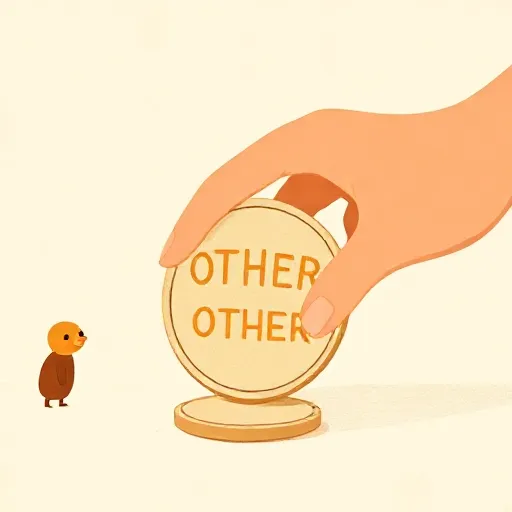
Psychologist Daniel Batson devised the most searching test of all. He asked participants to assign themselves and another person to two tasks: one came with raffle tickets for a $30 prize, the other was dull and offered nothing. Importantly, the other person would believe the assignment was made by chance, so they would never blame the participant. Most people assigned themselves the good task. But when told that flipping a coin was the fairest way to decide — and a coin was provided — nearly everyone who flipped still ended up with the good task, even when the coin must have landed against them.
This is moral hypocrisy: appearing moral to oneself and others while dodging the real cost of being moral. Batson found that those who rigged the coin rated their behavior as almost as morally right as those who genuinely followed the coin. Something in their minds let them compare their actions to the rule of fairness without feeling the full sting of breaking it.
But Batson also discovered two forces that flipped the switch toward actual fairness. First, a mirror. When participants sat facing their own reflection, the hypocrisy dropped sharply. The mirror heightened self-awareness, making the gap between their standards and their actions impossible to ignore. Second, when participants were asked to imagine themselves in the other person’s shoes — truly take their perspective — almost everyone chose the fair split. Empathy and self-awareness, it seems, can strengthen our weak fairness motives enough to beat selfish temptation.
The Mixed-Up Minds Behind the Games
So what’s the bigger picture? No single motive explains everything. Both ultimatum and dictator games suggest a messy blend of desires: wanting to do what’s right, wanting to avoid feeling guilty, wanting to appear generous, and wanting the cash. Researchers now think a multi-motive model is needed, not a simple fight between fairness and selfishness.
Individual differences matter, too. Personality psychologists have found that people who score high on honesty-humility — a trait from the HEXACO model that includes sincerity, fairness, and modesty — give significantly more in dictator games and show little difference in their offers between the ultimatum and dictator setups. They are consistently fair, regardless of whether the other person can reject the offer. Other traits like agreeableness also predict generosity.
A newer and especially promising concept is justice sensitivity. Some people are highly sensitive to witnessing injustice or benefiting from it, which leads them to share more and reject unfair offers less selfishly. Others are mainly sensitive to being a victim themselves, which predicts more selfish behavior. These measured differences show that our sense of justice is not a simple on/off switch but a set of sensitivities that shape how we treat others.
What Does This Mean for You and Me?
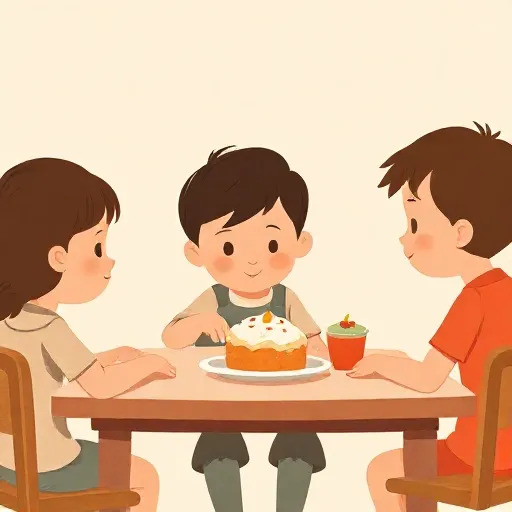
These experiments aren’t just parlor games. They mirror the everyday dilemmas we face: how much effort to share with a group project, whether to keep an extra dollar we find, or how to split a treat with a sibling. The data suggest that most of us are not thoroughly fair or thoroughly selfish. Instead, we carry a bundle of motivations — some noble, some sneaky, some self-deceiving — that get triggered differently depending on whether we’re watched, how the situation is framed, and what we think the other person expects.
This messy picture has real consequences. If we know that mirrors and empathy prompts can nudge people toward actual fairness, we might design classrooms, workplaces, and public spaces that encourage better behavior without relying on punishment alone. At the same time, the research warns us to be humble about our own virtue. Many of us, when given a chance to cut a corner while still feeling virtuous, will take it. Recognizing that tendency is the first step to outsmarting it.
Think about it
- If you knew you could split $10 with a stranger and they would never learn how much you started with, would you give anything? Does your answer change if the stranger could find out later?
- Batson’s study found that facing a mirror made people act more fairly. Should classrooms put mirrors near places where kids make choices about sharing? Why or why not?
- If some people are naturally more sensitive to injustice, should we design rules that treat everyone as if they might cut corners, or would that make fair-minded people feel distrusted?