
Is It Wrong to Profit from Someone’s Desperation?
The Hiker and the $1000 Water Bottle
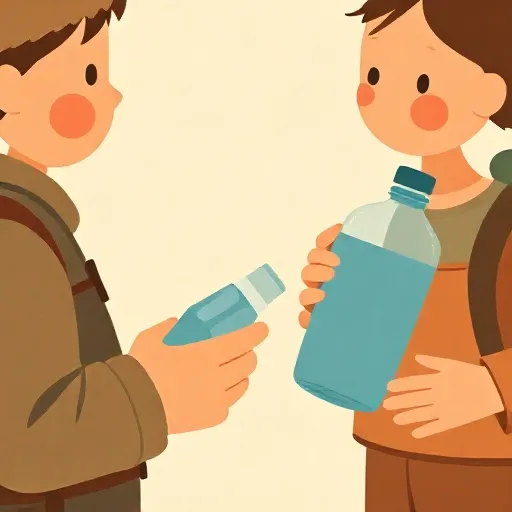
Imagine you are lost in the desert, throat so dry it hurts. A stranger appears and offers you a bottle of water. The price? One thousand dollars. You would probably pay it without thinking, because your life is worth much more. The stranger knows you are desperate. You both come away from the deal better off than before. But something feels wrong. This is the puzzle of exploitation — taking unfair advantage of someone’s vulnerability for your own gain.
Philosophers have argued about exploitation for over two thousand years. Hard cases like the desert hiker push us to ask: what makes a deal fair? Is it the price, the background situation, the attitude of the person with power, or all of these? And if a deal is exploitative but still helps the desperate person, could it be worse than not helping at all?
Ancient Roots: Just Prices and Fair Trade
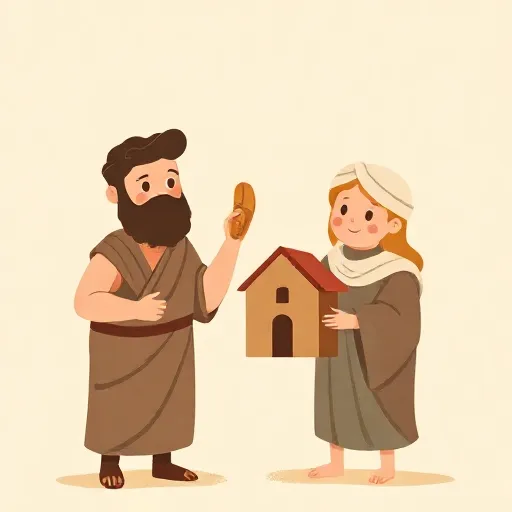
Long before modern economics, thinkers already searched for a just price — a price that is truly fair. Aristotle (384–322 BCE) suggested that a just exchange should be proportional. If a shoemaker trades with a builder, how many pairs of shoes are worth a house? The idea was that goods should exchange according to some kind of equal worth, but Aristotle’s notion was hazy.
Centuries later, the medieval scholar Thomas Aquinas (1225–1274) gave a clearer answer. He argued that the just price is generally the price at which things are selling in a normal market — the going rate. But there was a catch: a seller who used fraud, or who took advantage of a temporary monopoly to inflate prices, was acting unjustly. Aquainas did not think earning a profit was sinful in itself, only that you should not prey on someone else’s particular distress.
The English philosopher John Locke (1632–1704) sharpened this idea. He said the just price is the market price in the place where the seller operates. If a ship full of grain sails to a port where a famine is raging, the merchant may charge a much higher price than in a well‑fed town. Locke thought that was fair, because if merchants could not make up losses in hard times they would go out of business. What was not fair, he insisted, was charging one particular person more because you know they are in an emergency — like demanding five times the normal price for an anchor from a captain whose ship is in trouble. The fair price, for Locke, is set by supply and demand across the whole market, not by one buyer’s desperation.
Marx’s Workers and the Hidden Surplus
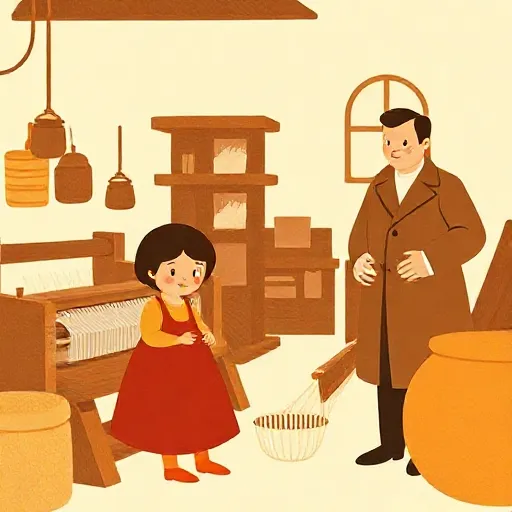
The most famous — and most controversial — theory of exploitation comes from Karl Marx (1818–1883). Marx looked at whole economic systems, not just one‑time swaps. He believed workers in a capitalist society are exploited because they are forced to sell their labor power to capitalists for less than the full value of the goods they produce.
Marx inherited a labor theory of value from earlier economists: the idea that a commodity’s real value depends on the amount of labor needed to make it. Under capitalism, workers’ labor power becomes just another commodity. Its price (the wage) is determined, Marx thought, by the cost of keeping the worker alive and able to work — a bare subsistence wage. But labor has a special power: it can produce more value than it takes to sustain itself. If a worker’s wage covers only the food and shelter needed for a day, the goods that worker makes in that day are worth much more. The extra value, surplus value, flows straight to the capitalist. In effect, Marx said, part of every workday is unpaid — much like a feudal serf working on the lord’s land for free.
Marx’s theory ran into deep problems. Labor isn’t all the same — skilled work differs from unskilled work, and there is no obvious way to reduce them to a single standard. Moreover, many goods like land or a famous painting have value that no amount of labor could create. And economists discovered that labor‑intensive industries do not always earn higher profits, as Marx’s logic seemed to predict. Some modern Marxists, such as G. A. Cohen, tried to rescue the core idea by saying exploitation isn’t about labor creating value in a technical sense, but about capitalists unfairly appropriating the products workers create. Still, the debate rages on.
When Economics Trades Labor for Marginal Products
By the early twentieth century, most economists had abandoned the labor theory of value. They developed a new way of thinking about exploitation, focused on marginal product. Think of a factory hiring workers one by one. The first worker adds a lot to total output; the tenth adds a bit less, because the machines are crowded and space is short. The value added by the very last worker hired is that worker’s marginal product. A. C. Pigou and Joan Robinson (1903–1983) argued that a factor of production — land, capital, or labor — is exploited if it is paid less than its marginal product.
This neoclassical account had a striking feature: under perfect competition, exploitation was impossible, because fierce competition would push wages up to the marginal product. Whether that is a strength or a weakness depends on whether you think intense market competition can still be exploitative. The neoclassical approach also opened the door to saying that capital or land can be exploited, not just workers — a conclusion many philosophers found odd. And there was a fairness problem: if a factory hires more workers, the marginal product drops, so early hires earn more than later ones for exactly the same work. That clashes with the intuition that equal work deserves equal pay.
Unfairness: More Than Just a Bad Deal

If exploitation is not about one magic number — not labor time, not marginal product — then what makes a deal unfair? Modern philosophers usually agree that exploitation involves taking unfair advantage, but they divide sharply on what “unfair” means.
One family of views looks at the substance of the deal. An exchange creates a cooperative surplus: the extra total gain that wouldn’t exist without the trade. You might say the surplus should be split equally. But the desert hiker example shows the problem: the hiker gets nearly all the surplus (her life is worth infinitely more than $1,000 to her), yet we still call the deal exploitative. Others appeal to basic needs: a fair deal should ensure each person’s basic needs are met. That idea struggles with everyday swaps — buying an apple doesn’t trigger a duty to cover the seller’s entire grocery bill.
Another family focuses on the procedure that leads to the deal. Alan Wertheimer has argued that a fair price is the price that would emerge in a reasonably competitive market, free from one‑sided pressure or hidden information. But other scholars, like John Roemer and Hillel Steiner, point to background injustice: a wage is exploitative only if it results from an unjust distribution of property or past wrongdoing. Without that, a very low wage might be just a sad fact of life, not exploitation. In response, some say the source of the vulnerability doesn’t matter — if you use someone’s need to squeeze an unfair gain, that is exploitation regardless of how the need arose. The argument is still very much alive.
Sweatshops, Price Gouging, and the Puzzle of Helping
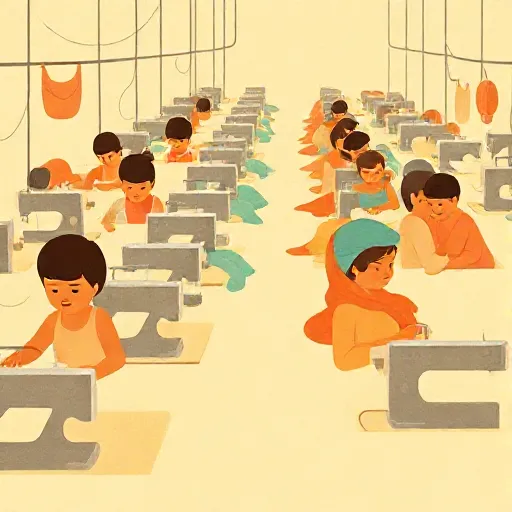
Exploitation isn’t just a topic for dusty books. It is at the center of fierce real‑world debates. Consider sweatshops: factories in poorer countries that pay low wages for long hours in unsafe conditions. Critics say these workers are exploited. Defenders reply that even low‑paying factory jobs are often better than the alternatives available, like subsistence farming or scavenging. This raises a knotty philosophical claim called the Non‑Worseness Claim (NWC): if the deal is mutually beneficial and both parties consent, can it really be morally worse than no deal at all? If so, how should we weigh the wrong of exploitation against the benefit of lifting someone out of even greater hardship?
The same puzzle appears when disaster hits and a seller charges an outrageous price for a generator or a bottle of water. Many people feel that price gouging is wrong, even if the buyer is better off with the generator than without it. But if we ban such sales, the desperate person might get nothing. That doesn’t mean we should just shrug — maybe the real solution is to tackle the vulnerability itself, by making sure no one is so desperate in the first place. These questions push us to think about fairness in our own lives: when a friend asks for a favor and you can easily set the terms, are you taking advantage if you demand too much in return?
Think about it
- Suppose a shipwreck leaves you stranded on an island with the only other survivor, who owns a bag of emergency food. He offers to trade a few crackers for your beloved watch. You are desperate; he knows it. Is his offer exploitative, or is he just making a helpful deal?
- Two people do exactly the same work, but one was hired first in a busy season and is paid more because their “marginal product” was higher at that moment. Is that fair? What would you change if you could redesign the pay system?
- If a poor country has factories with tough working conditions, but shutting them down would leave workers with even fewer options, should outside protesters call for the factories to close — or push for something else?