
Did God Invent the Number 2?
The Puzzle: Did God Invent Numbers, or Do They Just Exist on Their Own?

Close your eyes and think about the number 2. You can’t touch it or see it, but it feels real: 2 + 2 always equals 4. It could not be otherwise. Did someone — or something — make that true? If God exists and created the whole world, did God also create the number 2, along with all the other objects you can’t stub your toe on?
Philosophers call things like numbers, truths, and properties abstract objects. They aren’t made of matter, they don’t grow old, and they exist in every possible world — they are necessary beings. Nothing could make them pop out of existence. This article asks: does God ground these abstract objects? “Ground” means “provide the foundation for their existence.” If God grounds them, they depend on God. If not, they exist independently — with no creator and no outside cause.
Over the centuries, thinkers have given very different answers. Some point to religious writings that say God made “all things, visible and invisible.” Others reason from perfect being theology: the idea that God is the greatest possible being, so God must be the source of everything. Both trains of thought push toward the view that God grounds abstracta. But trying to make that work leads to surprising puzzles.
Descartes’s Big Gamble: Could God Have Made 2 + 2 = 5?

René Descartes (1596–1650) took the boldest position. According to him, God’s will causes every necessary truth to be true — and God could have willed otherwise. On this view, called theistic voluntarism, God freely chose that 2 + 2 = 4, just as a baker freely chooses to make a cake. If God had wanted, 2 + 2 might have been 5. Nothing forced God’s hand.
This makes God truly sovereign. But it also raises a sharp problem: if God could have made 2 + 2 = 5, then the truth “2 + 2 = 4” is not absolutely necessary. It depends on God’s will, which might have been different. Some voluntarists try to soften this by saying the truth is still weakly necessary: it holds in every world we can reach from the actual one, though God could have set up an unreachable world where it fails. Most philosophers find this unsatisfying. Real necessity, they argue, should be rock‑solid — true in any possible world whatsoever, with no “maybe” tucked away somewhere. If God’s will could have been otherwise, then 2 + 2 = 4 starts to feel a bit shaky. That’s why Descartes’s view has won few followers.
Emanationism and the Bootstrapping Trap

A different approach, theistic emanationism, says that abstract objects are caused by God’s thinking — not by a choice, but by God’s necessary, eternal intellectual activity. Gottfried Leibniz (1646–1716) compared God’s mind to a realm of eternal truths that spontaneously radiate outward. More recently, Thomas Morris (born 1951) and Christopher Menzel (born 1958) argued that God’s creative intellect brings all properties and numbers into existence, yet since God must think this way, the objects are absolutely necessary. The number 2 exists in every possible world because God necessarily thinks it.
This avoids Descartes’s trouble with contingency. But emanationism faces a deeper challenge: the bootstrapping objection. To cause a property like being omnipotent to exist, God must already have that property. You can’t cause your own omnipotence before you are omnipotent. It is like pulling yourself up by your own bootstraps — a causal circle. The same problem pops up with God’s own haecceity (the property of being God): causing it to exist would be nothing less than God causing his own existence. For many philosophers, this circularity makes emanationism impossible.
What If Numbers Are Just God’s Thoughts?

The worries about causation lead some theists to theistic mentalism: the view that abstract objects simply are divine mental states. They are not caused by God; they are the very thoughts God is always thinking. Augustine (354–430) and Thomas Aquinas (1225–1274) held versions of this, and recently Gregory Welty has defended it. If successful, no mysterious act of creation is needed — God’s inner life is the realm of numbers and truths.
Mentalism gets around bootstrapping because there is no causal circle. Yet it faces hurdles of its own. Thoughts feel like concrete events inside a mind; numbers feel like abstract, non‑mental objects. Can a thought actually be the number 2 in the same way we normally think of it? And mentalism often pairs with divine simplicity, the idea that God has no parts and is identical with each of his attributes. That would make God identical with the number 2, and with every other property, which many philosophers (like Alvin Plantinga, 1932–) have argued leads to absurd results.
The Other Side: Platonism and Nominalism
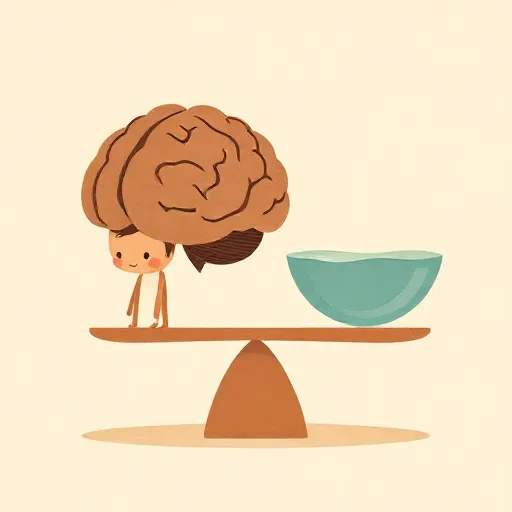
What if God simply does not ground abstract objects? That position is theistic Platonism. Peter van Inwagen (born 1942) argues that abstract objects cannot be caused at all — they just are, uncreated and independent of any mind. Sacred texts that say God made “all things” must be read as meaning “all things that can be made.” Just as “God can do all things” doesn’t mean God can make a square circle, it doesn’t mean God creates uncreatable numbers. And perfect being theology loses its bite: if it’s impossible for numbers to depend on anything, then being the being who grounds numbers is not a great‑making property.
A simpler alternative is theistic nominalism, defended by William Lane Craig (born 1949). Nominalists deny that abstract objects exist at all. On this view, there are no numbers floating in Plato’s heaven — only physical things and the ways we talk about them. If nominalism is right, the question of whether God grounds numbers simply dissolves. But nominalism must answer powerful arguments that we need abstract objects to make sense of mathematics, science, and ordinary language. The debate stays vigorous.
Why This Tug‑of‑War Over Numbers Still Matters
This isn’t just an argument for theology professors. It’s a fight about what it means for anything to be necessarily true. Is 2 + 2 = 4 an eternal fact that even God couldn’t change? Or does its truth depend on a mind — God’s mind — holding it in place? And if numbers don’t depend on God, does that mean the universe has two ultimate foundations: God and the realm of abstracta?
When you do your math homework tonight, you are brushing up against ideas that have puzzled people for centuries. The same goes for properties like being brave or being round. Are they discovered, invented, or thought? Next time you stare at a blank page before solving a problem, you might wonder: am I uncovering a truth that sits out there on its own, or stepping into a mind so vast that it holds every possibility? The answer changes how you see the very ground under your feet.
Think about it
- Suppose a friend tells you, “Even God can’t make a square circle.” Is “2 + 2 = 4” more like a square circle (impossible to imagine otherwise) or more like a law a powerful ruler could change? Why?
- If numbers are real but uncreated, does that make the universe less orderly — or more mysterious? Can you picture a world where truths just are, with no explanation?
- Imagine you had to decide which is greater: a being who is the source of all truths, or a being who shares the world with eternal truths that were never made. What would you choose, and what would that choice say about what you value most?