
Islamic Philosophy
45 articles
-
A Universe That Never Began? Averroes' Dangerous Idea
Did the universe have a beginning? Averroes thought it always existed. Others said God made it from nothing. This debate still puzzles thinkers.
-


Avicenna Said Aristotle’s Logic Was Full of Mistakes. Was He Right?
A thousand years ago, a Muslim genius declared Aristotle got logic wrong. The fiery debate that followed reshaped how we think.
-
Can Math and Magic Save Your Soul? The Brethren of Purity Tried.
A secret brotherhood in 10th-century Iraq wrote an encyclopedia to purify souls through science and faith. Who were they, and did they succeed?
-
Can Philosophy Settle Religious Fights?
Al-Fārābī believed Aristotle’s logic could end endless debates about God and creation. His quiet, careful analysis of words still matters.
-

Can the Bible Say One Thing and Mean Another?
A 12th-century rabbi used ideas from Islamic thinkers to argue that God is beyond words and the Bible hides secret meanings. The fight isn't over.
-


Can You Find the Missing Piece? Avicenna’s Science of Knowing
A thousand years ago, a Persian philosopher asked how we really know things. His answer: it’s all about finding a hidden connector—and anyone can do it.
-
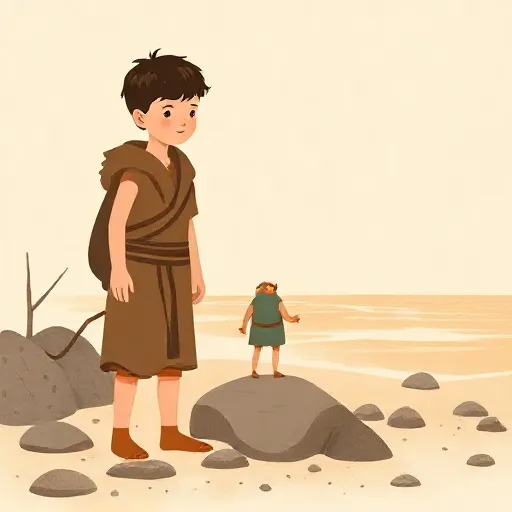

Can You Learn All About God Just by Thinking?
Can you learn about God and right and wrong just by thinking? A story by Ibn Ṭufayl of a boy who does that sparked a big debate among Muslim thinkers.
-

Can You Trust Both the Qur’an and Aristotle? Ibn Rushd Said Yes.
Can reason and revelation both be true? Ibn Rushd showed they can—truth doesn’t fight truth. His bold defense of philosophy still inspires.
-
Can Your Mind Become Immortal? Al-Fārābī's Journey of the Intellect
A medieval Islamic philosopher thought your intellect could climb a ladder of light and live forever, free of your body. Here's how.
-
Could the Whole Universe Be Made of Light? Suhrawardi’s Big Idea
Could everything be made of light? Suhrawardi said yes, and we can know this by inner seeing, not reasoning. His idea challenges our view of reality.
-


Did a Foolish Soul Create the Universe? Al-Rāzī’s Wild Idea
Did a foolish Soul really start the universe? One philosopher thought so, and believed we can use reason to figure out life without prophets.
-


Did God Really Push That Ball? The Puzzle of Occasionalism
When a ball hits another, what really pushes? Is it the ball or God? This puzzle of occasionalism makes us rethink cause and effect.
-
Did God Really Sit on a Throne? Ibn Taymiyya’s Fierce Answer
Did God have a physical form? One scholar said yes, trusting his senses over abstract ideas. His fiery answer got him jailed, but he refused to be silent.
-

Did the Universe Have a Beginning? (And Other Medieval Brain‑Twisters)
Did the universe always exist? Medieval thinkers from three religions debated this and other big questions, and their ideas still matter.
-


Do Numbers Exist Outside Your Mind? A Medieval Muslim Debate
Where do numbers go when objects vanish? Medieval Muslim thinkers debated this. Their ideas changed how we see math's truth.
-


Do We All Share the Same Mind? The Arabic Ideas That Shook Europe
Did you know that hundreds of years ago, thinkers asked if all humans share one mind? Their answers still spark debate today.
-
Do You Really Choose, or Was It Always Going to Happen?
Do you really choose, or is it all decided? Al-Rāzī believed every decision is forced by past events, yet he still sought the best life.
-


Does Thinking About Being Prove God Exists?
Can thinking about being prove God exists? Avicenna's bold idea says yes. He argued one necessary being explains why anything exists at all.
-
He Left Everything to Find the Truth About Reason and Revelation
Al-Ghazālī left everything to find out if reason and revelation can coexist. His surprising answer: they never truly clash if understood correctly.
-
How Do Words Mirror the World? A 10th-Century Genius Explains
Al-Fārābī asked how languages grow from pointing to poetry, and why logic helps us think together. His surprising answer still shapes debate today.
-

How the Caliph's Translators Saved Greek Philosophy
How did translators in old Baghdad save Greek philosophy? Their work kept big ideas alive and sparked new thinking across empires.
-


If a Cup Exists, Is That Part of What It Means to Be a Cup?
Is being a cup the same as just existing? Early Islamic thinkers wondered, leading to deep questions about God and creation.
-
Is Everything Just One Big, Changing Existence?
Are a rock, a tree, and you separate things or parts of one big existence? Mulla Sadra’s surprising answer changes how we see reality and ourselves.
-


Is the World Made of Tiny Bits or Smooth Stuff?
A thousand years ago, thinkers argued whether you can cut things forever or must stop at tiny bits. Their debate about infinity still puzzles us today.
-


Is the World Made of Tiny Pixels or One Smooth Thing?
Is the world made of tiny bits or one smooth whole? This ancient clash still shapes how we see atoms, change, and whether we have free will.
-


Is There a Kind of Knowing That Books Can't Teach?
A 12th‑century Persian philosopher said that true understanding comes from the heart, not just the mind. His ideas cost him his life.
-

Is Your Mind a Shared Light? Medieval Muslim Thinkers Asked
Ancient Greek ideas met Islamic doctors and astronomers. They debated: Is your soul separate from your body? Do all minds think with one cosmic light?
-
The Book That Wasn’t Aristotle’s (And Why That Made It So Powerful)
Why did a book that claimed to be by Aristotle but wasn't end up shaping Jewish, Christian, and Islamic thought for centuries?
-


The Philosopher of Two Eyes: How Ibn ‘Arabî Saw Reality
A 12th-century Muslim mystic believed we need both reason and imagination to grasp reality. His ideas challenge how you see yourself and the world.
-


The Philosopher Who Hid His Deepest Ideas in Plain Sight
Al-Fārābī tried to unify all knowledge—logic, math, music, politics—but did he hide his true views from the public? A 10th-century mystery.
-


The Philosophers Who Thought Reason Wasn’t Enough
Can logic explain everything? Some Muslim philosophers thought deepest truths are felt, not reasoned. Like a light switching on inside.
-


What Happened When Aristotle's Metaphysics Moved to Baghdad?
In the 9th century, Arabic scholars got their hands on a Greek book that asked the deepest questions. Their fight over it still matters.
-

What to Do When Everyone Around You Is Wrong?
What if everyone around you believes something false? Medieval thinker Ibn Bajja had a plan: train your mind and seek truth, even if you must walk alone.
-

When Is Something Truly Necessary? Avicenna’s Answer
What does it mean when we say something must be true? Avicenna's surprising answer still helps us work out what's necessary, possible, or impossible.
-


Who Really Lights the Fire: You, Nature, or God?
Do you really choose your actions, or does God cause them? Islamic thinkers debated this, and their answers shape today's arguments about brains.
-


Why Abd al-Latif Thought Modern Philosophy Was a Disaster
Why did a 12th-century scholar think modern philosophy was a dead end? He believed ancient Greek methods could lead to real understanding and happiness.
-

Why al-Farabi Thought Religion Was a Tool, Not the Truth
al-Farabi thought a perfect city works like a body. He also said religion is just a tool. Why would an Islamic philosopher say that?
-

Why Al-Kindi Believed the World Could Not Be Eternal
In 9th-century Baghdad, al-Kindi used Greek ideas to defend Islam. His infinity puzzle challenged Aristotle and still makes philosophers think.
-


Why Did a 10th-Century Doctor Say That God Is Beyond Words?
Isaac Israeli blended Greek emanation with Jewish faith. His ladder of light explains how the universe came to be — and how you can perfect your soul.
-
Why Did a Brilliant Mathematician Write Poems Full of Doubt?
Why did a great thinker both prove God and doubt life's meaning? His struggle shows that head and heart don't always agree.
-
Why Did a Philosopher Think Gut Feelings Were Key to Truth?
Ibn Kammūna argued that flashes of insight—not just reasoning—give us certain knowledge. But his attempt to compare religions fairly revealed hidden bias.
-

Why Did Jewish Scholars Risk Everything for Arabic Books?
In medieval Spain, Jewish thinkers secretly translated Arabic philosophy. A dangerous act that changed Judaism forever.
-


Why Did Medieval Philosophers Hide Their Real Ideas?
Some medieval thinkers wrapped their ideas in allegories and riddles. Were they afraid of persecution, or was something else going on?
-
Why Does a Melody Make You Feel Brave? The 2,500-Year Debate
Why does a melody make you feel brave? Ancient Greeks thought music had secret powers from numbers or from copying feelings. Discover their story.
-


Why Is There Something Rather Than Nothing?
Why does anything exist? Some think a powerful being must have made it. Others say there's no reason—it's just a brute fact. A huge puzzle!