
Can You Find the Missing Piece? Avicenna’s Science of Knowing
The Boy Who Devoured a Library
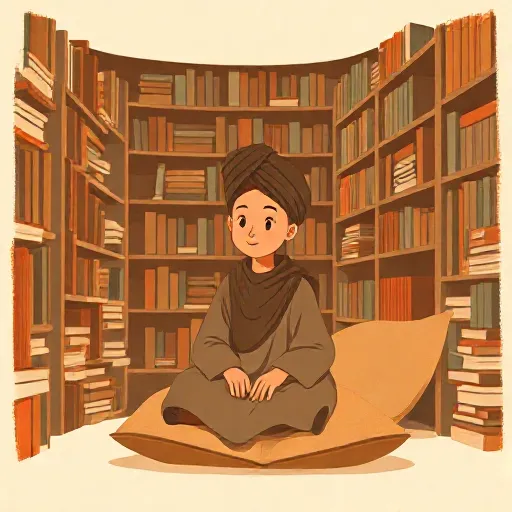
Late in the tenth century, in the Silk Road city of Bukhara, a teenage boy got his hands on the keys to the royal library. Ibn Sīnā (c. 980–1037), who the West would later call Avicenna, was a governor’s son. He had already raced through his education, mastering logic, physics, mathematics, and medicine mostly by himself. When he successfully treated the Samanid ruler’s illness, his reward was permission to enter the palace collection—a treasury of ancient Greek and Arabic science. He later wrote that he saw books there whose titles he had never heard and would never meet again. He read them all. By the time he was eighteen, he said, philosophy held no new surprises for him.
That library moment set the stage. But soon history struck. The Samanid dynasty fell, and Ibn Sīnā had to flee. He spent the rest of his life as a wandering physician, political advisor, and scientist, moving from court to court across Persia. Even so, his mind never stopped. He wrote vast encyclopedias of philosophy—sometimes riding on horseback between battles, sometimes dictating in a single feverish night. His most famous work, The Cure (al-Shifāʾ), ran to twenty-two large volumes. It wasn’t a medical manual; it was a blueprint for all knowledge. And at the heart of that blueprint lay a deceptively simple question: when you figure something out, what is actually happening inside your head?
One System to Rule Them All
Before Ibn Sīnā, most philosophy was written in scattered treatises or commentaries on Aristotle. The different sciences—logic, physics, metaphysics, ethics—were studied one by one, and they often didn’t fit together. Ibn Sīnā looked at that patchwork and decided it could be something more. He wanted to revise and weave every branch of knowledge into a single, self-consistent system, a gigantic puzzle where every piece locked with every other. He called these complete books summae, a Latin word later used for his all-in-one philosophical encyclopedias.
His first summa, written at age twenty-one for a neighbor who asked for “a comprehensive work,” covered everything except mathematics. His later masterwork, The Cure, stretched to include logic, physics, mathematics, and metaphysics—the study of being itself—plus a whole new section he invented: the metaphysics of the rational soul. There he explored prophecy, dreams, prayer, and what happens after death, all using the same logical tools as any other science. The goal was not to list facts but to build a worldview anyone could verify, step by step, with their own reason. For Ibn Sīnā, philosophy wasn’t finished until it formed a perfect circle—a web of ideas in which every statement could be traced back to solid first principles by finding the right connections. And the master key to those connections was something he called the middle term.
The Detective’s Secret: The Middle Term

Imagine you know two facts: “Cauliflower is a vegetable” and “Vegetables are healthy.” You can hook them together into a three-step chain: Cauliflower is a vegetable, vegetables are healthy, therefore cauliflower is healthy. That chain is a syllogism, and the piece that does the hooking—vegetable—is what Ibn Sīnā called the middle term. Without it, the two outer ends just dangle. With it, a brand-new piece of knowledge clicks into place.
Ibn Sīnā believed that all certain knowledge works this way. The hard part isn’t seeing the ends—often those are right in front of you. The hard part is spotting the middle term that explains why they belong together. He called the talent for suddenly hitting upon that missing link ḥads, a term that means something like intuitive correct guessing or mental acumen. It’s that flash when you realize that a bat is a mammal because it nurses its young, even though it flies like a bird. You’ve landed on the middle term that makes the whole syllogism hold.
But he didn’t stop there. In the cosmology of his day, the universe was a set of concentric celestial spheres, each moved by an intellect that thinks eternal truths—intelligibles, or the forms things have in themselves. The lowest of those cosmic minds, the active intellect, contains all the intelligibles that human minds can ever grasp. Our rational soul, being an immaterial substance like those celestial intellects, can “contact” the active intellect and receive knowledge. However, Ibn Sīnā insisted this is not a magical download. The active intellect lets intelligibles flow out in response to a demand. Your mind must first work: you need to gather data through your senses, search for a middle term, and only then receive the understanding. If you stop looking, the flow stops. Knowledge, for him, is always earned.
Your Brain’s Inner Laboratory
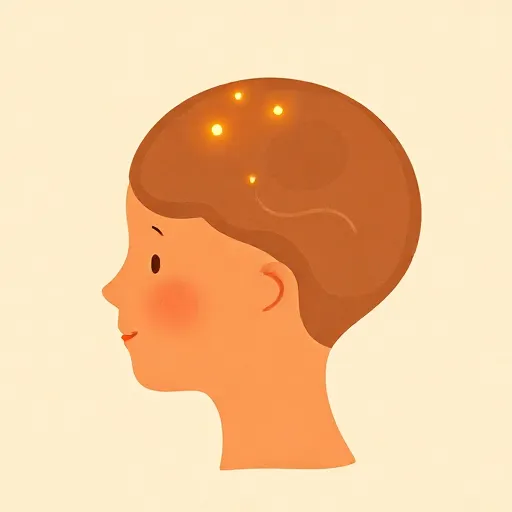
If finding the middle term is the engine of knowing, senses are its fuel. Ibn Sīnā argued that human minds can’t just think pure concepts on their own—they have to start from the mess of the material world. That’s why he mapped, with painstaking detail, the soul’s five external senses and, more importantly, its five internal senses housed in the brain. There’s the common sense that stitches separate sensations into a whole object; imagery that stores the forms of things after you stop seeing them; imagination that recombines images; estimation that detects invisible meanings (like sensing that a stranger’s smile hides danger); and memory that holds those connotations. Together, these inner faculty members prepare raw experience for the intellect. They present it with patterns from which a middle term might be plucked.
This inner laboratory also explained the most mysterious human phenomena. Take prophecy. Ibn Sīnā didn’t see prophets as miracle workers who break the laws of nature. In his system, a prophet is someone whose ḥads is so extraordinarily strong that they can hit upon middle terms almost instantly, grasping an entire web of knowledge that ordinary thinkers would take years to build. Meanwhile, a powerful imagination translates those abstract intelligibles into concrete images and language—a revealed book, a vivid vision, a parable. The prophet’s rational soul, still operating naturally, just runs at a speed and clarity that most of us never approach.
Dreams and glimpses of the future fit the same pattern. The celestial souls, responsible for earthly events, constantly send out information. Your sleeping mind, freed from the noise of daytime senses, can sometimes snatch a faint signal—especially if your inner senses are in just the right balance. Ibn Sīnā was describing a universe in which nothing supernatural occurs, only the same rational laws working at different intensities. Heaven and hell, in his final chapters, became names for the states your rational soul enters after death: either the joy of thinking eternal truths directly, like the stars, or the misery of never having trained itself to think at all.
Why a Twelfth-Century System Still Echoes Today

Ibn Sīnā’s vision didn’t stay in the eleventh century. His ideas traveled through Islamic Spain into Latin Europe, where they shaped thinkers like Thomas Aquinas. His insistence that philosophy must be backed by rigorous logic and grounded in sensory experience planted early seeds for the empirical sciences. And his deep wager—that the universe is intelligible, that your mind is kin to the stars, and that happiness is the activity of reason—still hums in the background whenever someone argues that understanding the world is the best way to live well.
You can feel it directly. When you’re stuck on a riddle and suddenly the missing clue snaps into place, that “aha!” is your ḥads springing into action. When you connect one subject to another—history to chemistry, fiction to statistics—you are building the kind of integrated web Ibn Sīnā aimed for in his summae. He believed that every genuine act of knowing is a small act of participation in a cosmic order, a moment when your soul mirrors the eternal intellects. The puzzle isn’t solved for you; you must stretch toward it. But the pieces are there, and the hunt for the middle term is the most human adventure there is.
Think about it
- If all knowledge depends on finding a connecting idea, could there be some things that have no connecting idea—things we just can’t ever understand?
- Avicenna said we need our senses to start knowing. If you were born without sight or hearing, would your mind still be able to discover the same truths as anyone else?
- Imagine you suddenly had a perfect guess for a math problem without any steps. Could you trust that as real knowledge, or would you need proof?