
Does Thinking About Being Prove God Exists?
A Boy Who Devoured Books

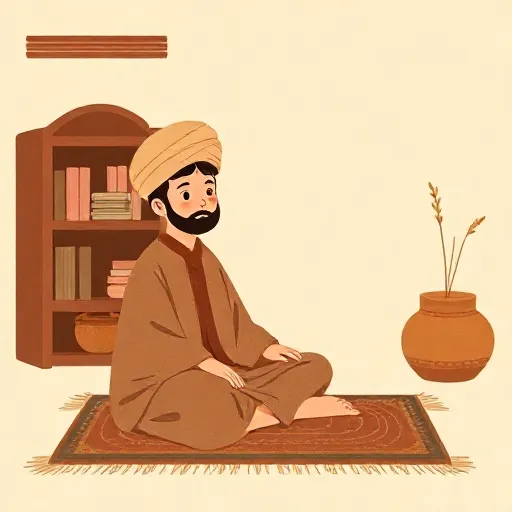
More than a thousand years ago, a boy named Abū ʿAlī al-Ḥusayn ibn Sīnā — we call him Avicenna (980–1037) — did something that still shapes philosophy today. He was born near Bukhara in what is now Uzbekistan. By ten he had memorized the entire Qurʾān and studied logic. By sixteen he was a practicing physician. But his deepest love was philosophy. He read the Greek thinker Aristotle’s Metaphysics forty times and still felt baffled — until he found a short commentary by the philosopher al-Fārābī. Suddenly the whole book made sense. From that moment Avicenna set out to build his own grand system: a picture of reality that began with the simplest thing of all — being.
One Science, Two Questions: Being and God
Avicenna believed every science needs a subject‑matter — something it takes for granted and studies — and an object of research — a question it sets out to answer. Geometry assumes shapes and tries to prove theorems about them. Physiology assumes living bodies and tries to explain how they work. But what should philosophy’s highest science assume?
Avicenna’s answer: its subject‑matter is the existent — literally, whatever is. That makes it ontology, the study of being as being. But the question this science must answer is whether a First Principle, an uncaused cause, exists. That makes it theology, the study of the divine. For Avicenna, metaphysics is one single science with two faces. It studies “being” in general, but its driving goal is to prove that there is a being that can’t not be.
What Makes a Horse a Horse? Essence vs. Existence
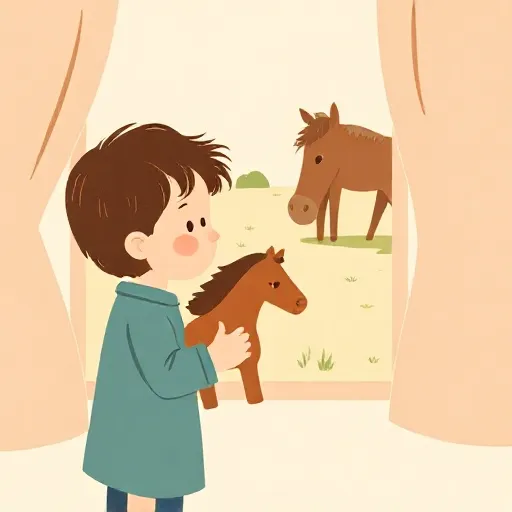
Avicenna made a distinction that seems obvious once you think about it. You can imagine a unicorn perfectly — its shape, its horn, its color — and still ask, “But does it really exist?” Knowing what something is doesn t tell you that it is. Avicenna called the “what” the essence of a thing, or its quiddity (from the Latin quid, “what”). The “that” is its existence.
For ordinary things, essence and existence are two different pieces. A horse’s horseness — its quiddity — doesn’t guarantee that any horse is actually standing in a field. It just gives you the definition. That means every horse, every rock, every star is in itself merely possible: it could exist or not exist. And if it does exist, something else must have pushed it from possible to real. Existence, for a possible thing, is always a gift from a cause.
But what if there were a being whose very essence is to exist? That being would have no quiddity separate from existence — it would just be existence itself. Avicenna calls it the Necessarily Existent. Everything else is possible and needs a cause; this one thing cannot fail to be.
The Thing That Can’t Not Exist
How do we know such a being exists? Avicenna offers a striking argument. Look at anything that exists. It is either necessary in itself or possible in itself. A possible thing is one that can equally be or not be. If it does exist, it must be made necessary by something else — a cause that tips the scale. So every possible existent points to a cause outside itself.
Now imagine the entire collection of things is made only of possible beings. Each one depends on a cause, which depends on another cause, and so on. You get a chain with no first link. Avicenna insists that an infinite chain of dependent things still fails to answer the real question: why does anything exist at all? If every link is held up only by the link below it, a chain with no top still has nothing holding the whole thing up.
Therefore, Avicenna concludes, there must be a being that is necessary in itself — uncaused, not dependent on anything. This First Cause is what he calls the Necessarily Existent. From its very definition, he draws further conclusions: it must be utterly simple, unique, and indivisible. It doesn’t “have” existence; it is existence. Everything else has existence added to an essence, like a label stuck on a jar. The First Cause is the jar that is nothing but label.
How the Universe Flows from One Thing
If the First Cause is absolutely one and simple, how do we get the dazzling variety of stars, planets, animals, and people? Avicenna uses an idea he inherited from earlier thinkers: emanation (a word that literally means “flowing out”). The Necessary Existent does not build the world in time with raw materials, like a carpenter. Instead, its very act of knowing itself eternally “causes” a first effect — a pure intelligence. That intelligence then knows both its cause and itself, generating further intelligences, souls, and celestial bodies in a descending chain.
This might sound strange, but Avicenna thinks it solves a deep puzzle. He believes creation must be absolute: the world depends entirely on God at every moment, with no time-gap before it began. Yet he also accepts, like Aristotle, that the world is eternal — it has always existed. How can both be true? Only if “creation” means a constant giving of existence, not a one-time event in the past. The world has always existed because it has always been caused. Avicenna calls this ibdāʿ, absolute instauration: causing something after absolute non‑being, not in time but in the order of reality itself. The universe, for him, is like light streaming from a lamp that has always been lit.
Why Avicenna’s Ideas Still Matter

When you close your eyes and picture a friend, you are using Avicenna’s insight: your mental picture doesn’t guarantee your friend is real. Essence and existence are separate. Every time you wonder, “What if this had never happened?” you are leaning on the idea that most things are merely possible, not necessary.
Avicenna’s proof of the Necessarily Existent influenced the great medieval philosopher Thomas Aquinas and shaped centuries of thought in both the Islamic world and Europe. Later thinkers challenged his argument, asking whether an infinite chain of causes is really impossible or whether “necessary existence” even makes sense. The debate is still alive. So the next time you ask the biggest question of all — “Why is there something rather than nothing?” — you are standing right where Avicenna stood a thousand years ago, trying to see what being itself has to say.
Think about it
- Could you imagine a being that has to exist by its very nature? What would make that different from imagining a unicorn?
- If a giant row of dominoes had no first domino but had always been falling, does that explain why any domino is falling now?
- When you picture a friend, does the picture ever give you proof that your friend is currently standing in front of you? What does that tell you about what it means to exist?