Why al-Farabi Thought Religion Was a Tool, Not the Truth
What If Your City Worked Like a Living Body?
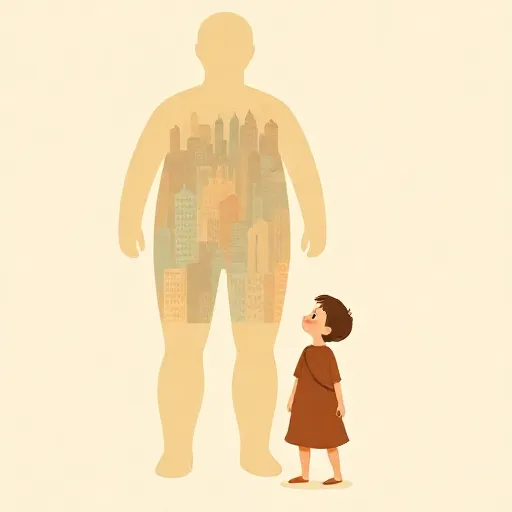
Imagine looking down at a giant living body. A heart pumps steadily, lungs expand and contract, kidneys filter what needs cleaning. Now imagine that body is your city. The heart is the ruler. The hands are builders, the mouth is the baker, the legs are messengers. Each organ has a job, and none can do its work alone. Only when every part plays its role does the whole body — or the whole city — stay truly healthy.
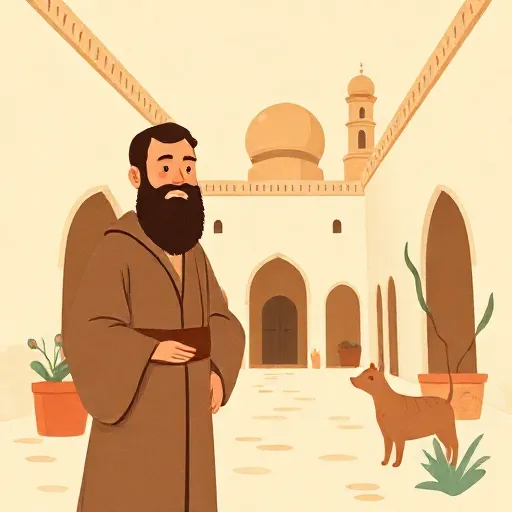
This is more than a cool picture. It is how the philosopher Abu Nasr al-Farabi (c. 870–950 CE) thought any real human community should be built. He was one of the first great minds in the Islamic world to write about what a perfect society would look like. And he did not start from scratch — he read Aristotle, Plato, and many other Greek thinkers whose works had recently been translated into Arabic. But he gave their ideas a completely new twist, especially where religion fits in.
For al-Farabi, a city, a nation, or even a union of all people in the world could be called perfect only if it aimed at one thing: guiding every citizen toward true happiness. That may sound obvious, but he meant something very specific. A city that just keeps people fed, safe, and busy is not truly good. It is like a body that breathes but never moves — alive, but missing its real purpose. That real purpose is something al-Farabi called a natural telos — a built-in goal that every human being and every community should strive for.
The Goal: Become a “Pure Thinker”
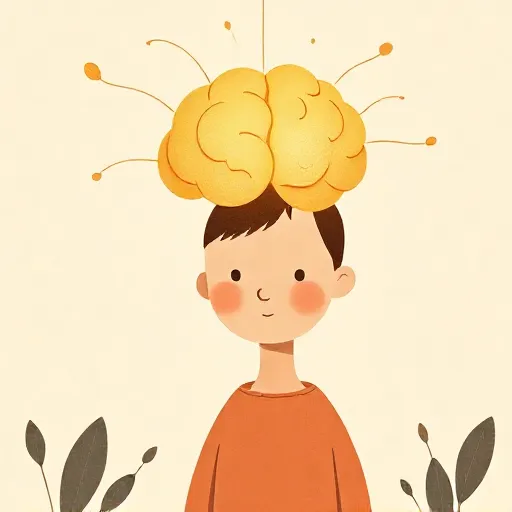
So what is this true happiness? According to al-Farabi, it is not about having fun, winning prizes, or getting rich. It is about making your rational faculty — the part of your soul that thinks — as perfect as possible. You are born with the ability to understand things in a universal, abstract way. When you actually exercise that ability fully, you become what he calls an intellect in actuality. In that moment, your mind works like the active intellect, a perfect, immaterial entity that exists beyond the physical world and whose entire being is pure thinking.
Human beings, he believed, are stuck in the middle. While we are alive, we have bodies made of matter that can get sick and eventually die. But we also have souls with an immaterial intellect that can survive death. The active intellect constantly offers us the raw materials to think — what al-Farabi called primary intelligibles, or basic principles of reasoning. Our job is to take those gifts and turn them into real knowledge: to learn what the cosmos is, what we are, and how we fit into the grand order of things.
That brings us to a startling claim. True happiness, according to al-Farabi, is ultimately a state of the afterlife — a purely intellectual state where the soul, freed from the body, enjoys the pleasure of thinking at its highest level. No physical resurrection, no bodily pleasures. Only the soul’s joy in knowing. And the degree of this happiness depends on how much you have perfected your intellect while you were alive. Some people will reach a greater clarity than others, because they worked harder to think well and behave well. So, for al-Farabi, your life here is preparation. To be happy forever, you need to know certain things and do certain things now.
But What If You’re Not a Genius?

Here a big problem creeps in. If the highest happiness requires deep knowledge of the universe, then only people who can do philosophy — who can actually grasp the first cause, the separate intellects, and the structures of physics and biology — will ever reach it. And al-Farabi admits that most people are not born with the sharp-witted nature needed to become philosophers. People’s temperaments differ. Some are naturally quick, others slower, depending on where they were born and how their bodies are mixed. Does that doom the slower ones to misery?
To his credit, al-Farabi does not give up on the average person. He insists that every sane human being has an innate character that allows them to receive common intelligibles — basic ideas that everyone can share. The real question is how those ideas are taught. The deep truths about the cosmos, about human nature, and about what you must do to be happy can be known in two ways. They can be impressed on your soul “as they really are” — that is, through demonstrated, scientific philosophy. Or they can be impressed “through affinity and symbolic representation” — through vivid stories, images, and comparisons that point to the same truths without requiring the listener to follow rigorous proofs.
This second way is where religion enters the picture. The excellent city must have a ruler who understands reality perfectly. But that ruler cannot only talk to a handful of geniuses. She must also reach the blacksmith, the baker, the weaver, and the guard — each with their own natural talents and limits. The ruler’s job is to teach the same essential things, but in a language and a form that fit each group. For most people, that means learning through similitudes — symbolic representations that feel immediate and true, even if the learner cannot explain why.
Religion: The Ruler’s Most Useful Tool
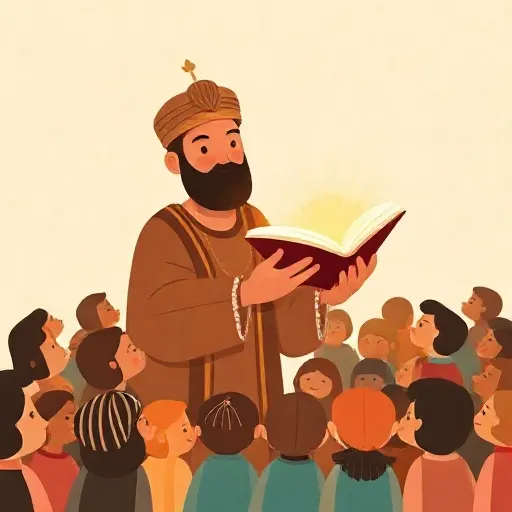
Given that need, al-Farabi offers a bold definition. Religion, he says, is “opinions and actions, determined and restricted with stipulations and prescribed for a community by their first ruler.” If the ruler is truly excellent, she uses religion solely to help everyone — herself included — reach ultimate happiness. Religion, then, is not an independent source of truth. It is a tool of governance. Its job is to put philosophy’s discoveries into a form that ordinary people can grasp and live by.
This does not make religion useless or fake. In fact, an excellent religion is a similitude of philosophy. Just as a healthy body functions thanks to many different organs, a good religion has both a theoretical part (a creed that describes God, angels, and the order of the world) and a practical part (laws and rituals that train people in virtuous habits). The creed uses names like “God” instead of “First Cause,” “angels” instead of “separate intellects,” and “prophets” instead of “philosophical lawgivers.” The law prescribes prayers, praise, and moral guidelines that build the same kind of steady, balanced character that Aristotle praised in his Nicomachean Ethics. Both creed and law are metaphorical accounts of what philosophy knows with demonstration.
So al-Farabi’s ideal ruler is a staggering figure: she is at once a philosopher who knows the truth with certainty, a lawgiver who translates that truth into a working constitution, and a prophet (or at least a prophet-like figure) who can present these ideas in powerful, persuasive images. She does not need a supernatural revelation from the sky. She has reason, which for al-Farabi is itself a divine gift. And through religion, she hands the rest of the city the key to happiness on terms they can actually use.
Still a Puzzle Today

You might wonder: why go through all this trouble? Why not just let everyone chase food, comfort, and pleasure? al-Farabi’s answer lies in his portrait of deficient cities. These are communities that cooperate only for bodily needs — earning a living, staying safe, and having fun. Their rulers may be clever at managing resources, but they never steer people toward true happiness. Without a shared vision of what a human being is really for, the whole society drifts. Citizens work, eat, and play, but they miss the one thing that makes them fully human: perfecting their intellect.
This is where his ideas still clang like a bell. Do we need wise leaders who grasp the whole picture before they decide what schools teach, what laws are passed, and what stories we tell? Or can societies be excellent even if nobody claims a deep, philosophical understanding of the cosmos? Al-Farabi pushes us to ask: is it fair to teach most people through simplified symbols while a small elite enjoys the real thing? And if a religion is truly excellent, could it actually guide someone to the same happiness as philosophy — without that person ever cracking a book of logic?
He leaves us with an unsettling but hopeful picture. The structure of the universe, from the simplest organism to the farthest star, already contains a roadmap to happiness. Philosophers have already read parts of that map. The only thing left, he believed, is to build cities that follow it. Whether that makes religion a friend of philosophy or just its useful copy — that is a question you get to think about yourself.
Think about it
- If you had to design a new city from scratch, would you prefer a single, deeply wise leader to make the rules, or would you rather everyone decide together what counts as a good life? Why?
- Can a story, a ritual, or a powerful image teach you something just as well as a clear scientific explanation? Or does something important always get lost in the translation?
- Should a society aim for everyone to become a philosopher, or is it fine if most people follow practical rules without ever asking why? What might al-Farabi say, and what do you think?