Did God Really Push That Ball? The Puzzle of Occasionalism
When One Ball Hits Another, What Really Pushes?

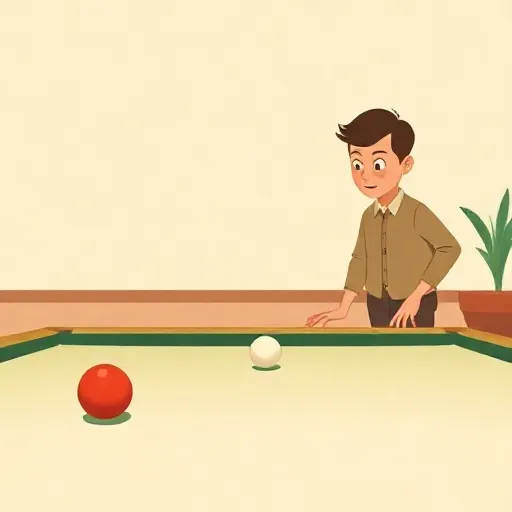
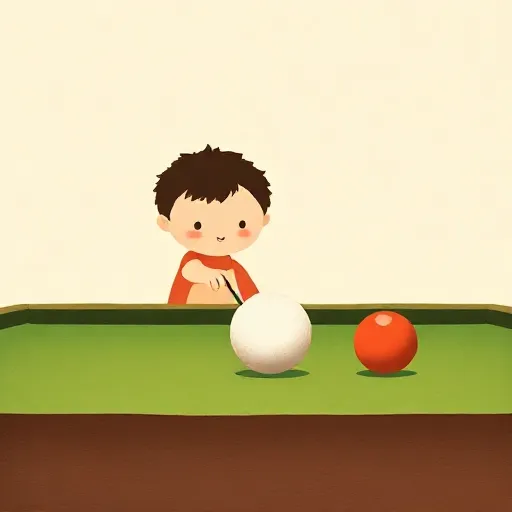
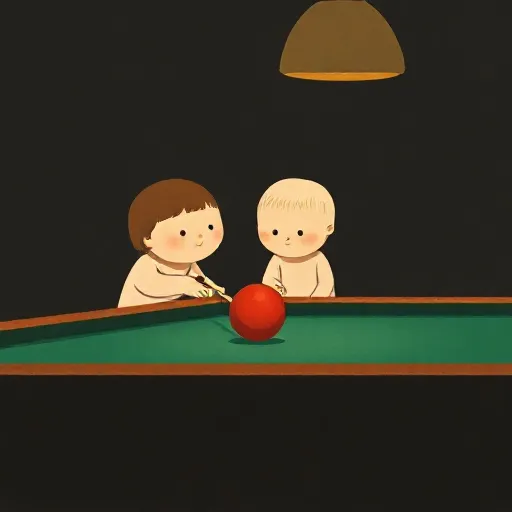
Imagine a game of pool. The white ball smacks the red ball, and the red ball rolls. It feels obvious: the white ball made the red ball move. But what if that feeling is wrong? What if the white ball has no real power at all, and something else — someone else — does the pushing?
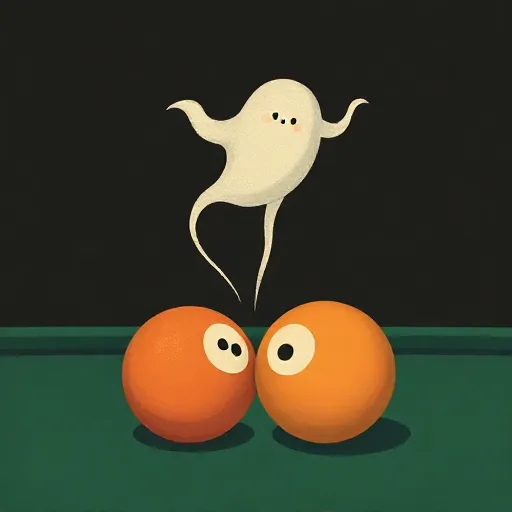
This is the core of occasionalism, a view that says creatures never truly cause anything. When you strike a match, when a rock shatters a window, when you decide to raise your hand, the only genuine cause is God. Things that seem like causes — the match, the rock, your choice — are at most “occasions” that God uses as cues to bring about the effects we see.
One of the most famous occasionalists was the French philosopher Nicolas Malebranche (1638–1715). He argued that bodies are completely passive. A billiard ball, after all, is just a piece of extended stuff: size, shape, position. It contains no force that could make another ball move. “All the properties of extension,” Malebranche wrote, “can consist only in relations of distance.” So when a ball appears to cause motion, what’s really happening is that God’s will is moving things according to a plan — a plan that happens to include the image of one ball touching another. But the idea that physical objects could truly act on each other was, for Malebranche, a kind of confusion.
Before Malebranche, the roots of occasionalism reached back centuries. They grew from a single, pressing worry: if ordinary causes are real, then God might not be able to speak or act in the world in a surprising way.
Al-Ghazālī and the Miracle Test
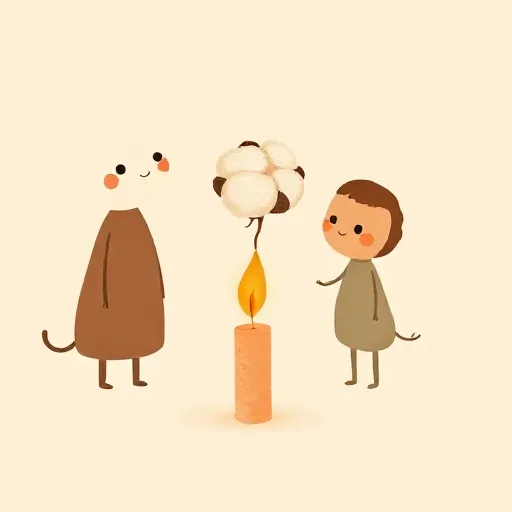
In the eleventh century, a brilliant Islamic thinker faced a problem. Al-Ghazālī (c. 1055–1111) wanted to defend the possibility of miracles — like the stories in the Qur’an where God suspends the ordinary course of nature. Against him stood philosophers like Avicenna (Ibn Sīnā, 980–1037), who claimed that the world runs on iron rules. For Avicenna, a creature’s very nature forces certain effects: fire necessarily burns dry cotton; a stone necessarily falls.
Al-Ghazālī pushed back with a sharp logical point. Hold two things in your mind — say, fire and cotton. Is there a necessary connection between them? A necessary connection means you can’t even think of the first without the second following. But, al-Ghazālī argued, I can easily imagine fire not burning cotton. There’s no contradiction in it. The statement “fire touches cotton and the cotton does not burn” is not like “Cotton is both dry and wet at the same time.” Only that second kind of statement is truly impossible. So the tie between fire and burning is not a logical must; it is just a habit.
That opened a huge door. If God is all-powerful, then the only limit on God’s power is logical impossibility. And since a fire that doesn’t burn cotton is not a contradiction, God could — and occasionally does — cause fire without burning. Al-Ghazālī wrote that “the connection between what is habitually believed to be a cause and what is habitually believed to be an effect is not necessary.” Their link is only “due to the prior decree of God, who creates them side by side.”
Did al-Ghazālī himself believe that only God is a real cause? Scholars still debate this. Some read him as a full occasionalist. Others point out that he may have allowed a weaker kind of creaturely causation, as long as it never boxed God in. What is certain is that his challenge — that genuine causes might require necessary connections — became a weapon for later occasionalists. If a cause must necessitate its effect, and if only God’s will can do that, then ordinary things are left powerless.
You Can’t Move Your Arm Unless You Know How

In the 1600s, occasionalism exploded in Europe among followers of René Descartes. Many of them faced a puzzle: if the mind is a thinking thing and the body is an extended thing, how could they possibly interact? One response was to say they don’t — not directly. And a strange new argument emerged.
The Dutch philosopher Arnold Geulincx (1624–1669) proposed a rule: you cannot cause something unless you know how to cause it. Think about raising your arm. You simply will it, and up it goes. But do you know how your will manages to stir the animal spirits, contract the muscles, send signals along nerves you can’t even picture? Geulincx said you definitely do not. Therefore, you are not the real cause. You provide the occasion, and God does the actual work.
Malebranche took up a version of this idea. He pointed out that between your volition to move your arm and the twitch of your smallest nerve, you see “no relation whatever.” You are ignorant of the million tiny movements it takes. So the effect cannot come from you.
The strength of this “no knowledge” argument depends on how strict you make it. Must you know every tiny detail of a process to cause it? Many philosophers thought not. But Geulincx and others took volitional agency — God’s intentional, knowing action — as the model for all causation. If that is the standard, then human acts fall laughably short. Still, is it fair to compare a rock’s push to a mind’s knowing volition? This question never went away.
God’s Never-Ending Creative Act

The most formidable occasionalist argument came from a theological idea nearly everyone accepted at the time: conservation is but continuous creation. A moment’s reflection shows why. For anything to keep existing, God must sustain it; if God stopped willing it, it would vanish. And that act of sustaining, they held, is exactly the same kind of act as creating from nothing.
Malebranche and earlier figures like Louis de la Forge (1632–1666) drew a dramatic conclusion. In creation, God alone causes both the being of a thing and all its particular features — a chair, for example, must be placed somewhere, with some shape. God cannot create a “chair in general.” And if conservation is the very same activity continued, then at every moment God is the sole producer of a chair’s existence, its position, and every change it undergoes. There is simply no room for anything else to be a cause. As Malebranche put it, God cannot will a chair to exist “without situating it here, there, or elsewhere.”
Think of a stone thrown through a window. If God continuously recreates the stone with its motion and the pane with its fragility, then the shattering is entirely God’s doing. The stone is, at most, the occasion that prompts the next divine act. La Forge even argued that if God stopped actively putting a body in its place, it would slip right out of existence.
Not everyone who accepted “continuous creation” bought this. Rivals like divine concurrentists said that conservation and creation are one continuous act, but that God does more at the original moment of creation while allowing creatures to contribute later. Malebranche insisted the string of divine volitions is exactly the same all through — same effects, same power. For him, that meant no finite thing ever lifts a finger, literally or otherwise.
Are You Just a Puppet? Why It Still Matters

If every motion, every thought, every choice is caused directly by God, where does that leave you? The worry is blunt: am I just a puppet, my strings jerked by a perfect puppeteer?
Malebranche took this very seriously. He tried to carve out a space for human freedom without giving us the power to create any new mode or thought. He called it the power of consent. God constantly gives us desires and thoughts, he said, but we can freely suspend our consent or give it. When a thought pulls you somewhere, you can hold back — or go along. That act of consent, Malebranche argued, does not produce anything new; it simply lets God’s motion carry you forward.
Many have found this hard to swallow. If even the act of suspending consent is itself something that happens in your soul, and God continuously creates your soul with all its modes, it’s unclear how any part of you escapes the divine creative flow. The tug-of-war between God’s full causality and human responsibility remains unresolved.
Yet occasionalism forces us to ask a deeper question that still matters, whether or not you believe in God. What does it mean for one thing to cause another? Must a cause be a kind of irresistible push, or can causation be something looser — a pattern we notice, a regularity we rely on? Every time you say, “I did it,” you are making a causal claim. The occasionalists, for all their strangeness, remind us that those claims are more mysterious than they first appear.
Think about it
- If God causes every single event, can there be a real difference between a miracle and an ordinary sunrise? Why might that matter to someone who believes in miracles?
- Imagine a scientist shows that every time you decide to raise your hand, your brain had already started the movement before you were aware of deciding. Would it still feel like you caused it? How might Geulincx respond?
- When you accidentally knock over a glass, you didn’t “know how” your muscles moved — but we still hold you responsible. Is that fair, or does Geulincx’s principle change how we should think about what you are really doing?