Why Do We Believe One Thing Causes Another?
The Billiard Ball That Baffled a Genius
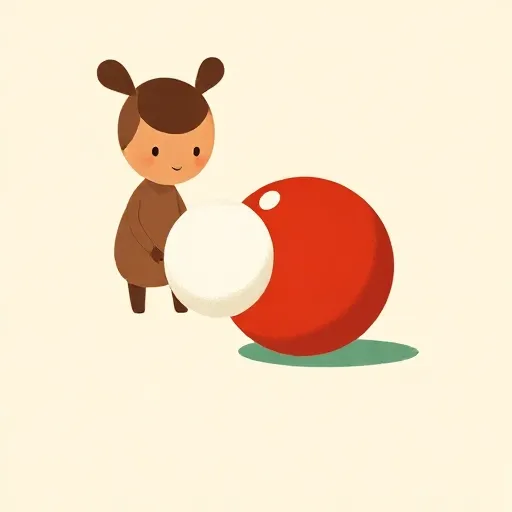
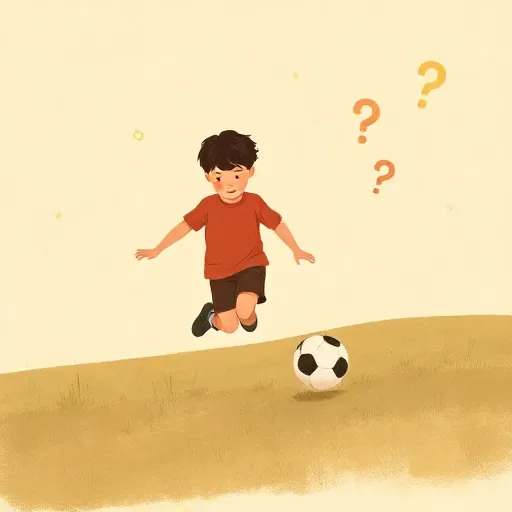
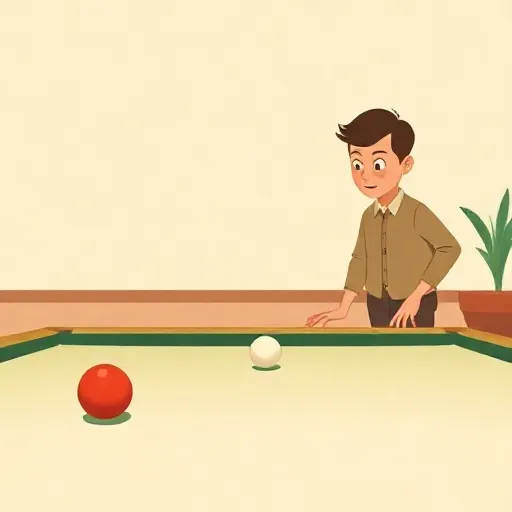
Picture a billiard game. The white ball smashes into the red one, and the red ball shoots away. You knew it would happen. But how did you know? You didn’t see the future; you just expected it. The Scottish philosopher David Hume (1711–1776) asked a question that seems too simple to matter: does pure thought tell you the red ball must move? His answer was no.
Hume noticed something unsettling. You can clearly imagine the red ball staying perfectly still after the collision. That image isn’t a contradiction — it’s just a different movie in your head. So our certainty about cause and effect doesn’t come from logic alone. It comes from experience, from watching one thing follow another over and over. The idea that the second ball must move, Hume argued, is not something we find in the world. It’s something our minds add after seeing the same sequence so many times that we can’t help but expect it.
That mental expectation is what Hume called custom or habit. The feeling of a necessary link — that the effect had to follow the cause — is just a strong inner push, not a truth stamped on reality. To Hume, when we say “the fire caused the heat,” we’re really saying the two events have been constantly conjoined in our past, and our minds now leap from one to the other. The necessary connection we talk about is a feeling projected outward, not a glue in the universe.
Why You Can’t Prove Tomorrow Will Be Like Today
This is the trap of induction — the move from “it has always happened this way” to “it will always happen this way.” Hume saw that all our predictions about the future rest on a hidden assumption: that nature is uniform — that the future will resemble the past. But why believe that?
You can’t prove it with pure logic, because imagining a change in nature isn’t like imagining a square circle. There’s no contradiction. And you can’t prove it by pointing to past success, because that just says “nature has been uniform so far, so it will be uniform tomorrow” — which is exactly what you’re trying to prove. That’s reasoning in a circle.
Hume concluded that there’s no rational foundation for induction. Yet we can’t stop using it. We are built to form habits. When you see lightning, you brace for thunder because you’ve experienced the pattern. The belief that one thing causes another doesn’t come from reason — it comes from custom, a psychological reflex stronger than any argument. The “must” you feel is just a property of your own mind, not a feature of the lightning or the thunder.
The Alarm Clock That Woke a Sleeping Philosopher
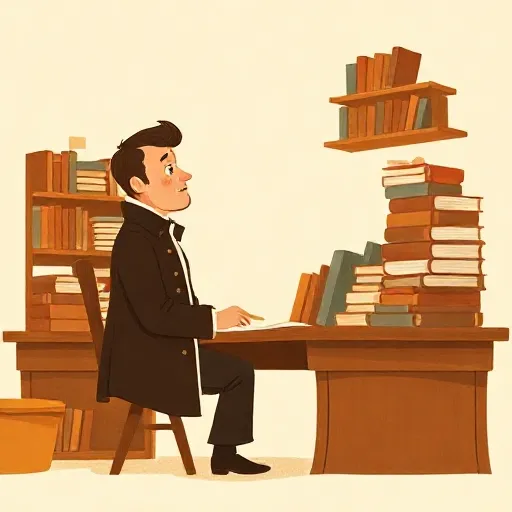
Half a century later, a German professor read Hume’s words and felt the ground shift. Immanuel Kant (1724–1804) wrote that Hume “interrupted my dogmatic slumber” and gave his thinking a completely new direction. What jolted Kant awake was the fear that if Hume was right, not just everyday causal thinking but science itself was on shaky ground — because science relies on the idea that there are necessary laws of nature, not just habits of the mind.
Kant didn’t want to dismiss Hume’s problem. He wanted to solve it. He saw that Hume’s challenge about cause and effect was only a small piece of a much bigger puzzle. All the basic concepts we use to understand the world — like substance, possibility, necessity, and causality — seem to be packed into our minds before we ever open our eyes. Kant called these categories of the understanding. The puzzle was: how can these categories apply to the world if they don’t come from the world?
Kant’s bold answer flipped the usual picture. Instead of saying the mind copies nature, he said the mind prescribes laws to nature. We don’t discover cause and effect inside our perceptions. We bring the concept of cause to our perceptions, and that’s what turns a jumble of sensations into a world we can experience in an organized way. To put it dramatically: experience itself is only possible because the mind actively structures it.
Building a World With Mental Templates
Here’s a way to picture Kant’s big idea. Imagine you put on a pair of glasses that sorts everything you see into “before” and “after.” Without the glasses, you wouldn’t see events in time at all — you’d have a chaotic stream of colors and noises. The concept of cause is like that. When we see the sun warming a stone, we don’t just see one thing after another; we see the sun making the stone warm. The “making” isn’t in the raw sensations. It comes from our own understanding.
Kant called judgments that add something new but are known before experience synthetic a priori judgments. “Synthetic” means the predicate isn’t just hiding inside the subject — it genuinely expands your knowledge. “A priori” means you can know it without checking the world, because it’s a condition for having any coherent experience at all. The statement “every event has a cause” is synthetic a priori. It’s not a logical truth like “all bachelors are unmarried,” and it’s not something you learn by counting cases. It’s a rule the mind uses to turn raw perceptions into objective experience.
This is where Kant directly answers Hume. Hume thought that all we have are judgments of perception — subjective reports like “when I see the sun, I feel warmth.” Kant agreed those alone don’t contain necessity. But then, he said, we add a pure concept of the understanding — the category of cause — and the subjective sequence becomes a judgment of experience: “the sun is the cause of the warmth.” That second judgment is necessary and universally valid. It’s a law, not just a habit.
The Sun, the Stone, and the Puzzle of Particular Laws
Now a tricky problem appears. The law “sunlight causes heat” isn’t one we know purely by thinking. We had to observe the stone many times. So it seems to be learned from experience, not built into the mind. How can it be necessary? Kant was keenly aware of this difficulty, and his solution is one of the most debated parts of his philosophy.
He distinguished between the most general principle (“every event has a cause”) and particular causal laws like the one about the sun and the stone. The general principle is synthetic a priori — a pure law of the understanding. Particular laws are discovered through observation. But Kant insisted that once we embed a discovered regularity into the unified framework of the understanding, it takes on necessity. It’s not just an “empirical rule” anymore; it becomes determined by the a priori principles that make experience possible in the first place.
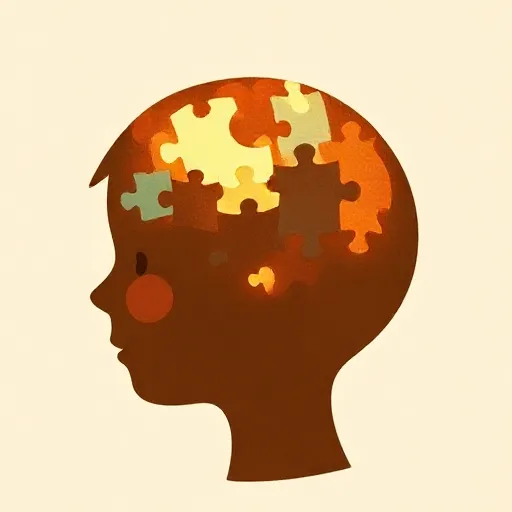
To understand this, think of a jigsaw puzzle where the outer frame is already fixed. The frame is the Analogy of Experience — the principle that every event must have a cause and that nature must hang together as a single system. The inner pieces are particular laws we discover by looking. They aren’t in the frame, but they only snap into place because the frame already exists. Once snapped in, they belong to the whole necessary structure. Kant thought Isaac Newton’s law of universal gravitation worked exactly like that: it was discovered from observations, but it derived its necessity from the fact that it fit the a priori conditions of a unified, law-governed nature.
Does This Still Matter? The Ripple in Your Life
Kant’s wrestling match with Hume isn’t just a dusty old argument. It shapes how you unconsciously think about science, prediction, and even your own freedom.
If Hume is right, the laws of nature are just well-grooved habits. They work, but there’s no hidden guarantee they’ll keep working. If Kant is right, nature really does wear a straitjacket of necessary laws that our own minds help put on it. That might sound comforting — science is on solid ground — but it also raises a huge personal question. If every event in the universe, including every flicker in your brain, is governed by necessary causal laws, can you ever make a truly free choice? Or are you, like the billiard ball, just pushed by the last thing that hit you?
Kant himself believed that there must be room for freedom, but that’s another story. What matters here is that the old Hume–Kant clash still ripples through every debate about whether the future is open, whether physics tells the whole story, and whether you are more than a very complicated machinery of cause and effect. Next time you decide what to eat or which friend to call, ask yourself: was that decision forced by a chain of causes stretching back before you were born — or did something new begin with you? The two philosophers who argued about billiard balls three centuries ago are still sitting in the room.
Think about it
- If a supercomputer could predict every choice you’ll ever make with perfect accuracy, would you still be really free?
- When you see a magic trick you don’t understand, do you believe something supernatural happened, or do you assume there’s a hidden cause — even if you can’t find it?
- Does it matter whether the laws of nature are truly necessary or just patterns we’ve gotten used to? Why?