Why Do You Believe the Next Piece of Bread Will Nourish You?
A Scottish Philosopher Stares at a Loaf
In the 1740s, a Scottish thinker named David Hume (1711–1776) often sat in his study and asked a simple question. Why do you believe that the next piece of bread you eat will nourish you, rather than poison you? Every loaf you have ever tasted has fed you. But that only tells you what happened so far. How do you get from “it always nourished before” to “it will nourish tomorrow”? This is the problem of induction — and it has kept philosophers busy ever since.
Hume thought of the mind as a collection of ideas, which are faint copies of vivid impressions we receive through our senses. You feel the bread, see its color, taste it. Those sensations leave ideas in your mind. More complex ideas, like the connection between bread and nourishment, get built out of simpler ones. The most important connection, Hume said, is cause and effect. It is the only way we can go beyond what our senses tell us right now. When you see bread, you immediately expect nourishment. That jump — from a cause you see to an effect you cannot yet observe — lies at the heart of his puzzle.
Two Kinds of Reasoning and a Hidden Principle
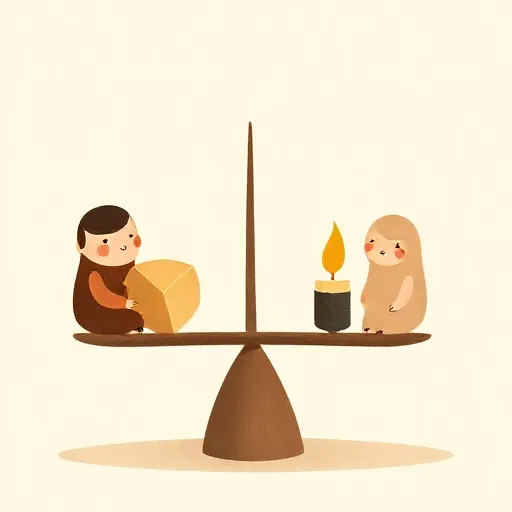
Hume drew a sharp line between two ways of thinking. Demonstrative reasoning deals with relations of ideas. It gives you conclusions you cannot even imagine being false — like “2 + 3 = 5” or “a triangle has three sides.” There is no contradiction in denying the opposite. Probable reasoning, on the other hand, deals with matters of fact. It tells you what is likely based on experience — that bread will nourish, that the ground will not swallow you up.
Now look closely at what happens when you expect the next piece of bread to feed you. You have a long string of past cases where bread nourished. To reach the future case, you rely on an invisible bridge: the assumption that the future will resemble the past. Hume called this the Uniformity Principle (UP). It says that unobserved events will follow the same patterns as the observed ones. The whole inductive move — from “all so far” to “the next one” — depends on this principle. The question is: can reason give you any justification for trusting the Uniformity Principle?
The Dilemma: Reason Cannot Answer

Hume examined both kinds of reasoning and found that neither can support the Uniformity Principle. First, could a demonstrative argument prove it? To count as demonstrative, the conclusion must be undeniable — its denial must be a contradiction. But it is no contradiction at all to imagine that nature suddenly changes. You can clearly picture a world where bread starts to poison you instead of nourishing. The idea does not break any logical rule. So the first path is blocked.
What about a probable argument? This is where the trap snaps shut. Any probable argument that tries to show the future will be like the past already relies on the very principle it is trying to prove. You might say, “The Uniformity Principle has always worked before, so it will work next time.” But that claim itself assumes the Uniformity Principle — you are smuggling in the same hidden assumption. The reasoning circles back on itself. So the second path is blocked too.
Hume’s shocking conclusion is that no chain of reasoning — neither demonstrative nor probable — can justify the leap from observed cases to unobserved ones. In his own words (paraphrased): it is impossible for us to satisfy ourselves by reason why we should extend experience beyond those particular instances that have fallen under our observation. Reason, he thought, simply cannot do the job.
What Pushes Us Then? Custom and Instinct
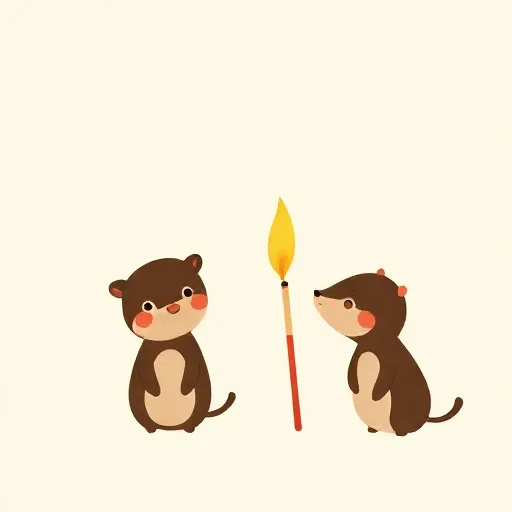
If reason is not in charge, what makes us all expect bread to nourish? Hume gave a surprising answer: the imagination, driven by custom or habit. When we repeatedly see two things conjoined — flame and heat, snow and cold — the mind starts to associate them so strongly that the appearance of one automatically brings the idea of the other. You do not think through an argument; you just feel the expectation. Hume compared it to a natural instinct, as unavoidable as feeling love when you receive kindness or anger when you are hurt.
He even suggested that this instinct might be more reliable than careful reasoning. Nature, he wrote, has arranged a kind of “pre-established harmony” between our expectations and the way the world usually goes. In everyday life, we rarely go wrong when we trust these habits. But the philosophical point remains: what jumps from past to future is not a logical proof. It is a mental reflex — something we do because our minds are built that way, not because we have good reasons.
Philosophers Try to Mend the Gap
Hume’s argument has not stopped people from trying to find a rational bridge. Some, like the 20th-century philosopher Hans Reichenbach (1891–1953), offered a pragmatic reply. He admitted that we cannot prove induction will succeed. But if any method can succeed, induction will eventually find the truth — so it is the best bet, like casting a net when you do not know if there are fish. Others, such as P.F. Strawson (1919–2006), argued that asking for a justification of induction is like asking whether the whole legal system is legal. It is simply part of what we mean by “reasonable” to trust past patterns.
More recently, some thinkers turned to the mathematics of probability. They show that if you start with no special bias, repeated observations can make a prediction highly likely. But this approach still requires some starting assumptions — a prior belief about how the world might behave — and critics say that brings empirical guesses back into the picture. None of these solutions have convinced everyone. The problem of induction remains a live, unsettled puzzle.
Why It Still Haunts Every Prediction You Make
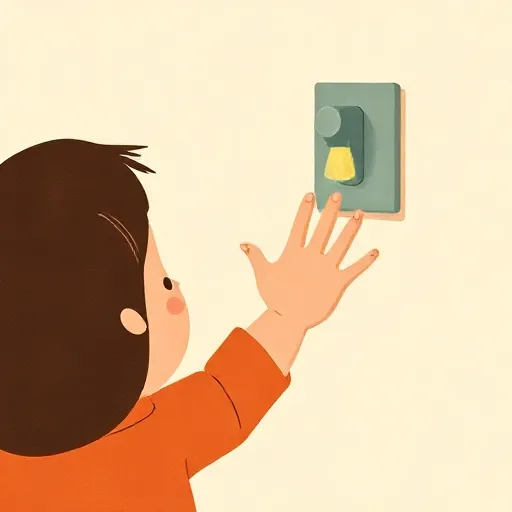
You may have never read Hume before, but you have been living his problem every day. When you flip a light switch, you assume the bulb will glow. When you sit on a chair, you expect it to hold you. These tiny predictions, and the massive ones that science depends on, all run on the engine of induction. Hume’s genius was to show that the engine has no logical certificate. He did not say we should stop using it — we cannot — but he made it clear that our most basic confidence in tomorrow rests on a leap we cannot justify with pure thought.
The puzzle does not go away. It is a reminder that however much we know, the next moment could always surprise us. And that is both unsettling and deeply human. Next time you reach for a slice of bread, you might pause, just for a second, and wonder: why am I so sure?
Think about it
- If every time you dropped a ball it fell down, would you have a reason to believe it will fall tomorrow? What if you suddenly found yourself on the moon?
- A doctor says, “Based on past cases, this medicine will work.” If Hume is right, is the doctor’s belief anything more than a habit?
- If we can never prove that the future will be like the past, should we worry about the sun not rising, or should we just go on as usual? Why?