
How Do You Know the Sun Will Rise Tomorrow? Hume’s Radical Answer
The Pill That Always Works… But Why?
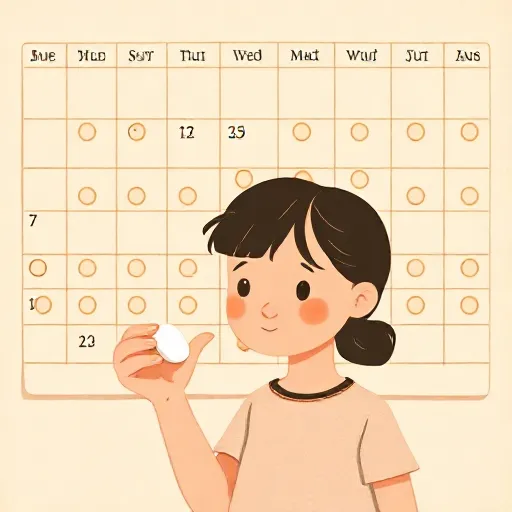
Your head aches. You take an aspirin. In twenty minutes, the pain fades. You didn’t need a scientist to explain it; you just know the pill made it better. But if someone asked you “How do you know the aspirin caused the relief?”, what would you say? You might answer, “Because it always worked before.” That feels rock‑solid. But a philosopher named David Hume (1711–1776) saw a crack in that answer—a crack so deep it threatened to swallow up most of what we call knowledge.
Hume was a cheerful Scotsman who loved food, company, and calm conversation. As a young man he had a terrifying insight: our most basic beliefs about cause and effect might have no foundation in reason at all. If he was right, science, law, even our plans for tomorrow rest on something far more slippery than proof. His attempt to draw a map of that slippery ground would make him one of the most important thinkers in history.
The Science of Human Nature
Hume set himself a gigantic task: to study human nature the way Isaac Newton had studied the physical world. Newton explained the planets with a few simple laws, most famously gravity, a pulling force you couldn’t see. Hume wanted to discover equally simple laws that explain thinking, feeling, and acting. He called his approach the experimental method: reject any claim not based on observation and experience. Like a biologist mapping the parts of a cell, Hume would map the mind’s “geography” and then uncover its “secret springs.”
He saw a mess. Philosophers had fought for centuries about infinity, the soul, and the ultimate nature of reality, getting nowhere. Their theories were “airy sciences”—grand words that didn’t connect to anything you could actually experience. Hume’s drastic remedy was to first find the limits of what our minds can understand, then build a real science of human nature inside those walls.
The Mind’s Toolkit: Impressions and Ideas

To start, Hume needed an inventory of the mind’s contents. He called every mental item a perception, and split them into two kinds: impressions and ideas. Impressions are the live, forceful feelings we get when we see a sunset, prick a finger, or feel a wave of anger. Ideas are the fainter copies we use when thinking or remembering. The difference is the same as feeling a blister now and recalling last summer’s blister.
Hume insisted on a simple rule, his Copy Principle: every simple idea is a copy of a simple impression. A person blind from birth has no idea of red, because she has had no impression of it. You can build a unicorn in your imagination, but you only do that by shuffling bits from real impressions—a horse’s body, a narwhal’s horn. The highest‑soaring fantasy is still assembled from the bricks of experience.
This principle gave Hume a powerful tool, what he called “a new microscope.” If a philosophical term—say, “soul,” “free will,” or “necessary connection”—didn’t trace back to some clear impression, then it was empty noise. No impression, no meaning. That test would explode a lot of philosophy.
Why We Believe in Cause and Effect
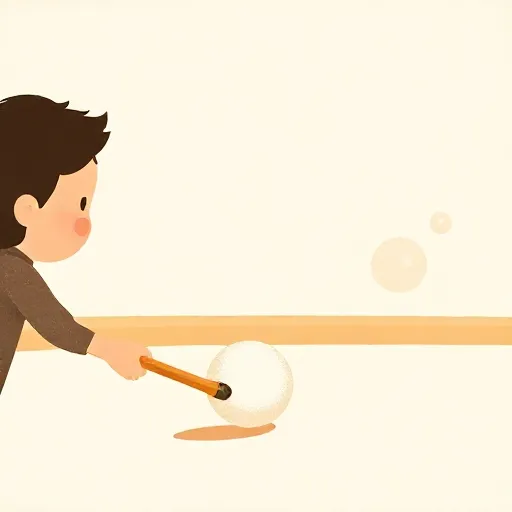
Hume’s most troubling discovery came when he turned his microscope on causation. When you say “aspirin causes headache relief,” what idea is behind the word “cause”? We see the pill go in, and after a while we see the pain subside. But do we ever see a power or a glue that forces one to follow the other? No. We only see two events happen one after another, over and over.
Reason, Hume argued, can never prove that the future will be like the past. Suppose you tell me, “Every time I let go of a stone, it has fallen.” From that past record, you leap to “The next stone I drop will fall.” That leap is not logical. There is no contradiction in imagining the stone suddenly floating. Maybe the laws of nature will change tomorrow. The only thing that pushes you to expect the fall is custom or habit: your mind, after many repeated experiences, simply forms a tendency to move from the thought of dropping to the thought of hitting the ground.
This habit is so strong that the idea of the effect gains a special liveliness. That liveliness is what Hume calls belief—not a special ingredient, just an idea that feels more solid and weighty, almost like an impression, because it is linked to something you are feeling right now. Belief is just a feeling, not a flash of insight into hidden cosmic glue.
With this move, Hume turned the old story on its head. Reason isn’t the driver; it’s the passenger. “Reason is, and ought only to be the slave of the passions,” he wrote. We do not live by proofs. We live by custom and feeling, which work so smoothly we mistake them for iron logic.
Morality: Heart over Head

Hume applied the same tool to morality. Many thinkers of his time believed that right and wrong could be deduced by reason, like geometry. Samuel Clarke (1675–1729) argued that certain actions are “fitting” to a situation, and we grasp that fitness with our intellect. Hume disagreed completely. Pass a starving stranger your last bread roll. Where in the bread, the stranger, or the hand-off does “goodness” appear? Nowhere. You see a sequence, not a moral property.
Instead, moral judgments spring from sentiment—feelings of approval or disapproval. When you watch someone kick a dog, you feel a hot, painful disapproval. That feeling is not a conclusion of a chain of reasoning; it arises immediately, like a sneeze. Hume did not think this made morality random. He believed a natural mechanism, sympathy, ties us together. Sympathy is not pity; it’s a sort of mental echo. When you see your friend grimace after stubbing her toe, your idea of her pain is so lively that it becomes a faint pain in you. Thanks to sympathy, we can feel what others feel.
But sympathy is biased. You care more about your sister than about a stranger on another continent. That’s a problem if morality is to be fair. Hume’s solution is that we learn to take a general point of view. When judging character, we step back and consider what is useful or agreeable to the person and to those they interact with, not just to ourselves. A courageous nurse in a faraway time, who never helps me, still wins my approval because, from a shared viewpoint, her courage is useful and admirable. In this way, morality is a product of human nature, built from the ground up out of feelings and shared perspective, not handed down on stone tablets.
The Case Against a Divine Designer

In his last great work, the Dialogues concerning Natural Religion, Hume (writing through a character named Philo) took aim at the most popular argument for God’s existence: the argument from design. It says: look at the eye’s delicate parts, or the seasons’ regularity. They look like a machine, and a machine needs a maker. So the universe must have an intelligent maker—God.
Philo hits back with relentless questions. First, the analogy is weak. A watch is totally unlike a universe. We have seen watches being made, but we have never seen a universe being constructed. How can we legitimately jump from a tiny part we know to an unimaginable whole we don’t? Second, even if you think a mind made the world, what sort of mind is it? If you say it’s infinitely wise and good, the words no longer carry their ordinary meaning—you’ve stretched them beyond anything we can verify, so they become empty sounds. But if you try to make God understandable by comparing him to a human mind, you end up with a superhero, not an infinite being: a God who makes mistakes, feels anger, and didn’t have the power to stop evil before it started. That’s not the God most believers worship.
Philo does not declare that God doesn’t exist. He instead shows that the design argument leaves us with something so vague that it has no religious content at all: “the cause or causes of order in the universe probably bear some remote analogy to human intelligence.” Any two things are remotely similar in some way. An apple and a nebula are both round. That sort of statement is so empty it can’t guide anyone’s life. Hume thus dissolved the argument rather than refuting it with a counter‑claim.
Why Hume Still Haunts Us

You still wake up every morning trusting the sun will rise, even though you can’t prove it. That’s Hume’s legacy. He showed that the deepest confidence—in science, in justice, in ordinary plans—runs on a foundation of feeling and habit, not airtight logic. And that’s not necessarily bad. Hume thought nature was kind to arrange our minds this way; if we waited for absolute proof before making any move, we’d starve or freeze. But the knowledge that certainty is beyond us can make us a little humbler, a little more willing to listen to people who see the world differently.
When scientists talk about the limits of what we can know, when ethicists argue that moral truths are not like math, and when religious believers and skeptics wrestle over what words about God can even mean, they are walking on ground Hume cleared. He invites you to be curious, not cynical, and to treat every grand pronouncement with a gentle, persistent question: Where did that idea come from? Is there a real impression behind it?
Think about it
- If a pill has worked 1,000 times before, do you have a better reason to take it than you did after the first try? Or is it just a stronger habit?
- If you could take a “sympathy pill” that made you feel exactly what a stranger feels, would your moral decisions become better, or just more confusing?
- Could you live an entire day without making any assumptions about cause and effect? What would that day look like?