When a Rooster Crows, Does It Make the Sun Rise?
Why the Rooster’s Crow Isn’t a Cause
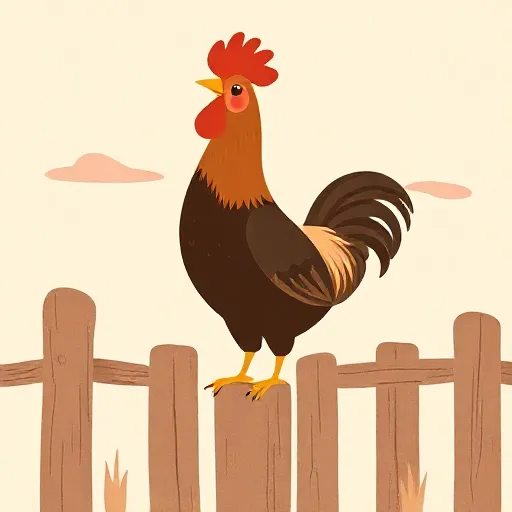
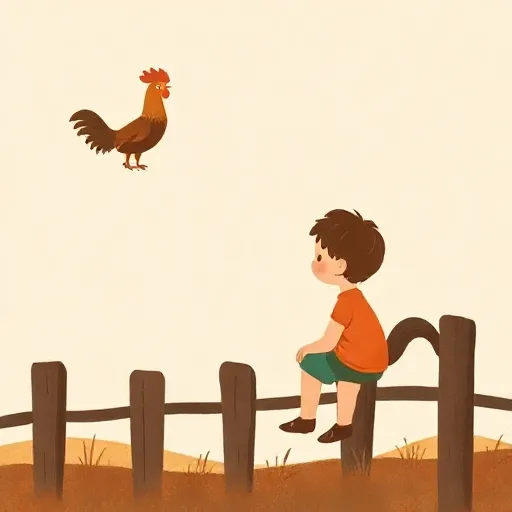
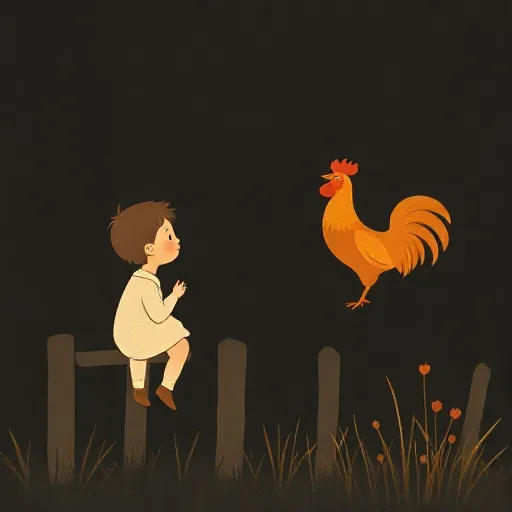
Imagine you’re on a farm. Every morning, just before the sun peeks over the hills, the rooster crows. After seeing this hundreds of times, you might start to believe the rooster’s crow makes the sun rise. But you know that’s not true. The two events happen one after the other, but the rooster isn’t the cause.
David Hume (1711–1776), a Scottish philosopher, thought that causation is all about that kind of pattern. He boiled it down to three simple ingredients. First, temporal precedence: the cause happens before the effect. Second, spatiotemporal contiguity: the cause and effect are close to each other in space and time. Third, constant conjunction: whenever the cause happens, the effect always follows, without exception. According to Hume, if these three things are true, then we have a genuine cause. There is no hidden power or glue that “makes” the effect happen — just one event after another, over and over.
Hume also believed that our feeling of a necessary connection is something our own minds create. When we see A followed by B again and again, our brain forms a habit of expecting B whenever we see A. That mental jump makes us think there’s a must linking them. But in the world itself, Hume said, there is only regular succession. Causation is nothing more than constant conjunction.
Right away, though, this simple picture runs into trouble. The rooster and the sunrise satisfy all three conditions: the crow comes first, it’s close in time and space, and it happens every morning right before sunrise. Yet we’re sure the crow doesn’t cause the sun to rise. So a theory that calls that a cause seems to be missing something important.
The Meteor That Ended the Dinosaurs
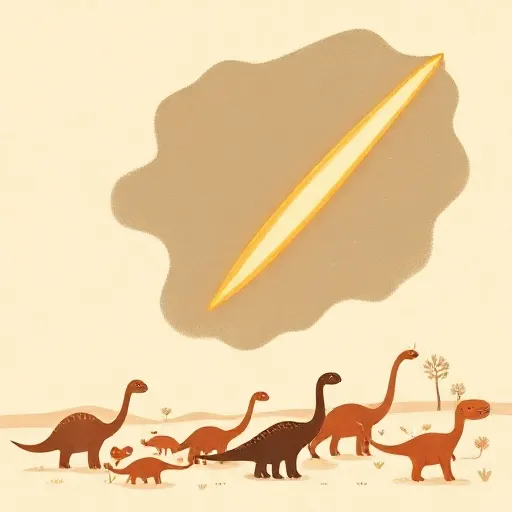
About sixty-six million years ago, a giant meteor smashed into the Earth. The dust and gases it kicked up changed the climate so drastically that the dinosaurs died out. Most scientists agree: the meteor caused the extinction. But Hume’s theory says otherwise.
Remember the third ingredient: constant conjunction. Every event of type C must be followed by an event of type E. For the meteor to count as a cause, it would have to be part of a regular pattern — every time a meteor just like this one hits a planet just like Earth, the dinosaurs go extinct. But that never happens. The meteor strike was a one-of-a-kind event. There is no class of similar strikes to observe. So, strictly, the regularity theory tells us the meteor wasn’t a cause at all.
This is the problem of singular causal relations. Some causes happen only once, or so rarely that we can’t possibly observe a pattern. If causation requires a regular succession of types, then singular, unrepeatable causes slip through the net. A theory that says the meteor didn’t cause the extinction seems to fly in the face of both science and common sense. Something is too strict about the simple regularity view.
When Two Things Follow Each Other But Aren’t Connected
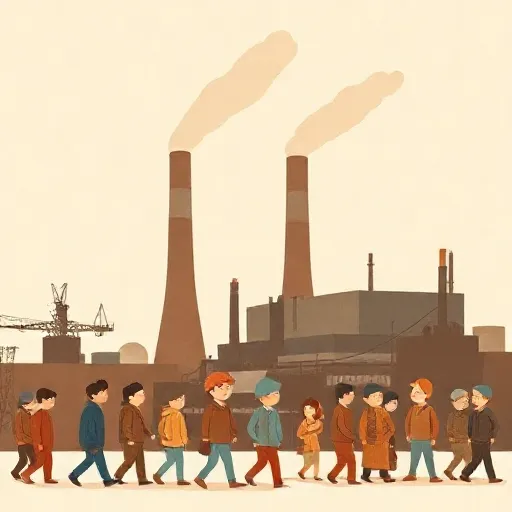
The rooster problem is only one face of a deeper challenge. In the early 1900s, the philosopher Bertrand Russell pointed to an example: factory hooters (loud horns) in Manchester, England, would sound every day at 5 p.m. A short while later, workers in a London factory would stop work and go home. The hooter’s blast regularly preceded the London workers leaving, day after day. On Hume’s rules — it happens first, it’s close enough in time and space via a chain of events, and the pattern holds steady — the hooter seems to cause the Londoners to leave. But obviously it doesn’t. Both the hooter and the London exodus are caused by a common factor: the clock striking five, which sets off routines in both cities.
Philosophers call this the problem of spurious causation. Two events can be constantly conjoined without one causing the other, especially when a hidden common cause is pulling the strings. The regularity theory, in its simple form, can’t tell the difference.
John Stuart Mill (1806–1873) tried to patch this hole. A cause, Mill said, isn’t just any regular succession; it’s a set of factors that is sufficient and necessary for the effect, and the regularity must be a law of nature, not a mere accidental pattern. The cry of a rooster before sunrise is a regularity, but it isn’t a law. The real laws are the most general, stable patterns we find — like the rotation of the Earth and the rising sun. But what makes something a law? Mill and later philosophers, such as Frank Ramsey and David Lewis, argued that the laws of nature are the axioms of the best deductive system we can build to organize our knowledge — the simplest and strongest. This introduces a puzzle: if what counts as a law partly depends on our search for simplicity, then the difference between genuine and accidental regularity might rely on how we think, not just on how the world is. Causation starts to look less objective.
A Jigsaw of Causes: The INUS Idea
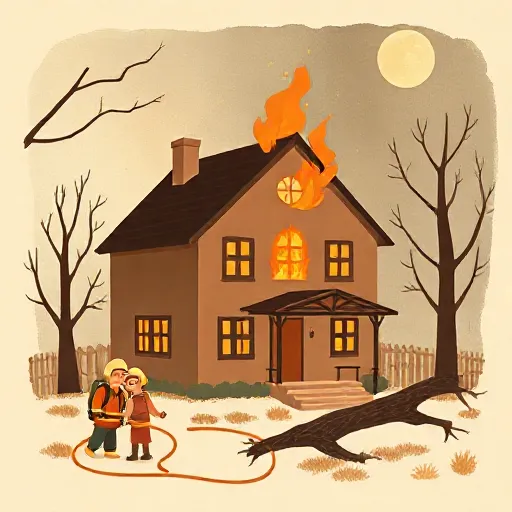
Most effects don’t have a single, neat cause. A house fire might start because of a short circuit, or because an arsonist poured petrol, or because a burning tree fell on the roof. Each of these is a whole cluster of conditions: the short circuit only causes fire if oxygen is present and no sprinkler system is working, for example. J.L. Mackie (1917–1981) built a theory around this complexity.
Mackie said a cause is typically an INUS condition: an Insufficient but Necessary part of an Unnecessary but Sufficient condition. Let’s break that down. For the house fire, the short circuit (C1) is insufficient on its own — you need oxygen and the absence of a sprinkler too. But within that cluster of factors that together are enough to start the fire, the short circuit is necessary — if you removed it, that particular cluster wouldn’t work. The cluster as a whole is sufficient for the fire, but it’s unnecessary, because another cluster (the arsonist and petrol) could have done the job. So a cause like the short circuit is an INUS condition relative to the whole background of possibilities.
This elegantly captures how multiple, different sets of conditions can bring about the same effect. It also explains why we can point to one factor — the short circuit — and call it “the” cause, even though many things had to be in place.
Still, Mackie’s theory couldn’t escape the problem of spurious causation. He himself showed that with the Manchester hooter example. On his own logic, the hooter could end up counting as an INUS condition for the London workers leaving, because when you add in all the background conditions (like the automatic device that sets off the London hooter at five), the blast becomes part of a cluster sufficient for the leaving. So a common cause’s effect can masquerade as a cause of another effect. Mackie acknowledged that his theory was incomplete and needed a notion of causal priority — a way to tell which direction the influence flows. He never fully solved it.
Why This 250-Year-Old Puzzle Still Matters
You make causal judgments every day. You wonder if studying caused your good grade, if the new skateboard wheel caused the smoother ride, or if eating too much candy caused your stomachache. In science, law, and medicine, getting causation right has huge consequences. Does a new drug cause recovery, or did patients just get better on their own? Did a factory’s pollution cause the illness in a nearby town? These questions aren’t just for philosophers — they’re for doctors, judges, and you.
The regularity theory of causation, for all its problems, gave us a powerful starting point. It taught us to look for patterns and to be skeptical about invisible “powers” that can’t be observed. Modern philosophers have built on that base, using tools from logic and computer science to craft theories that handle tricky cases — the one-off meteor, the rooster, the common cause. The debate is far from settled.
Next time you see two things happen one after the other, pause. Ask yourself: is this a real cause, or is there something else going on behind the scenes? That’s a question Hume would want you to ask — and nobody has given the final answer yet.
Think about it
- If you notice that every time you wear your lucky socks your team wins, does that make the socks a cause of the victory? What other factors might you check before deciding?
- A scientist says, “This single experiment shows the chemical caused the reaction.” What might make it hard to prove causation from just one trial?
- Suppose a new law makes a city safer, but at the exact same time the weather gets colder and people stay indoors more. How would you try to figure out which change really caused the drop in crime?