Did the Universe Have a Beginning? (And Other Medieval Brain‑Twisters)
The Accusation That Shook the Medieval World

In 1095, a brilliant Muslim theologian named al-Ghazālī (1058–1111) published a book with a shocking title: The Incoherence of the Philosophers. He accused the most famous Islamic philosopher, Avicenna (Ibn Sīnā, before 980–1037), of three errors so serious that they made him an unbeliever. One of those errors was claiming that the world had no beginning — that it had always existed.
That accusation was not just a squabble. It was the spark that lit a centuries‑long argument across three continents and three religions. Medieval philosophers in Latin Europe, the Islamic world, and Jewish communities all worked within a shared heritage: the writings of the ancient Greek thinker Aristotle (384–322 BCE) and a tradition of writing commentaries on them. But they also had to fit Aristotle’s ideas with their own religious beliefs — Islam, Christianity, or Judaism — which often seemed to contradict him. Three huge puzzles stood out, and thinkers from all three faiths wrestled with them. They asked: Has the universe always existed? If God knows everything, are you really free to choose? And what happens to your soul after you die?
Puzzle 1: Has the Universe Always Existed?

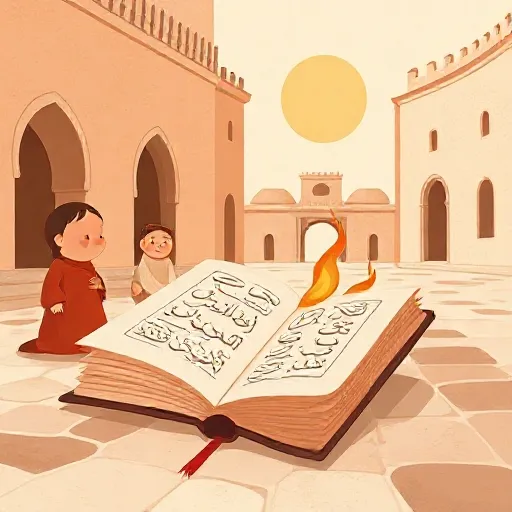
Aristotle taught that the universe is eternal: it has no beginning and no end. Every change has a change before it, forever. For many Jews, Christians, and Muslims, that idea clashed with the belief that God created the world at a moment in time. If the world is eternal, can God really be its creator?
John Philoponus (c. 490–570s), a Christian thinker in Alexandria, tried to prove Aristotle wrong using Aristotle’s own rules. Aristotle said that there can be no actually infinite number of things — the number of stars could be huge, but not truly infinite, as if you could count them all. Yet if the universe had no beginning, Philoponus argued, an actually infinite number of days would have passed before today. Since that is impossible, the world must have had a start.
Al‑Ghazālī also insisted that a beginningless world cannot have a real creator; the philosophers’ God would at best be a metaphor. Averroes (Ibn Rushd, 1126–98), the great Spanish Muslim commentator on Aristotle, fired back. He said both sides agree there are three kinds of things: God, who is uncaused; ordinary bodies, which start in time; and the universe as a whole, which is also caused but not preceded by time — because time itself begins with the motion of bodies. The only difference was whether the chain of past moments stretches back infinitely. That, Averroes claimed, was a tiny disagreement.
Maimonides (Moses ben Maimon, 1138–1204), the celebrated Jewish thinker, refused to smooth things over. He argued that Aristotle had not proven the world’s eternity beyond doubt. Maimonides did not try to demonstrate a beginning; he only showed that the question remains open — and that the idea of a wilful, choosing God fits better with a universe that has a start.
In thirteenth‑century Paris, the Arts Master Boethius of Dacia (d. c. 1284) took a startling approach. He said that as a natural scientist, you have to deny that the world began, because natural science works on the rule that every change has a prior change. But as a Christian, you accept a beginning by faith. Those two claims, he argued, don’t clash because they belong to different ways of talking. Thomas Aquinas (1225–74) took another path: he believed that God could have made an eternal world and still be its true creator, even though — by faith — he knows the world actually did have a start.
Puzzle 2: If God Knows Everything, Are You Really Free?
Most medieval thinkers believed God knows the future perfectly. But if God already knows what you will choose tomorrow, it looks like you couldn’t choose anything else — otherwise God would be wrong. So are your choices really free?
Boethius (c. 476–c. 525), a Roman philosopher writing in prison while awaiting execution, saw the problem clearly. In his book The Consolation of Philosophy, he argued that things are known according to the power of the knower. God exists in eternity, not time. Eternity doesn’t mean endless time; it means grasping all moments — past, present, and future — all at once, as if everything is happening now. Just as watching a chariot race doesn’t force the riders to steer the way they do, God’s timeless vision doesn’t force your choices.
John Duns Scotus (1265/6–1308), a Franciscan theologian, pushed deeper. He noticed that almost everyone accepted that God’s will is unchanging. Under Aristotle’s old rule, what never changes is necessary. But then God couldn’t will contingently, and nothing could be free. Scotus tore up that rule. He said necessity is not just “always true”; something can be true through all time and still be possible to have been otherwise. God’s will could have been different, even though it never actually changes.
Other thinkers took very different routes. Maimonides insisted that words like “knowledge” mean something completely different when applied to God — we can’t understand how God knows, so we cannot say it takes away freedom. His younger critic Gersonides (1288–1344) rejected that escape. He held that God knows only the general laws of the universe, and what happens to individual humans is determined indirectly by the stars — but humans can use their intellects to override those astral influences. By contrast, Hasdai Crescas (c. 1340–1410/11) bit the bullet: he accepted that God foreknows every event and that everything is causally determined, yet he argued this doesn’t make punishment pointless. The threat of punishment is itself part of the chain of causes that keeps people from doing wrong.
Puzzle 3: What Happens to Your Soul After Death?

For Aristotle, the soul is the form of a living body — like the shape of a statue that gives it its identity. That makes separate survival look impossible. Yet Aristotle also hinted that human intellect might be imperishable. Plato, by contrast, saw the soul as a distinct substance that could be reborn. Medieval thinkers had to square these philosophical views with their faiths, which promised bodily resurrection and an afterlife with reward and punishment.
Avicenna read Aristotle through Platonic eyes. He argued that the intellect that thinks about universals must be immaterial — if it were physical, it couldn’t grasp abstract ideas. And whatever is immaterial cannot be destroyed. So each person’s intellect survives death, even if the body does not.
Averroes disagreed completely. In his Great Commentary on On the Soul, he proposed that there is only one immortal intellect for all humanity — a separate, immaterial being. It needs humans, though, because thinking requires images that our physical brains process. Just as the same book makes many viewers’ eyes see the same page, our brains supply images to a single cosmic intellect. Individual souls do not live on; only the shared intellect does.
Thomas Aquinas condemned Averroes’s view as incoherent — it would turn humans into objects that are thought about, not thinkers themselves. Instead, he held that each human has their own intellective soul, which is the form of their body. But because thinking intellectually doesn’t happen in a bodily organ the way seeing happens in the eyes, the soul is a subsisting thing — it can continue to exist even when separated from the body.
By 1516, Pietro Pomponazzi (1462–1525) launched the sharpest attack on Aquinas’s argument. According to Aristotle, intellectual thinking always depends on mental images, and those images need a brain. Even if thinking itself is immaterial, it cannot occur without the body’s cooperation. So — at least by natural reason alone — the soul seems to perish with the body. Pomponazzi insisted he accepted the Church’s teaching that the soul is immortal, but his job as an Aristotelian scholar was to follow reason where it led, powerfully echoing the earlier stance of Boethius of Dacia.
Why Medieval Brain‑Twisters Still Matter Today
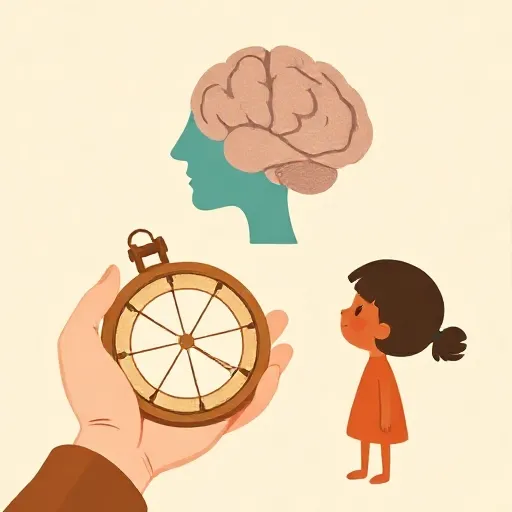
These three puzzles didn’t vanish with the Middle Ages. When cosmologists ask whether time itself had a beginning (the Big Bang) or whether there was something before it, they are retracing the steps of Philoponus, al‑Ghazālī, and Aquinas. When neuroscientists debate whether your decisions are determined by brain chemistry, they are wrestling with the same knot that Boethius, Scotus, and Crescas unpicked in different ways — just without God in the picture. And every time we wonder whether our minds could be uploaded to a computer or whether “you” are more than your neurons, we are echoing Avicenna, Averroes, and Pomponazzi.
What made these medieval arguments so rich wasn’t just the clever logic. It was the fact that thinkers in Baghdad, Paris, Toledo, and Cairo — Muslims, Christians, and Jews — shared the same ancient books and the same hard questions, even when their answers pulled in different directions. That cross‑cultural conversation, carried out over centuries, is a reminder that philosophy is not a solo sport. You think alongside others, even across time and borders, and the questions outlast every attempt to settle them.
Think about it
- If the universe had a beginning, what was there before the beginning? Can you imagine a state with no time at all, or does that idea break your brain?
- Suppose a supercomputer could predict everything you will ever do with complete accuracy. Would you still think of yourself as free? Why or why not?
- If your entire personality — memories, likes, quirks — could be perfectly copied into a machine, would that copy be you? What, if anything, makes you the same person as your past self?