Did the World Have a Beginning? William of Auvergne's Big Argument
Forbidden Books in Paris
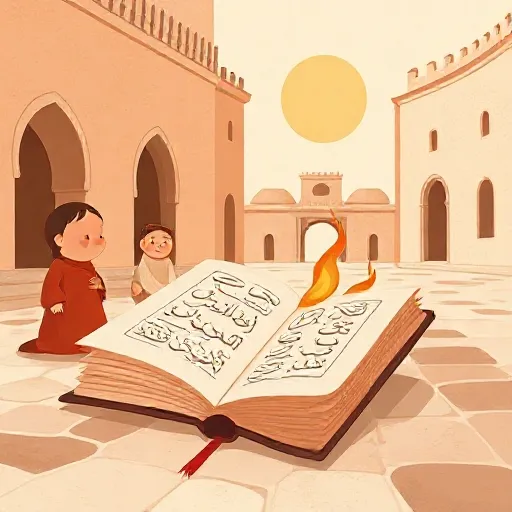
In 1210 the Church leaders in Paris ordered that nobody should lecture on Aristotle’s books about nature. The ancient Greek thinker’s ideas seemed dangerous, even poisonous to Christian belief. But a young priest named William of Auvergne (c. 1180–1249) didn’t just ignore the ban—he dug into those forbidden texts. He also read the works of brilliant Islamic and Jewish philosophers, especially Avicenna (Ibn Sīnā, 980–1037) and Avicebron (Solomon Ibn Gabirol, 1021/2–1057/8). To his surprise, he found them full of wisdom—and full of claims he was sure were wrong. That tension drove him to become one of the boldest philosophers of the Middle Ages.
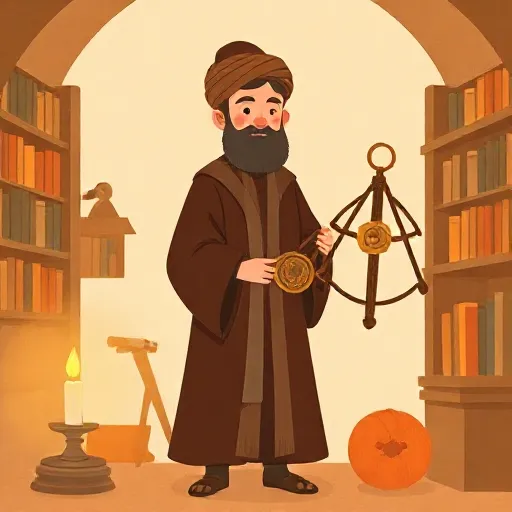
William was born in Aurillac in south-central France, probably between 1180 and 1190. Legend says he was so poor as a child that he had to beg. But his sharp mind carried him forward. By 1225 he was a professor of theology at the University of Paris, and in 1228 he travelled to Rome, impressed the pope, and was made Bishop of Paris. He would hold that position until his death in 1249. From his bishop’s seat he launched a massive project: to use hard thinking, not just scripture, to show where Aristotle, Avicenna, and others had gone astray—and to defend what he saw as the true picture of the world.
Everything Borrows Its Being
William’s philosophy starts with a simple but powerful distinction. Take any ordinary thing: a cat, a stone, a thought. It exists, but it didn’t have to. Strip away everything we can describe about it—its shape, colour, abilities—and at the bottom you find something that came to it, not something that makes it what it is. William called this gifted thing being (esse). The what-it-is of the thing—its essence (or quiddity, from the Latin for “whatness”)—doesn’t automatically include existence. A cat’s essence tells you what a cat is, but not whether any particular cat actually exists. So in all created things, essence and being are separate; the thing participates in being, borrows it from something else.
This makes every ordinary thing a being by participation. It gets its being from another. But, William argued, there cannot be only beings that borrow. If there were, you’d have either a circle—where something eventually borrows its own being from itself, which is absurd—or an infinite chain of borrowers with no lender. Neither can be understood. So there must be a being by essence (or being by substance): something that doesn’t get its being from anything, something whose very essence is to be. This being is being itself. William identified it with God, the first principle. God is not a borrower; God simply is, in a way that nothing else can be. This one simple insight became the cornerstone of his whole system.
The Fight Against Two Gods
Around William’s time, groups often called Manichees taught that the world needed two ultimate principles: one purely good and one purely evil. Only a second, evil source, they said, could explain why there is so much pain and wrongdoing. They rested on the idea that from one opposite, the other cannot come “of itself”—so good cannot produce evil.
William fired back with everyday examples. Drunkenness is clearly bad, yet it comes from wine, which is good. It arises from wine “incidentally,” not as the direct aim. Similarly, evil enters creation not because God wants evil, but because God makes creatures with free will and allows them to misuse it. So evil doesn’t need its own creator.
Then he delivered his most abstract blow. A true first principle, he argued, must be a necessary being through itself—the kind of being that cannot fail to exist and that borrows nothing. But earlier he had shown that there can be only one such being. Two first principles, each perfectly simple and independent, would be indistinguishable; there would be nothing to make them two rather than one. So the idea of an evil first principle self-destructs. The ground of everything is one, not two.
Did the World Have a Beginning?
One of the most explosive debates of William’s time was whether the universe had a beginning. Aristotle and Avicenna insisted that the world is eternal—that it stretches back infinitely, with no first instant. Avicenna’s key argument went like this: God is perfectly changeless. If God decided to create after not creating, that would be a change in God. But God cannot change. Therefore, God must create from eternity, and so the world must have always existed.
William disagreed with every word. He agreed that God is changeless and that God’s will is eternal. But, he said, the result of that eternal will can still have a beginning. Saying “God begins to create” doesn’t mean something new happens inside God. It means the created world has a first moment, while God’s choice to create is timeless. He compared it to a king whose decree sits unchanging in his heart, even though the effect laid out in the decree starts at a particular moment.
Then he attacked the very idea of a beginningless past. If the past were infinite, an infinite series of moments would have to be crossed to arrive at the present. But you can’t cross an infinite series—it has no end from which to start. So the past must be finite. He also argued that every created thing is, in itself, a mere possibility—it has no automatic ticket to exist. Non-being is natural to it. Therefore, to exist it must receive being after not having it; that very passage from non-being to being demands a first beginning. For William, the world could not be forever.
Your Soul, the King
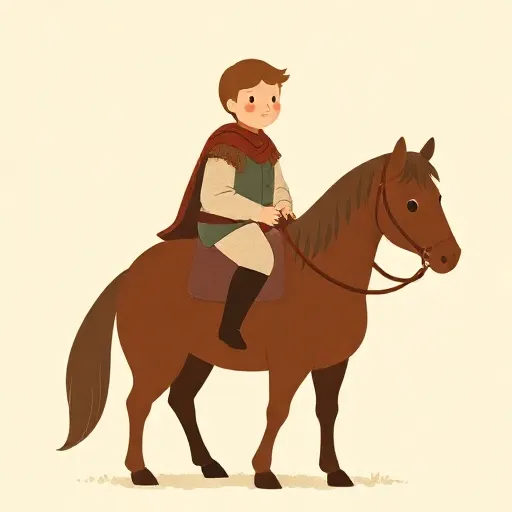
If the universe has a Maker, what about you? William was equally determined to show that each human being is far more than a lump of flesh. He argued that your soul is an invisible, living substance—the real “you” to which the pronoun “I” points. The body, he said, is an instrument, like a horse to a rider. A rider is defined with reference to a horse, but the horse is no part of the rider’s self. So when we say “I am hungry,” it’s not literally the soul that’s hungry, but the body the soul uses.
He borrowed a famous thought experiment from Avicenna. Imagine a person created floating in the air, blindfolded, never having used any senses. This person would have no awareness of having a body at all. Yet they would still know with perfect certainty that they exist. So the core you—your soul—doesn’t depend on a body to be real.
But the soul isn’t just a ghost in a machine. William gave the soul’s two main powers a vivid political twist. The will is an emperor or king in the kingdom of the self, issuing commands like “I will” or “I refuse.” The intellect is the king’s counsellor, offering advice. And a good king can ignore foolish advice. This freedom, William held, makes you truly responsible for your acts. Unlike an animal, which reacts on instinct without power to veto its own impulses, a human being can step back and choose. The will cannot be forced from within—if you truly will something, you cannot at the same time absolutely refuse to will it. That royal freedom means you are the owner of your deeds, good or bad.
Why It Still Matters
You might wonder why the arguments of a medieval bishop matter now. Look around. Scientists talk about the Big Bang—a beginning to the cosmos. That echoes William’s insistence that the world must have a first tick of the clock. Philosophers still wrestle with the question of why anything exists at all, and whether there must be a necessary being to explain it. The debates over free will haven’t gone away either. If every choice you make were strictly determined by brain chemistry and past events, could you still be praised or blamed? William thought a pure material world with no free soul would turn morality into nonsense.
His work is a reminder that big questions don’t get stale. You can think through them with reason, imagination, and respect for people who disagree. Whether or not you end up agreeing with William, his willingness to look at forbidden books, question great thinkers, and build arguments from scratch still offers a model for anyone who wants to understand the world—and themselves.
Think about it
- If you were floating in a void with no senses, could you still be sure you exist? What does that tell you about what “you” really are?
- If everything that begins to exist needs a cause, does there have to be a first cause that exists without a beginning, or could there be an infinite chain of causes? Why?
- If scientists ever prove that the universe had a first moment, would that settle whether it needed a creator, or would the question still be open? What different kinds of answers could someone give?