Did Fire Really Burn the Cotton? Causation in Islamic Thought
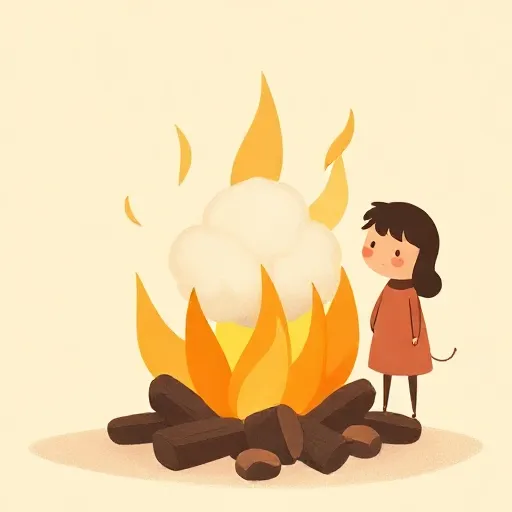
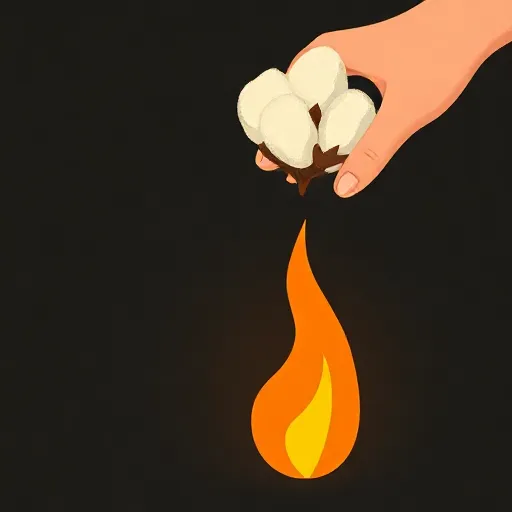
Imagine you’re sitting in your room, and you reach out to touch a candle flame. You know what happens next: your finger gets burned. But why does it get burned? The obvious answer is “because fire is hot, and heat burns skin.” But what if that’s not the whole story? What if, every time you’ve touched a flame, something else was actually doing the burning—something invisible, something beyond the flame itself?
This might sound like a silly question, but philosophers and theologians in the Islamic world spent centuries arguing about it. Their answers weren’t just abstract puzzles. They touched on some of the biggest questions anyone can ask: Does God control everything that happens? Are human beings really free? Can we trust what our senses tell us about how the world works?
The Basic Picture: Atoms, Accidents, and God’s Role
To understand the debate, you first need to know how most Islamic thinkers in the medieval period (roughly 800–1300 CE) understood the physical world. They believed everything was made of tiny, indivisible particles called atoms. These atoms didn’t do much on their own. What gave them their properties—color, temperature, shape, motion—were things called accidents. An accident was something that “happened to” an atom, like paleness happening to the atoms in your skin, or heat happening to the atoms in a flame.
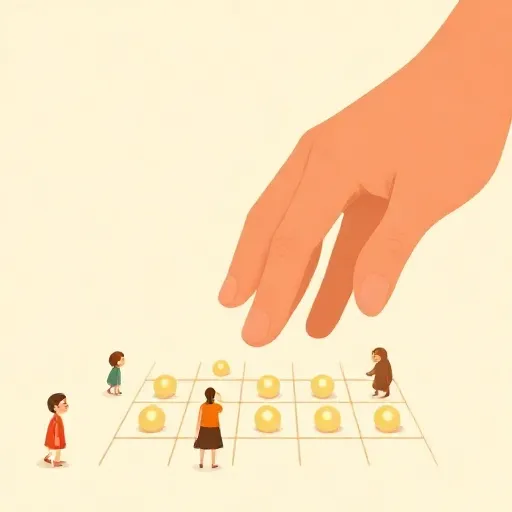
Here’s the crucial part: Most Islamic theologians believed that God created the world at the beginning, and then He recreated it at every single moment after that. Every atom and every accident existed only because God was constantly bringing them into existence, moment by moment. If your skin stayed pale all day, that was God continuously recreating its paleness. If your skin turned red when you went outside, that was God stopping the paleness and creating redness instead.
So, on this view, God is the immediate cause of everything that happens, at every moment. Nothing in the natural world has any power of its own. A flame doesn’t have the power to burn; God simply creates burning whenever a flame touches something burnable.
A Problem: What About Human Actions?
This picture raised an obvious problem. If God does everything, then when I choose to punch someone, God is the one creating my choice, my arm’s movement, and the punch itself. But then how can I be held responsible for punching? If God made it happen, why should I be punished?
Two major groups of thinkers took opposite sides on this question.
The Muʿtazilites: Humans Must Be Free
A group called the Muʿtazilites (active from the 8th century onward) argued that human beings must have the power to produce their own actions. Their reasoning was based on divine justice: if God punishes people for bad actions, then those actions must truly be theirs. Otherwise, God would be punishing people for things He Himself caused, which seems deeply unfair.
So the Muʿtazilites made an exception to the usual picture. They said that human beings—not God—are the ones who create certain accidents, like choices and bodily movements. For example, if I decide to punch you, I create the accident of my choice and the accident of my arm moving. God might still create some of the results (like your bruise), but the core action belongs to me.
This meant that for the Muʿtazilites, the world had two kinds of agents: God and human beings. Each one could cause certain things to happen. Human responsibility depended on human choice.
The Ashʿarites: God Alone Has Power
A rival group, the Ashʿarites (named after their founder al-Ashʿarī, who lived in the 9th–10th centuries), disagreed strongly. They argued that the Muʿtazilite view limited God’s power. If God is truly all-powerful, they said, then nothing can happen without His direct involvement. Every atom, every accident, every change must come from God alone.
But then how do we explain the difference between a deliberate action (like raising your hand to ask a question) and an involuntary movement (like a muscle twitch)? The Ashʿarites introduced a concept called acquisition (kasb). Here’s the idea: When you deliberately raise your hand, God creates in you a special power—a power for that specific action at that specific moment. This power is an accident that belongs to you temporarily. You “acquire” the action, which means it’s somehow connected to you, but God is still the only real cause.
Think of it like this: Imagine you’re holding a flashlight that someone else is turning on and off. The light seems to come from you, but the real power to make it shine belongs to the person operating the switch. For the Ashʿarites, God is the operator. The flashlight doesn’t have any power of its own.
This view is called occasionalism: the idea that God is the only true cause, and everything that happens is a direct result of His action at each moment. There are no “natural laws” that make things happen on their own. There’s only God’s habit of creating certain effects after certain other events.
The Philosophers Strike Back
Not everyone accepted the theologians’ views. A different group of thinkers—the philosophers (falāsifa)—followed the Greek philosopher Aristotle. They believed that things in nature do have real causal powers. Fire really does have the power to burn. That’s just what fire is.
The most influential of these philosophers was Avicenna (Ibn Sīnā, 980–1037). Avicenna developed a sophisticated theory of causation that tried to explain both natural events and God’s role in the universe.
Avicenna’s Big Idea: The Principle of Sufficient Reason
Avicenna started with a simple but powerful principle, which later philosophers would call the Principle of Sufficient Reason (PSR). It says: Everything that exists or happens must have a sufficient reason or cause why it is that way rather than some other way.
You can’t have something just “hanging in the balance” between existing and not existing, or between being one way and another way. Something must tip the scales.
Avicenna used this principle to divide everything that exists into two categories:
- Necessary of existence by itself: Something that exists on its own, without needing any cause. Avicenna said only God fits this description. God exists necessarily—it’s impossible for Him not to exist.
- Possible of existence by itself: Everything else. These things could exist or could not exist, considered on their own. But if they do exist, they must have a cause that makes them exist.
The second category is where it gets interesting. Take a tree, for example. Considered just by itself, a tree doesn’t have to exist. It could not exist. But if a tree does exist, there must be a reason—a cause. And if that cause is also a “possible” thing, it needs its own cause, and so on. Eventually, you have to reach something that is necessary by itself—God—to stop the chain.
Now, here’s the crucial part for causation in nature: Avicenna argued that a genuine cause must be sufficient to produce its effect. If I say “fire causes burning,” I mean that whenever fire is present with the right conditions and no obstacles, the burning must happen. It’s not just that it usually happens. It’s that it can’t fail to happen.
This gave Avicenna a very strong view of causality. Causes necessitate their effects. If you understand what fire is and what cotton is, you can see that fire must burn cotton when they come into contact (assuming no obstacles like water or talc). The connection is necessary, not just habitual.
What About God? Avicenna’s Emanation Theory
But Avicenna didn’t think God was constantly intervening in the world. Instead, he developed a theory of emanation: a step-by-step process where the universe flows from God like light flowing from the sun. God, being perfect and unchanging, produces one effect (a pure intellect), which produces another, and so on, down to the physical world we inhabit.
This means that God doesn’t directly cause individual events like a cotton ball burning. Instead, He established the whole system at once, and natural causes operate within it. Fire burns cotton because that’s how the system works, not because God specifically decides to burn this particular cotton right now.
The Great Debate: Ghazālī vs. The Philosophers
The most famous attack on the philosophers’ view of causation came from al-Ghazālī (1058–1111), a brilliant thinker who was trained in both philosophy and theology. His book The Incoherence of the Philosophers launched a devastating critique.
The “No Necessary Connections” Argument
Ghazālī made a simple but powerful point: We never actually observe a necessary connection between cause and effect. We see one thing happen, and then another thing happen. We see fire touch cotton, and then we see the cotton burn. But do we ever see the connection itself—the necessity that forces the burning to happen?
Think about it. You’ve seen fire and cotton together many times. But each time, you’ve just seen two events, one after the other. The “necessary connection” between them is something you add in your mind, not something you observe.
Ghazālī argued that the connection between what we call “cause” and “effect” is not necessary at all. It’s just God’s habit. God usually creates burning when fire contacts cotton, but He doesn’t have to. He could create a cold fire, or a fire that doesn’t burn. The only reason we expect burning is because we’ve seen it before. But past experience doesn’t guarantee the future.
This opened the door for miracles. If God can do anything, He can make a fire that doesn’t burn (like the fiery furnace that didn’t burn Abraham according to Islamic tradition). The philosophers said this was impossible because fire by its nature burns. But Ghazālī said that’s just an assumption—there’s no proof that fire has such a power.
Averroes Fights Back
Another great philosopher, Averroes (Ibn Rushd, 1126–1198), wrote a response called The Incoherence of the Incoherence. He defended the philosophers’ view by arguing that Ghazālī had misrepresented it.
Averroes pointed out that the philosophers didn’t say fire always burns anything it touches. They recognized that obstacles can prevent burning (like if the cotton is wet or covered in talc). What they claimed is that in the absence of obstacles, fire must burn. The necessity is conditional.
More importantly, Averroes argued that we can’t really doubt that natural things have powers. When you see fire burn cotton over and over, you’re not just seeing two separate events. You’re grasping something about the nature of fire: what it is to be fire is to have the power to burn. To deny this is to deny the possibility of science itself.
A Fundamental Disagreement About God
Underneath all these arguments was a deep disagreement about God’s nature.
For the philosophers (especially Avicenna), God is unchanging. An unchanging God cannot decide to intervene in the world at different times, because that would require Him to change His mind. So the universe must unfold according to a fixed system that God established once and for all. Miracles in the sense of “violations of natural law” are impossible.
For the theologians (especially the Ashʿarites), God is all-powerful and free to choose. If God can’t change His mind or intervene in the world, then He’s not really all-powerful. A truly powerful God must be able to do anything, including making exceptions to the patterns we observe.
This disagreement still matters today. It’s related to questions about whether science can explain everything, whether miracles are possible, and whether God is more like a watchmaker who winds up the universe and lets it run, or more like a king who is actively involved in every detail of His kingdom.
How Do We Know What Causes What?
There’s one more layer to this debate. Even if things do have causal powers, how can we know what those powers are? How do we figure out that fire burns and water wets?
Avicenna had an answer. He distinguished between two ways of knowing:
- Induction (istiqrāʾ): Simply observing that something happens many times. Avicenna thought this only gives us probability, not certainty.
- Experience (tajriba): Repeated observation plus a hidden reasoning process. When you observe fire burning cotton many times, you also implicitly reason that this regularity can’t be due to chance. There must be a real connection. This gives you confidence that fire really does have the power to burn.
But Ghazālī countered that this reasoning is circular. You assume that regularities must have causes, and then you use regularities to prove that there are causes. But the whole question is whether regularities have causes. Maybe they’re just God’s habit.
Why This Still Matters
These debates from medieval Islamic philosophy aren’t just historical curiosities. They touch on questions that are still alive:
What does it mean for something to be a “cause”? When scientists say that smoking causes cancer, do they mean that smoking necessitates cancer (which would be false, since many smokers don’t get cancer)? Or do they mean something weaker? How do we distinguish between a real causal connection and a mere coincidence?
Can God or nature break the patterns we observe? If miracles are possible, does that mean science can’t tell us anything certain about the world? Or can we be confident that the future will resemble the past?
Are human beings really free? If everything has a sufficient reason, then every choice I make must have a cause that made it happen. But if my choices are caused, how can I be free? The philosophers and theologians argued about this, and philosophers are still arguing about it today.
The great Islamic thinkers didn’t just ask these questions—they invented some of the tools we still use to think about them. The Principle of Sufficient Reason, the problem of induction, the debate between occasionalism and natural causation—these are all part of our intellectual inheritance from this tradition.
And nobody has fully solved them yet.
Appendix: Key Terms
| Term | What it does in the debate |
|---|---|
| Accident | A property or quality that “happens to” an atom or substance, like color, temperature, or motion |
| Acquisition (kasb) | The Ashʿarite idea that human beings “acquire” actions that God creates, allowing responsibility without real causal power |
| Atom | The smallest indivisible particle that makes up all physical things |
| Emanation | The theory that the universe flows from God in a step-by-step, necessary process, like light from the sun |
| Occasionalism | The view that God is the only true cause, and what we call “causes” are just occasions for God to act |
| Principle of Sufficient Reason (PSR) | The principle that everything that exists or happens must have a sufficient cause or explanation |
| Necessitating cause | A cause that makes its effect happen necessarily—it cannot fail to produce the effect when conditions are right |
Appendix: Key People
- Al-Ashʿarī (874–936): Founder of the Ashʿarite school of theology, who argued that God alone has causal power and that human beings only “acquire” their actions.
- Avicenna (Ibn Sīnā) (980–1037): The most influential philosopher in the Islamic tradition, who developed a comprehensive theory of causation based on the Principle of Sufficient Reason.
- Al-Ghazālī (1058–1111): A theologian and philosopher who wrote The Incoherence of the Philosophers, arguing that there are no necessary connections in nature and that God is the only true cause.
- Averroes (Ibn Rushd) (1126–1198): A philosopher who defended Aristotle against Ghazālī in The Incoherence of the Incoherence, arguing that natural things have real causal powers.
Appendix: Things to Think About
- If God causes everything that happens, can anyone be praised or blamed for their actions? Is it fair to punish someone for something God caused them to do?
- How would you prove that fire really has the power to burn, rather than just happening to burn every time you’ve seen it? What evidence would convince you that the connection is necessary?
- If you accept the Principle of Sufficient Reason (everything has a cause), does that mean human choices are also caused? And if they are, can we still be free?
- Suppose you saw a magician make a fire that didn’t burn his hand. Would that prove that fire doesn’t have the power to burn, or just that the magician has some special protection? How would you decide?
Appendix: Where This Shows Up
- Science: The question “How do we know that one thing causes another?” is central to scientific method. Correlation is not causation—you can’t just observe that two things happen together and conclude that one causes the other.
- Everyday reasoning: When you assume that flipping a switch will turn on the light, you’re relying on the same kind of reasoning the philosophers debated. You’ve seen it happen before, but do you really know it will happen again?
- Religion: Debates about miracles, divine intervention, and whether God is active in the world today are direct descendants of these medieval arguments.
- Free will: The question of whether our choices are determined by causes (like our genes, upbringing, and environment) or whether we can genuinely choose freely is still a major topic in philosophy and neuroscience.