Could the Whole Universe Be Made of Light? Suhrawardi’s Big Idea
The Philosopher Who Saw Too Much

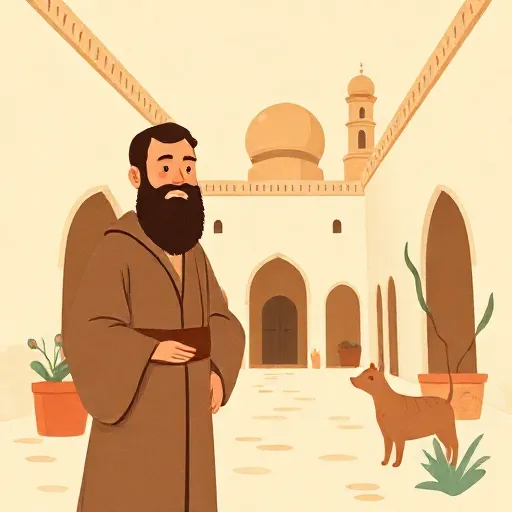
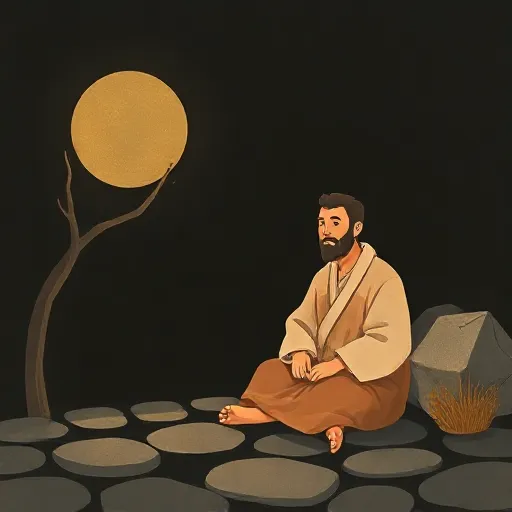
In 1191, in the Syrian city of Aleppo, a man named Shihab al-Din al-Suhrawardi (about 1154–1191) was put to death. He was only 37. His crime? He claimed he knew the deepest truths about the universe not because he had read them in books or worked them out with pure logic, but because he had seen them — directly, as clearly as you see sunlight. He called himself the “Master of Illumination,” from the Arabic word ishraq, meaning a shining radiance from within. For the powerful religious scholars of the city, that claim was not just arrogant; it was dangerous.
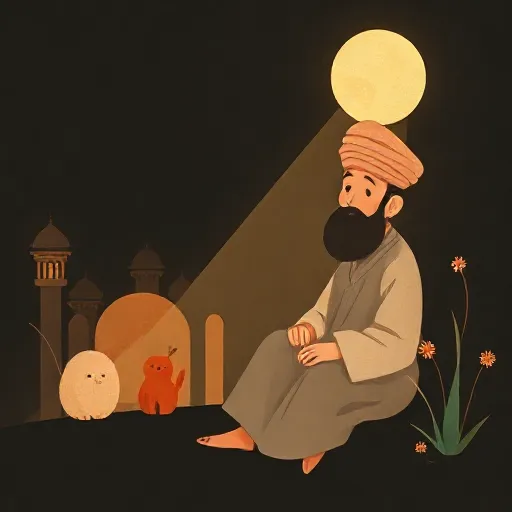
Suhrawardi believed something startling: that the whole of reality is made of light. Not just physical light from the sun, but a living, thinking light that everything — your soul, the stars, even the highest God — is built from, in different degrees of brightness. And he insisted that the only way to truly know this light was through a kind of immediate, wordless awareness he called knowledge by presence. To him, thinking and defining come later; first, you just see it. That radical idea brought him fame, a prince’s friendship, and finally a death sentence.
The Two Ways of Knowing: Thinking vs. Seeing

To understand why Suhrawardi’s view was so shocking, you have to meet the style of philosophy he grew up with. Almost all serious thinkers in his world followed the Peripatetic tradition — a name that comes from Aristotle’s habit of teaching while walking around. The most brilliant Peripatetic before Suhrawardi was Avicenna (Ibn Sina, died 1037). For Avicenna, true knowledge meant finding a thing’s perfect definition — a list of its essential features that left nothing out. If you could capture all the essential parts, you’d understand the thing completely. Logical proofs, built step by step, would then guarantee you had gotten it right.
Suhrawardi thought this was hopeless. Here’s why: imagine trying to explain redness to someone born blind. You can list wavelengths, compare it to heat, describe it as a property of apples — but the person never sees red. The definition never captures the thing itself. Suhrawardi argued that the same problem applies to everything that really matters. The most certain knowledge, he said, doesn’t come from stitching together words; it comes from a direct presence (hudur) of the thing in your awareness. You don’t prove that you’re in pain by listing symptoms — you just feel it. You don’t need a definition of yourself to know you exist; your own self-awareness is immediate, before any thought.
And the most obvious example of a reality that needs no definition, Suhrawardi said, is light. Light reveals itself and all other things. You can’t define it without using the word “light” in a circle. You just see it. So for Suhrawardi, light became both the starting point of knowledge and the basic stuff of existence. Instead of definitions, he built a whole system on this inner seeing.
A Universe Made of Light
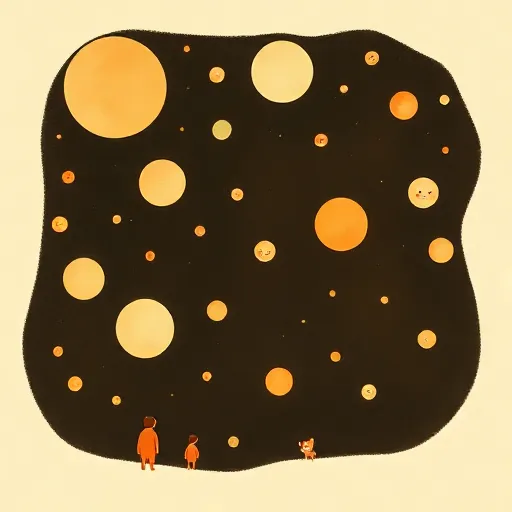
If light is what can be known most directly, Suhrawardi asked, what if light is also what is most real? In his masterwork, the Philosophy of Illumination (completed in 1186), he spelled out an entire universe made of light and its absence. At the very top is the Light of Lights — the necessary, all-powerful source of everything. From that first light, nothing solid is made: everything flows out in endless, shimmering rays.
Suhrawardi divided everything that exists into four kinds. First are pure, self-subsistent lights — immaterial minds, angels, and human souls that are aware of themselves. Second are dark barriers, which are physical bodies. A body is not a light in itself; it blocks light and can only be seen when an accidental light shines on it. Third are accidental lights, like the glint on a piece of metal or a sunbeam on a wall — lights that exist only in something else. Fourth are dark accidents, like the color of a rock in shadow, qualities that neither give nor show light by themselves.
All these levels differ only in intensity. Think of a dimmer switch. The Light of Lights is the fullest, brightest “on.” Each descending light is a little dimmer, a little weaker. A stone is a darkness that barely participates in light at all. Your soul is a bright, self-aware light that rules over your body, a dim barrier. Even God’s knowledge of the world, Suhrawardi said, is nothing more than all these lights being present to the Light of Lights in varying degrees — no complicated definitions needed.
Suhrawardi even rethought how your eye works. He rejected the idea that seeing happens because the object stamps a little picture onto your eyeball. Instead, he said, when you look at a rose, your luminous soul meets the accidental light of the rose directly. There’s no little form traveling through space — there is a presential, face-to-face encounter between two lights. For Suhrawardi, all true knowledge, from seeing a flower to glimpsing the divine, is like that: a meeting of lights.
The World of Images: A Realm in Between

If light lets you know things directly, then there must be a place where all the forms you can imagine actually exist before you perceive them. Suhrawardi invented exactly such a realm: the World of Images (‘alam al-mithal). It sits between the pure intelligible lights above and the dark physical world below.
This is no ordinary place. The World of Images contains suspended forms — shapes and pictures that are not imprinted into any matter. They are what you see in vivid dreams, in mirrors, or in the visions of mystics. When a prophet receives a vision or a poet imagines a fantastic beast, they aren’t inventing something completely new; according to Suhrawardi, their soul’s imagination is touching these already-existing suspended forms.
This idea also solved a puzzle about what happens after death. Many philosophers before Suhrawardi struggled to explain how souls could have any experiences once their bodies were gone. Suhrawardi’s answer: the World of Images provides an “intermediary body” for the soul after death. There, souls can continue to experience joys and pains in forms that feel real — a kind of inhabitable dream. It’s where imperfect souls go to keep growing, and it’s where the promises and warnings found in scripture find their truth. For Suhrawardi, the afterlife wasn’t just an abstract reward; it was a very real, image-filled realm you could, in principle, enter even while alive through deep meditative practice.
Why a Bright Idea Cost Him His Life

If Suhrawardi’s philosophy was so dazzling, why was he executed? The trouble came from both his ideas and his behavior, which mixed together into a dangerous cocktail. He arrived in Aleppo just as the famous ruler Saladin had conquered the city and handed it to his son, al-Zahir. Suhrawardi impressed the young prince and became his friend. At the palace, he debated the city’s top religious scholars — and regularly outshone them. He didn’t seem to hide his sense of superiority either. They resented him.
Worse, his teachings looked threatening. He filled his works with ancient Persian names and symbols that pre-dated Islam, like the divine regal light called kharrah, which ancient kings supposedly possessed. He described a chain of true sages going back to Plato, Hermes, and Zoroastrian priest-kings, and he claimed to be their heir. To his accusers, this sounded like he was reviving old pagan ideas or even claiming a kind of prophecy beyond what Islam allowed. They charged him with heresy. Mixed with political worry — was he plotting with the prince? — the accusations sealed his fate.
Suhrawardi was executed in late 1191 or early 1192. Yet his death didn’t kill his ideas. Within a century, scholars from Iraq to Iran were writing commentaries on his books, sometimes treating him as a mystic guide, other times as a sharp critic of Avicenna’s philosophy. His work sparked a whole Illuminationist tradition, even if later thinkers kept arguing over what he really meant.
Why Suhrawardi’s Light Still Matters

So why should a 12th-century philosopher’s vision of light matter to you today? Because Suhrawardi forces us to ask: are there things you can only know by being them, not by analyzing them from the outside? Think of the difference between memorizing a list of facts about your best friend and actually knowing what it feels like to laugh together. All the definitions in the world can’t replace that direct, shared moment.
We live in a world that prizes measurement, data, and logical argument — and those are powerfully useful tools. But Suhrawardi reminds us that the foundation of all knowledge might be something simpler and harder to capture: the silent awareness that you are you, right now, seeing light. Artists, scientists, and meditators often describe breakthroughs as moments of clear seeing before words rush in. Suhrawardi took that intuition and built an entire universe from it.
His story also raises an unsettling question about courage and truth. He thought he had glimpsed reality directly, and he refused to pretend otherwise — even when it cost him everything. Whether you think he was a genius or an overconfident mystic, his life invites you to wonder: what would you be willing to see, and say, if you truly believed you had touched something real? That question is as luminous and urgent now as it was in a candlelit Aleppo courtroom eight centuries ago.
Think about it
- If you could instantly “see” the truth about something without any reasoning at all, would that be more reliable than a carefully built argument? Why or why not?
- Suhrawardi pictured the whole cosmos — minds, bodies, stars — as one great dimmer switch of light. How would that change the way you treat an object, a plant, or a stranger?
- He was killed because his ideas threatened the authorities. Are there ideas today that still frighten people in power? What makes an idea worth protecting, even if it’s dangerous?