Is Everything Just One Big, Changing Existence?
A philosopher runs away from the city

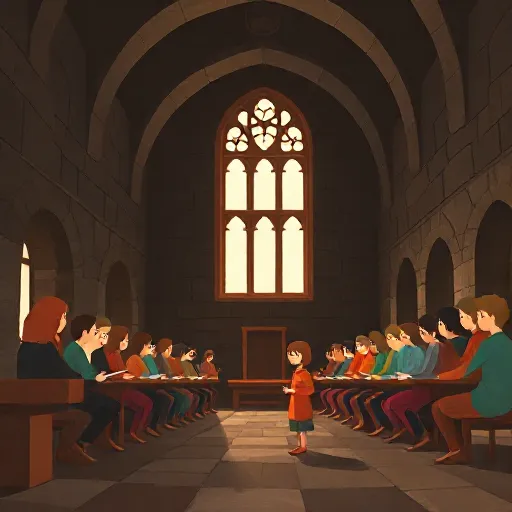
Around 1606, a teacher and thinker named Mulla Sadra (c. 1571–1640) felt fed up. He had studied in the great cities of the Safavid Empire, learning from the best minds of his time. But when he returned to his hometown of Shiraz to teach, people did not want to hear complicated philosophy. So Sadra did something unusual. He left the city and moved to Kahak, a tiny village far from the noise and the criticism. He wanted to sit quietly, think deeply, and figure out the most basic puzzle of all: what does it mean for something to be real?
He spent years in retreat, and there he began writing his biggest, boldest book, The Four Journeys. It was not an ordinary book of dry arguments. Sadra designed it like a mystical journey of the soul, a trip from ordinary life toward the deepest truth. And at the center of that journey was a single, radical claim that would shake up centuries of philosophy. He argued that everything in the universe is not a collection of separate things but one single, flowing act of existence, pulsing at different strengths.
What is more real — the thing or its existence?

Imagine you see a horse in a field. For a long time, philosophers said there are two big ideas to spot here. One is the fact that the horse is — it exists right there. The other is what the horse is — its essence, the bundle of properties that make it a horse instead of a rock. Most thinkers who came before Mulla Sadra, following a brilliant man named Avicenna (980–1037), believed these two pieces were equally important in everything we meet, except for God.
Sadra took a sharp turn. He asked a question that sounds simple but has huge consequences: which part is more fundamental — the existence or the essence? He decided the answer was clear. Think about it: an essence, like “horseness,” is just an abstract idea in your head. It does not have the power to make itself real. It does not “smell the fragrance of being,” as Sadra liked to say, quoting a famous Sufi. Only existence actually makes something show up in the world. You cannot point to a pure, floating horseness that is waiting for a divine switch to be flipped. What really happens is that God, the source of all existence, produces acts of being. These acts of being then take on the “garb” of a particular essence. This is why Sadra insisted on the ontological primacy of existence ( asalat al-wujud ). Existence is the ground floor; essence is just what we name the different shapes existence takes in our minds.
The single light that has no parts

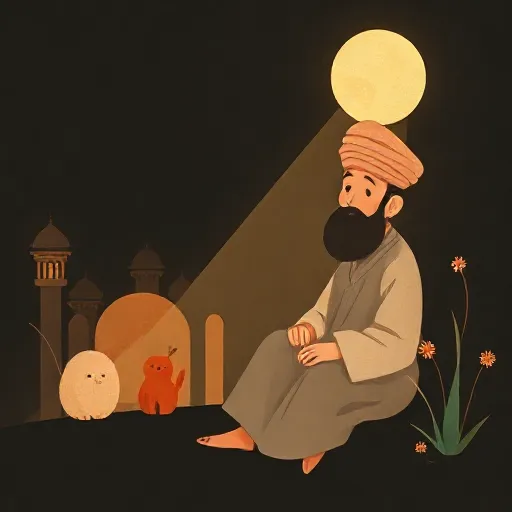
If existence is the true stuff of everything, a big problem appears. Why does the world seem like a wild mess of separate things — dogs, mountains, bad dreams, your best friend? Sadra’s answer is one of his most mind-bending moves. Existence, he said, is a single, simple reality. It does not have neat parts you can chop up, like slices of a pie. But it is not flatly the same everywhere. Instead, existence is modulated ( tashkik ). It comes in degrees of intensity, like a single light that can be a faint glow in one spot and a brilliant, blazing sun in another.
A stone has a weak, thin share of existence. A plant has more. An animal more still. A human, with the power to think and reflect, has an even richer, more intense degree of being. And God, at the source, is pure, infinite existence without a shred of weakness or privation. This means the old, messy argument between “the One and the Many” gets a new kind of settlement. There really is just one reality — existence itself. But that one reality is not stuck in boring sameness. Its very nature is to vary in strength, creating a cosmic hierarchy from the dimmest dust mote to the divine. Every individual in the universe is a unique, pulsing point on this single, shifting scale.
The soul is not a passenger in the body

If existence is a dynamic process always moving in intensity, then nothing just sits still and stays the same. This leads to Sadra’s radical idea about the soul. An old Greek idea, highly influential for centuries, said change was a property that happened to a stable substance. A young man named Zayd turns into an old man. Aristotle would say his substance, his basic “Zayd-ness,” holds steady while the accident of age happens to him.
Sadra said no. He argued for substantial motion ( haraka jawhariyya ). Change is not just on the surface; it goes all the way down. The thing itself is a structure of unfolding events. The young Zayd is literally not the same existent as the old Zayd, because his very existence is in motion, always becoming new. This is how Sadra understands the soul. The soul is not a ghost secretly driving a body-machine. The soul is a single, unfolding act of existence that starts in a very bodily, physical way and, through its own internal motion, grows in intensity. He called this its journey: “corporeal in its origination and spiritual in its survival.” At first, the soul is deeply tied to the physical body. But as it knows, learns, and acts, it intensifies. It becomes more immaterial, more independent, moving toward its source like a river flowing to the ocean. The body is the first, necessary garden where this soul-seed grows, not a cage it is trapped in forever.
When knowing means becoming the thing you know

So how do we know anything in this flowing, single-existence universe? For Sadra, the old models were not good enough. One model said knowledge is just a picture in our heads that matches something outside — a mental copy of a tree, say. But this makes knowledge a remote, secondhand affair. Another model said it was just a cold relationship between two separate things, a knower and an object.
Sadra, inspired by an ancient idea, went for a much closer, more intense solution. If the whole universe is a single existence, then the highest form of knowledge is union, identity between the knower and the known ( ittihad al-‘aqil wa-l-ma‘qul ). Think of it like this: when you truly know something, you do not just have a picture of it in your mind. The act of your intellect existing and the thing being known existing merge into one single event of awareness. This is not a fuzzy feeling. Sadra called it knowledge by presence ( al-‘ilm al-huduri ), a direct, certain, illuminating grasp that is more reliable than any report or copy. For this to work, all things must already exist in a simple, unified way in the cosmic Active Intellect, a pure sphere of knowing that is connected to the divine. To know something perfectly is to connect your own soul-intellect, through its own motion of perfection, to that level of unified, direct presence. You become, in a very specific epistemological sense, what you know.
Why a moving universe matters for you

Why pull a 17th-century Persian philosopher’s dense ideas out of a dusty book? Because Sadra hands you a very different mirror to look at yourself in. Your ordinary world tells you that you are a fixed label — a name, a personality, a backpack of facts you carry around. Sadra’s metaphysics says the opposite. You are not a thing; you are an event. Your existence is a verb, not a noun. At every single instant, you are a fresh act of existence, and the motion of your life can be toward greater intensity, more reality, a fuller share of being.
Even knowledge looks different. If knowing is not just grabbing facts but growing your very existential link to the universe, then a moment of real understanding is more than just getting a good test score. It is a literal increase in the intensity of your own being. You are not a finished product. You are a journey, made of the same stuff as everything else, always moving, always having the chance — as Sadra himself did when he walked out of the city to seek the truth — to travel from a dimmer share of existence to a brighter one.
Think about it
- If everything is made of one flowing existence, not separate stuff, does that change how you think about treating other people, animals, or the natural world?
- If your “self” is a motion and not a fixed thing, does it make sense to say you are the exact same person you were five years ago?
- Can you imagine a kind of “knowing” that is not just fact-collecting, but more like a direct, uniting experience? Have you ever felt something like that?