What Do a Rock, a Thought, and a Number All Share?
A Question That Stumped the Smartest Students
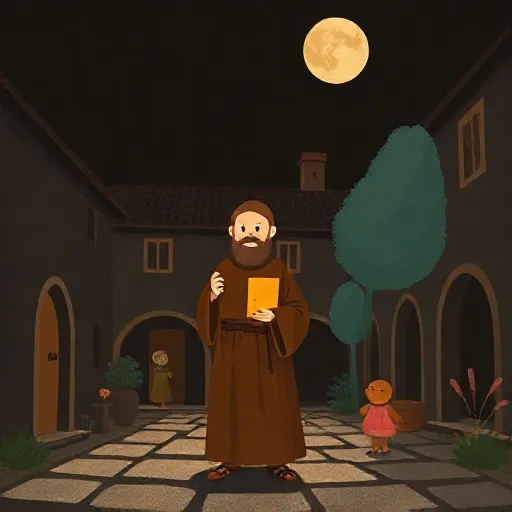
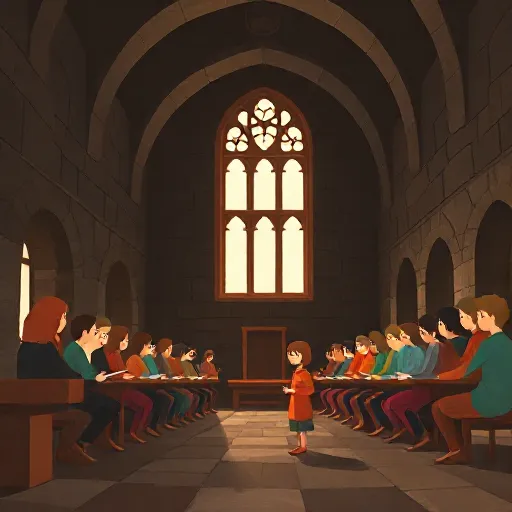
Imagine a chilly winter morning in Paris around 1250. You’re a young student in a long wool robe, sitting on a wooden bench in a stone lecture hall. A bearded master writes two words on a slate: “ens” (being) and “unum” (one). Then he asks: “Does ‘being’ mean the same as ‘one’? And what about ‘true’ and ‘good’—do these point to the deepest features shared by every single thing that exists?”
This wasn’t a trick question. The master was reaching for something philosophers call transcendentals—properties so basic that they slice across all categories, the ten highest kinds of things Aristotle listed (substance, quantity, quality, and so on). A horse, the color red, the number seven, and a memory all belong to different categories, yet each is a being, each is one thing, each is somehow true, and each can be called good or bad in some sense. The transcendentals “surpass” the categories; they run through all of them.
The Latin term transcendens literally means “that which goes beyond.” Medieval thinkers used it for terms that outstrip the usual ways of sorting reality. Among the big transcendentals they counted being (ens), thing (res), one (unum), something (aliquid), true (verum), and good (bonum). What made them special wasn’t just their enormous reach—it was that they are also the first things we know. Before you can define “dog” or “justice,” your mind already grasps being and oneness. You can’t even ask “What is that?” without presupposing being. These are the first objects of the intellect, self‑evident and primitive.
The First Hints: Aristotle and Avicenna

Long before the 1200s, two thinkers had already handed the medievals their starting clues. The first was Aristotle (384–322 BCE). In his Metaphysics, he noticed a curious pattern: just as the word “being” is said in many ways across the categories, so is “one.” A horse is one horse, a color is one color, a relation is one relation—yet the meaning of oneness shifts slightly. Aristotle declared that being and one share the same nature (phusis) but differ in concept (logos). So they are co‑extensive (anything that is a being is also one) but not identical in meaning. He also defined oneness as “indivisibility”—a thing is one insofar as it isn’t split into parts.
The second trailblazer was Ibn Sina (known in Latin as Avicenna, 980–1037). In his own Metaphysics, he introduced the idea of primary conceptions—notions so fundamental that they cannot be defined by appealing to anything more general. To define “being,” you would need an even broader term, but there is none. So these primary conceptions are self‑evident; we bring them to mind by using logically derivative trigger‑notions. Avicenna highlighted two in particular: thing and being. “Thing” points to the essence of a thing, what it is; “being” points to its existence, that it is. This distinction would echo for centuries. Crucially, Avicenna also argued that God cannot be the subject of metaphysics—because God’s existence needs to be proved within the science. So the subject of metaphysics must be being itself, the most common concept. That idea planted a seed for the later entire project of a science built around transcendentals.
From Scattered Clues to a Real Science
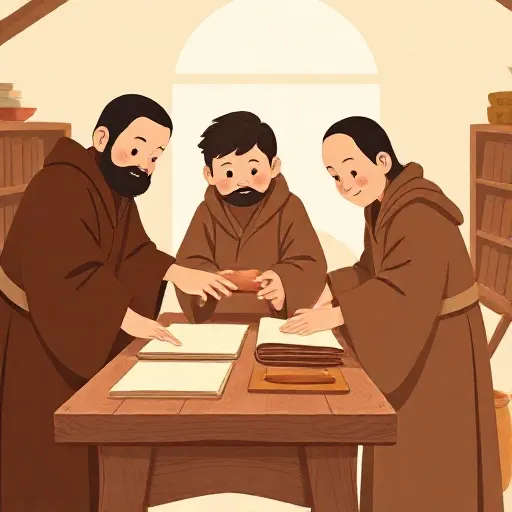
The scattered insights came together in the 1220s, when Philip the Chancellor (writing around 1225) compiled the Summa de bono—the first systematic account of a doctrine of the transcendentals. Others soon followed, including Bonaventure and Albert the Great. Philip and his successors focused especially on the transcendental good, wanting to show that goodness is not a Platonic otherworldly idea but a property of being itself.
How do you organize such a doctrine? The medievals borrowed a model from logic. They treated being as the subject of metaphysics, and the other transcendentals as its convertible properties—like “having three angles” is a convertible property of a triangle (every triangle has it, and it belongs to triangles by necessity). Something is convertible with being if you can say: whenever you have being, you also have that property. So being is one, being is true, being is good. But each property adds a conceptual note: “one” adds indivision, “true” adds relation to an intellect, “good” adds desirability.
This turned metaphysics into a transcendental science—a science that demonstrates the properties that belong to being simply because it is being. And because being is the first thing known, this science paradoxically became both the most fundamental and, in a sense, the easiest to begin—since its starting point is already in your mind.
Three Rival Blueprints: Aquinas, Henry of Ghent, and Scotus

If being and good are convertible, does a mosquito and God have “goodness” in exactly the same way? The three greatest medieval architects of transcendentals gave strikingly different answers.
Thomas Aquinas (1224/5–1274) said that transcendental being is limited to created being; God is the cause of being, not a member of the set “all beings” in the same sense. So terms like “good” are analogical when applied across God and creatures: they are partly the same in meaning and partly different. A helpful parallel: “healthy” is said of a person, of food, and of urine in different but related senses—God’s goodness is the primary analogate, and creatures participate in it in limited ways. Aquinas also held that the proper object of the human intellect is the quiddity of material things; we can’t directly know God in this life.
Henry of Ghent (died 1293) pushed back. He reinstated an older Franciscan claim that God is first known—not distinctly, but as the hidden horizon within every concept. Whenever you grasp that something finite is good, you already, dimly, presuppose an infinite goodness. So the divine is woven into the very meaning of the transcendental notions. Henry also identified being with thing, interpreting being more in terms of essence than existence, and treated “one” as a positive property, not a mere negation.
John Duns Scotus (ca. 1266–1308) rejected both. He argued that the concept of being is univocal: it means exactly the same when you say “God is a being” and “this pebble is a being.” If it were not univocal, you couldn’t reason about God at all. Scotus redefined transcendentality: a predicate is transcendental if it has no predicate above it except being. Commonness to many inferiors is not essential—so even notions like “infinite” (only true of God) can be transcendental. He introduced disjunctive transcendentals (finite/infinite, act/potency) and pure perfections like wisdom. Between being and the simple transcendentals like “one,” he posited a formal distinction—not a real separation, but a non‑identity in formality, like the roundness and redness of the same ball.
These three models fueled fierce debates for centuries and shaped how later philosophy asked about God, reality, and knowledge.
The Goodness Question: Does Everything Come with a Free “Good” Label?
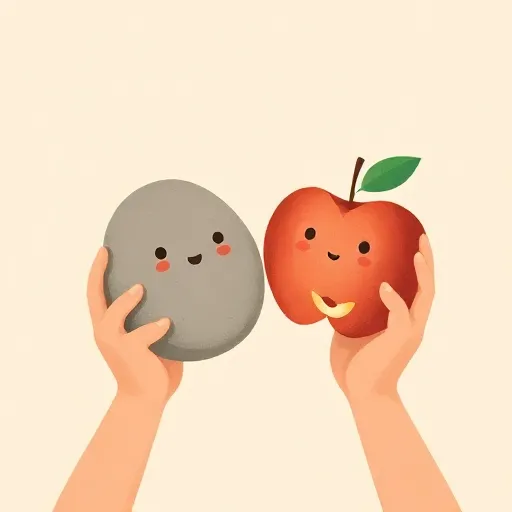
The claim that “being and good are convertible” sounds like it hands out a free “good” sticker to everything—from a violent storm to a paperclip. If that’s true, how can ethics even get started? This worry, echoed in modern times as the “naturalistic fallacy,” was alive in the medieval mind too.
Medieval philosophers drew a careful line between ontological good (the basic perfection a thing has just by existing) and moral good. Aquinas, for example, explained that “good” adds the note of desirability. A thing is desirable only insofar as it is perfect, and it is perfect only insofar as it is in act—meaning it actually is something rather than nothing. A rock actually is a rock, so it has some goodness; but a wise action has a much richer actuality. So not all goods are equal. The formula the medievals used was: good is that which all things desire, but desire follows the kind of thing you are. A rock doesn’t “desire” anything, but a living creature pursues what perfects it. So transcendental goodness anchors moral good without collapsing into it.
Duns Scotus sharpened the difference by making good a formally distinct property: being and goodness aren’t identical concepts, so you can think about being without automatically thinking it’s good. That eased the worry. Still, the deep root remained: goodness is not something humans invent; it’s built into the fabric of being. That’s a bold idea that still provokes debate—some contemporary philosophers accept it, others think it’s a confusion.
Why the Medieval Hunt Still Matters
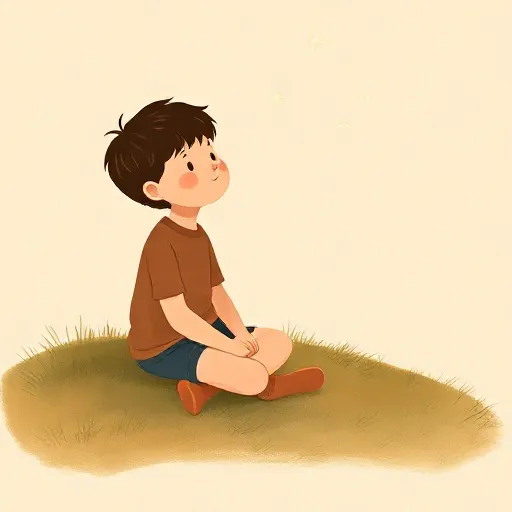
Imagine you’re sitting outside on a clear night, looking at the sky. You might wonder: does the universe simply exist, or is it also somehow meaningful? Are truth and goodness real features of the world, or just labels we slap on after the fact? The medieval doctrine of the transcendentals was one of the most ambitious attempts to answer those questions with a unified “yes.”
The idea that being, oneness, truth, and goodness are inseparable and stretch across every category implies that reality is not a cold, neutral pile of stuff. It suggests that understanding the world is possible because the world is intelligible—truth is built in. It suggests that pursuing what is good aligns you with the grain of the universe, not just with your own feelings. That vision excited the medievals and still attracts thinkers today.
At the same time, their project exposed a crack. They founded metaphysics on the identity of the first object of the intellect with the subject of the science. But what the mind can conceive (like “thing” or “something” applied to imaginary objects) is wider than what is real. That tension eventually led later philosophers, such as Kant, to turn the transcendental inward—making it about how our mind structures experience rather than about reality itself. So the medieval struggle directly shaped the modern world’s turn toward the inner life of the mind.
Next time you judge something as “true” or “good,” you’re touching a rope that leads straight back to a 13th‑century classroom where a student first realized that being, truth, and goodness might be the deepest code of all.
Think about it
- If a rock is “good” just because it exists, does that mean there is no such thing as a truly bad thing? Can you think of something that might be both existing and yet wholly bad?
- Try to define “being” without using the word “is” or any synonym (like “exist”). Can you do it? If not, what does that tell you about the most basic concepts in your mind?
- Suppose you could prove that goodness is a real feature of everything that exists. Would that change how you treat things—like a broken toy, a mosquito, or even a pile of trash? Why or why not?