What Makes You, You? A Medieval Philosopher’s Surprising Answer
A Kid, a Dog, and a Thousand-Year-Old Puzzle

You see a dog in the park. A shaggy terrier with one floppy ear. You know it’s a dog, not a squirrel or a bicycle. But what does that really mean? Is there some invisible thing — “dogness” — that this terrier shares with every other dog that ever lived? Or is “dog” just a handy label we slap onto a bunch of furry creatures that happen to look and act alike?
For over a thousand years, philosophers argued about this question. Some, called realists, said that common natures like dogness or humanness are real, even if you can’t touch them. Others, called nominalists, said only individual things exist — this dog, that person — and common natures are just names we invent. The fight was huge, and it wasn’t just about words. It was about what the world is made of.
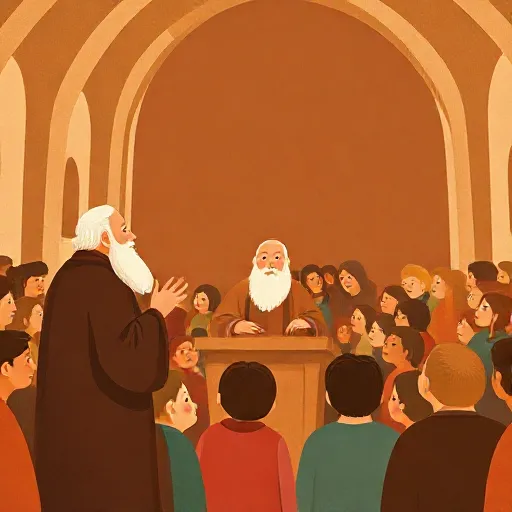
One thinker who jumped into the middle of this fight was Paul of Venice (c. 1369–1429). Born in Udine, Italy, he joined the Augustinian order as a teenager and studied at Oxford before becoming a teacher and a diplomat. He wrote dozens of books on logic, physics, and the soul. But his most daring idea was a new way to say: both sides are right. Individuals are real, and common natures are real — but not in the same way.
Identical and Distinct, All at Once

To explain how one thing can be both singular and common, Paul invented a careful system of identities and distinctions. He started with something simple. If you have two clay pots made from the same batch of clay, they share material identity — the stuff is the same. But if you look at the shape of one pot and its shiny glaze, those features are different forms sharing the very same pot. Paul called that a formal distinction.
A formal distinction means that two aspects are not just in your head; they are really in the thing, but they aren’t separate objects you could break apart. They are different descriptions that pick out one and the same reality. For example, your ability to laugh and your ability to learn are two different properties, but they live in you as one undivided person. They are formally distinct.
Now, here is where Paul turned an earlier idea upside down. Earlier thinkers like Duns Scotus had used formal distinctions to show how one individual substance could contain many different real aspects — the passage from one to many. Paul flipped the direction: he wanted to explain how many formal principles (like different properties or descriptions) could come together to make one single substance. He was travelling from many to one.
This move changed everything. It meant that a universal nature — like “being human” — and the individual person — like you — are really the same thing, just formally distinct. You aren’t a copy of some ghostly Human Template. You are the human nature, made concrete and unique.
The Glue Between Words and Things

If common natures are real, then what happens when we say a sentence like “Socrates is a man”? Paul thought that predication — connecting a subject to a predicate — is not just a game of words. It’s a real relation out there in the world.
He split predication into two kinds. Identical predication happens when the subject and predicate share at least one “substrate of existence.” In plain terms: you can say “this terrier is a dog” because the same individual thing that makes the terrier exist also makes the dog-nature exist in it. They overlap in reality.
Formal predication, on the other hand, requires a necessary link between the two forms. When you say “A human is formally an animal,” you aren’t just pointing out that every human happens to be an animal so far. You’re saying that being an animal is built into what it means to be human, by the formal principles themselves. And when you say “Human is a species,” you’re doing a second kind of formal predication, because you’re using a second-order label (species) that describes how the nature fits into a logical tree.
This might sound like splitting hairs, but it gave Paul a powerful tool. It allowed him to say that sentences like “This singular thing is a universal” are false if you treat them as formal predications. Instead, you should say “This singular thing is this universal” — the little word this switches the predication from formal to identical, making the sentence true. The result: Paul built a system where the same copula (the “is” in a sentence) could mean three different kinds of connection between things.
How You Know Your Best Friend

If Paul’s metaphysics was glued together with formal distinctions, his theory of knowledge had to follow. And here he broke with a long tradition. Thinkers like Thomas Aquinas (1225–1274) had said that your intellect primarily grasps universal essences — you know “humanity” first, and only by a kind of mental reflection do you get to know an individual like your friend. Paul found that deeply unsatisfying.
He asked: when you see a dog, your senses already form a detailed mental picture, or phantasm, that carries information about this particular dog. Your inner senses (what he called the cogitativa) even recognize the dog as a singular substance. So why should your intellect have to wait for a universal concept before it can reach the individual? That would mean you’d know the universal first, and then use the universal as a bridge to the singular — but the universal is no more like this dog than any other dog.
Paul’s answer was bold. The first intelligible species your mind receives — the first meaningful mental form — is singular, not universal. It comes directly from the phantasm, which is itself a representation of an individual. So you know the individual and the universal at the same time. The universal essence is still the primary object by nature (since it is deeper and more stable), but the individual is equally direct. You don’t need a convoluted turn back to the phantasm; your intellect simply has the power to receive both universal and singular species.
This was a quiet revolution. It meant that when you recognize your best friend across the schoolyard, you are not just seeing some surface appearance while your intellect lazily patterns “human.” You are knowing that person, directly, as a thinking being.
Are You Free, or Was Everything Already Planted?
There was a shadow in Paul’s system. If every individual is just the unfolding of a common nature, and all forms already exist as hidden potencies in matter, then isn’t the future already set? Paul’s theory of potency and act seemed to push in that direction.
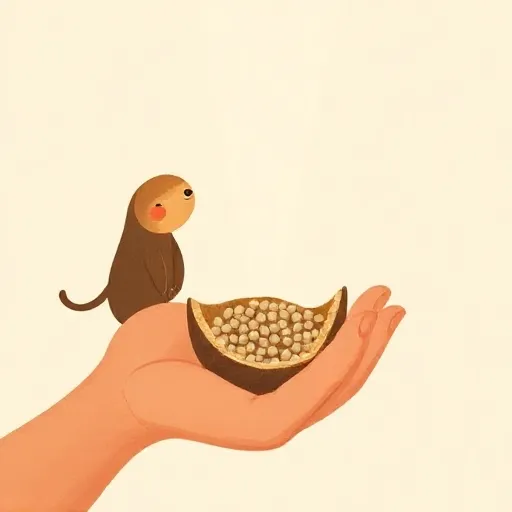
He taught that prime matter — the raw stuff of the world — isn’t completely blank. It contains rationes seminales, “seedlike principles,” that are eternal dispositions to receive each kind of form. All the forms that will ever appear in nature are already there, in a potential and incomplete state. When a new oak tree grows, it’s not something absolutely new; it’s the actualisation of a potency that was lying dormant in the matter all along.
This sounds like a giant domino chain where every event was bound to happen. But Paul tried to leave a gap for freedom — especially human freedom. He said that the specific traits and actions of individuals are not precisely determined in advance. Your height, your weight, your decisions: they can vary within a spectrum defined by the species. So Socrates’ life is not scripted down to the last cough, even though his human nature sets the boundaries.
Paul admitted that, from a purely physical point of view, you might have to say that everything real was already possible and even destined to become real if the conditions are right. But from a theological viewpoint, God’s creative will left many possible species entirely unrealized. The result is a delicate balance: the universe is deeply ordered, but at the individual level, there is room for surprise.
A Mirror That Still Reflects
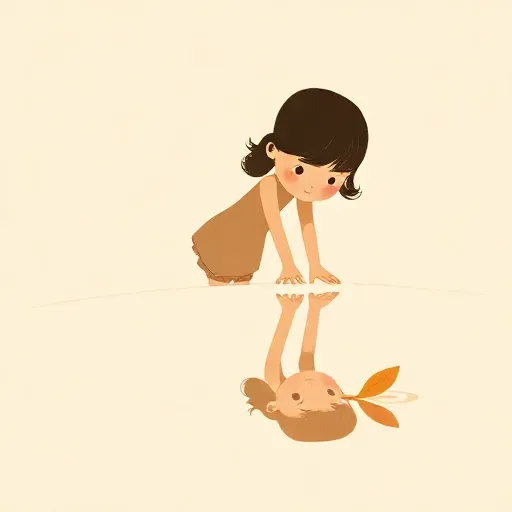
So why dig up a 600-year-old monk’s theories? Because his questions are still yours. Every time you struggle to describe yourself — “I’m me, but I’m also a student, a sibling, a friend” — you bump into the problem of the one and the many. Paul’s formal distinction is a way of saying: you are genuinely one thing, yet different true descriptions of you don’t just sit in language; they map onto something real in who you are.
His insistence that you know individuals directly also feels right. When you love someone or get angry at someone, you aren’t loving an abstract universal. Paul gave that intuition a philosophical backbone.
And his wrestling with potency and freedom? That’s the same puzzle we face today when we wonder if our choices are the product of our genes, our upbringing, and our brain chemistry — or if there is something genuinely open about the future. Paul didn’t solve the puzzle, but he built a towering framework that let the question be asked with precision.
He shows you that medieval philosophy is not a dusty cabinet of odd beliefs. It’s a workshop where the very concepts you use — “real,” “true,” “I” — were forged and tested. You live in the world Paul tried to understand.
Think about it
- If you and your best enemy share the same human nature, what makes you genuinely different people?
- Can you think of something about yourself that is true no matter what, and something else that could have been completely different? Where would each belong in Paul’s system?
- If all the forms of things that will ever exist are already hidden as potency in the world, does that mean the future is already written — or just that it has limits?