Is a Dog Still a Dog if It Looks Like a Raccoon?
The Dog Who Looked Like a Raccoon

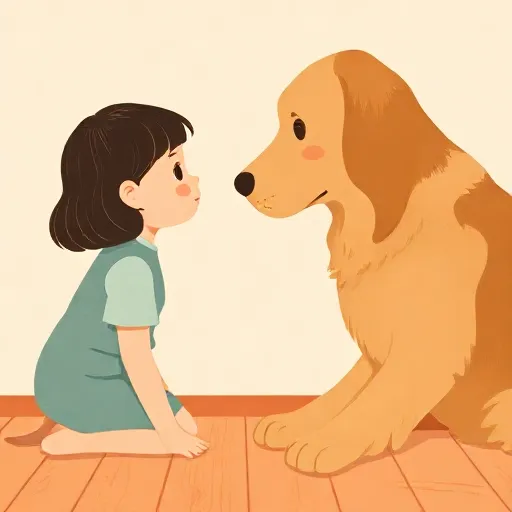
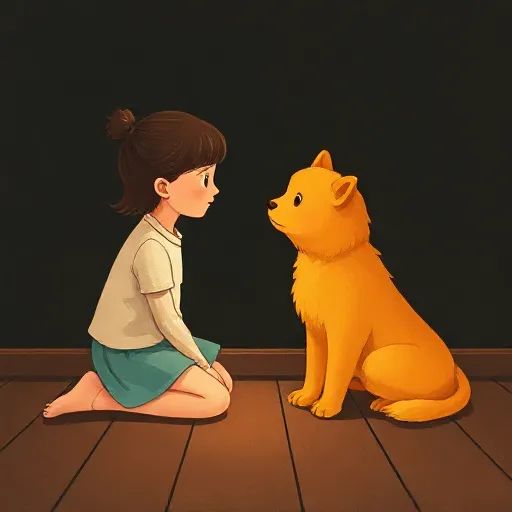
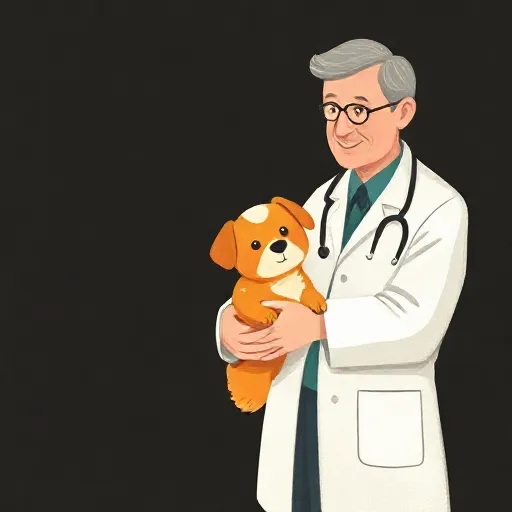
Imagine a veterinarian with a strange experiment. She surgically alters a small dog so that it looks exactly like a raccoon—striped fur, bushy ringed tail, the works. When she asks a child what animal is on the table, the child frowns and says, “It’s still a dog.”
Why does the child say that? It’s not because she saw the surgery. Even if she only saw the final result, most of us, and even young children, would insist the creature is a dog—not a raccoon. This stubborn judgment reveals a deep puzzle. We carry around mental tools called concepts—ideas like DOG, JUSTICE, GAME—that let us sort the world. But what are concepts made of? How do we decide what belongs under a concept and what doesn’t? And where do those concepts even come from? The dog-that-looks-like-a-raccoon is a doorway into one of philosophy’s liveliest quarrels.
What Is a Concept, Anyway?
Every time you think “that’s a dog,” your mind is using a concept. But what is that concept, exactly? Philosophers and scientists have three very different answers.
The first view, and the most popular in cognitive science, says concepts are mental representations—inner symbols, like words in a private language. When you think about a dog, your brain activates a symbol, something like DOG, that stands for dogs. Just as a sentence is built from words, a thought is built from these mental symbols. This helps explain why you can think an endless number of new thoughts (you can combine symbols creatively) and why your reasoning can be carried out by your brain. Critics push back. The philosopher Daniel Dennett (born 1942) points out that you probably believe “zebras don’t wear overcoats in the wild,” even though you’d never before stopped to form that mental sentence. If concepts require explicit mental words, how can you hold so many beliefs so automatically?
A second camp says concepts are abilities, not things in your head. On this view, the concept DOG just is the skill of telling dogs apart from non-dogs and drawing the right conclusions about them. This approach owes much to Ludwig Wittgenstein (1889–1951). He argued that inner pictures can’t explain understanding—you’d just need another inner picture to interpret the first, starting an endless regress. If you say a concept is a mental image, what tells you what the image means? That seems to need another concept, and so on forever. The ability view avoids that trap. But critics say it struggles to explain how we produce so many new thoughts so easily.
A third view treats concepts as abstract objects, like numbers or meanings that exist whether anyone thinks them or not. The philosopher Gottlob Frege (1848–1925) introduced the idea of senses—ways a thing can be presented. The names “Eric Blair” and “George Orwell” refer to the same real person, but they convey different senses. That’s why you can learn something when told they’re the same person. Concepts, on this picture, are those senses. Christopher Peacocke (born 1950) adds that we can talk about concepts nobody has yet acquired—like concepts that might exist even if all humans die out. Defenders of the mental-representation view reply: we can just say that an unacquired concept is a type of mental symbol for which no token has appeared yet in anyone’s brain, like a word no one has spoken. This abstract-object view has its own problem, though: if concepts are objects outside the causal world, how do our brains ever reach them?
Do Concepts Have a Definition?

Maybe the inside of a concept matters more than its outside. For a long time, philosophers loved the classical theory: a concept is a checklist of features that are necessary (must-have) and together sufficient (enough-to-guarantee). The classic example is BACHELOR: UNMARRIED and MAN. Anything that is an unmarried man is a bachelor, and only unmarried men are. If all concepts worked this way, then figuring out what’s a dog would be just a matter of checking the list.
That picture is neat, but it runs into trouble fast. Try defining “game.” Is a game always done for fun? Not if you’re a professional athlete. Always competitive? What about solo puzzles? The philosopher Wittgenstein suggested that many concepts hang together by a family resemblance, not a single definition—members share overlapping features, like the similar noses and jawlines in a family photo.
This idea evolved into the prototype theory. Eleanor Rosch’s experiments showed that we treat some members of a category as more typical than others. Apples are judged a more typical fruit than plums, and we answer “Is an apple a fruit?” faster than “Is a plum a fruit?” The prototype theory explains this beautifully: the concept FRUIT stores a summary of the most common features, and you decide membership by comparing a thing to that ideal. The more features an item shares with the prototype, the more central it feels.
But then our dog-raccoon creature returns. If you simply compare surface features, a dog altered to look like a raccoon shares many features with prototypical raccoons. Yet children confidently say it’s still a dog. Why? A third approach, the theory theory, answers that concepts are like terms in a scientific theory. Even young children have a rudimentary biological theory that says what an animal really is depends on its hidden inner nature, not its fur. The dog may look different, but its dog-essence is unchanged. The theory theory explains the deep, reflective judgments that prototypes miss. Still, it has its own headaches: if each person’s theory is slightly different, how do we ever share the same concept? One popular middle path today is that concepts have multiple layers—a fast prototype for quick judgments, a deeper theory-like core for harder cases, and perhaps an atom-like link to the world that fixes what the concept is about.
Are We Born with Concepts or Do We Learn Them?

Where do concepts come from in the first place? One side, empiricism, says almost everything comes from sensory experience. The British philosopher David Hume (1711–1776) believed all concepts are copies of impressions—what you’ve seen, heard, or felt—combined by a few simple mental rules. He went so far as to say that any book not full of experimental reasoning about facts or abstract reasoning about numbers “can contain nothing but sophistry and illusion,” and should be thrown into the fire. Modern empiricists are less extreme. Jesse Prinz (born 1968) argues that even abstract concepts are built from perceptual representations. Thinking about a hammer, for example, lights up brain circuits that control hand shape; thinking in general works like a mental simulation of your senses.
On the other side are nativists, who think many concepts are built-in from birth. The most famous radical nativist, Jerry Fodor (1935–2017), once claimed that virtually all simple concepts are innate. His argument was sharp: to learn a concept like DOG, you’d need to form a hypothesis about what a dog is. But that hypothesis itself uses the concept DOG. So you must already have it. That would mean you can’t really learn new simple concepts—they’re already there. Fodor later softened his view, suggesting concepts might be acquired by a purely biological process, not a learning one.
Most researchers today think neither extreme is right. For example, the concept PURGATORY enters your mind through cultural stories, sermons, and books—clearly a kind of learning, not an inborn biological event. Yet many also suspect we are born with special-purpose learning systems that make it easier to pick up certain concepts, like concepts for numbers, objects, and other minds. So the debate keeps evolving: how much is already wired in, and how much do you absorb from the world around you?
Why It Still Matters: Thinking About Thinking
All this talk about concepts isn’t just about dogs and raccoons. It strikes at the heart of how we do philosophy itself. For centuries, many philosophers believed that the proper job of philosophy is conceptual analysis—sitting in an armchair and finding the exact definition of concepts like KNOWLEDGE, JUSTICE, or FREEDOM, usually by testing them against clever thought experiments. This is an a priori activity, meaning it supposedly doesn’t depend on experiments or sensory observation.
The trouble started, famously, with KNOWLEDGE. For ages, philosophers agreed that knowledge is Justified True Belief. Then in 1963, Edmund Gettier (1927–2021) cooked up short counterexamples—cases where someone has a justified true belief that seems to be just luck, not knowledge. Almost everyone agreed the old definition failed. Since then, philosophers have proposed countless fixes, but no replacement has won universal acceptance. If even KNOWLEDGE resists a clean definition, maybe most concepts lack definitional structure altogether. And if concepts don’t have tidy definitions, the whole armchair method is in danger.
Things get thornier when we look across cultures. Studies suggest that people from East Asian backgrounds sometimes have different intuitions about the same thought experiments that Western philosophers treat as obvious. If your and my concept of JUSTICE disagree, whose analysis is correct? Some philosophers now think conceptual analysis should be replaced by a more naturalistic approach, where philosophy works hand in hand with science—using psychology, neuroscience, and anthropology to study how we really think.
You don’t need a philosopher’s degree to feel the pull of this puzzle. Next time you argue about whether a hot dog is a sandwich, you’re doing a little bit of conceptual analysis. You’re grappling with the same riddle: what makes something fall under a concept? When you can’t decide if a weird new food counts, you’re living out the same questions that drive the biggest debates in philosophy. The story of concepts is the story of how your mind makes sense of the world—and it’s still being written.
Think about it
- If you could see a friend’s concept of “fairness” as a pattern in their brain, and it looked totally different from yours, could the two of you still have a real discussion about what is fair? Why or why not?
- Imagine we discover that newborn babies already have a simple concept of “number” hardwired in their minds. Should that change the way we teach arithmetic in school? How?
- A scientist programs a robot to identify mammals by fur. A platypus has fur, so the robot calls it a mammal. A biologist agrees, but for a completely different reason—it produces milk. Who is “more right” about what MAMMAL means, and why?