Is Everything Really One? The Fight Between Monism and Pluralism
What Do You Count When You Count Things?

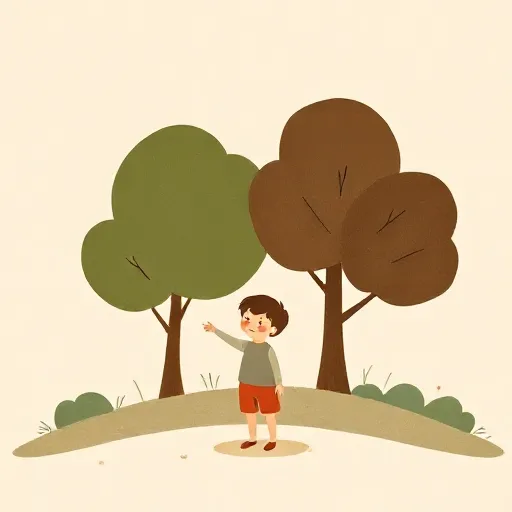
Picture yourself in a forest. Someone asks, “How many things are here?” You look around and say, “There’s a copse.” But a friend argues, “No, there are five trees.” Both of you are right. The puzzle is that you can count the same patch of the world in different ways. Philosophers call what you are counting the target and how you are counting it the unit. If your target is the grove and your unit is “copse,” the answer is one. If your unit is “tree,” the answer is five.
This simple idea opens a huge philosophical debate. Monism is the view that when you pick a target and a unit, the count is one. The opposite, pluralism, says the count is many. There’s even a third option, nihilism, which says the count is zero — perhaps because nothing of that kind exists at all. But monism, pluralism, and nihilism are not absolute labels. You need to specify what you’re counting and how. A philosopher can be a monist about the highest kind of stuff (like matter) but a pluralist about individual objects (like trees and tables). The real action lies in choosing your target and unit carefully.
All Stuff Made from One Recipe: Substance Monism
One of the oldest monist ideas concerns what everything is made of. Substance monism targets concrete things (things you can bump into) and counts by the highest type. It says all concrete objects fall under one top category. For example, a materialist holds that everything is ultimately material — even thoughts are just brain activity. An idealist says everything is mental — the physical world is just a kind of thought. A neutral monist thinks both matter and mind come from a deeper neutral stuff.
The classic rival is substance dualism, famously defended by René Descartes (1596–1650). Descartes argued there are two highest types: material substance (with extension in space) and mental substance (with thinking). That’s a pluralism of substances. The fight between one-type and two-type views shaped centuries of philosophy. But even if you settle that debate, there’s a separate question about how many individual things exist, and that’s where things get really strange.
The Radical Idea: There’s Only One Thing!

Existence monism targets concrete objects and counts by individual tokens — how many separate, concrete individuals exist. It answers: exactly one. There is only one real concrete thing, and it is the whole universe. Contemporary philosophers Terence Horgan and Matjaž Potrč (writing in 2000) gave this single thing a silly name: the blobject. The blobject has enormous structural complexity and local variety — there are regions that look like chairs, people, and planets — but it has no genuine parts. It’s not that the blobject is a big bag of pieces; rather, talk of pieces is just a convenient fiction.
This view sounds wild, but it was taken seriously by ancient thinkers like Parmenides (born around 515 BCE) and later by Baruch Spinoza (1632–1677) and F. H. Bradley (1846–1924). However, most philosophers today find existence monism nearly impossible to believe. As G. E. Moore (1873–1958) pointed out, you can hold up one hand and then the other and claim, “Here is one hand… and here is another.” Common sense and perception scream that many concrete things exist. Existence monists try to wiggle out by saying that ordinary statements like “there are two hands” are true in a loose, everyday sense, even though strictly speaking there’s only one object. They use paraphrases: instead of “my hand is here,” the blobject is “handish” at this location. But critics reply that this just swaps obvious facts for complicated tricks, and the view remains a very hard sell.
A Smarter Monism: The Whole Comes First
If existence monism rejects the many things you see and touch, maybe there’s a monism that accepts them all but still says One is more fundamental. That’s exactly priority monism. It still targets concrete objects and counts by tokens, but the unit is basic tokens. A basic object is one that doesn’t depend on anything else for its existence; it’s the foundation. Derivative objects exist, but only because the basic ones do. Priority monism holds that exactly one basic concrete object exists, and that object is the whole cosmos. All the tables, trees, and people are real, but they are dependent fragments — shards of the one fundamental whole.
This view flips a common intuition. Many people assume that parts are more basic than wholes: grains of sand make up the heap, atoms make up the chair. Priority monism says no: the whole is prior to its parts. Historically, this idea may have been held by Plato, Plotinus, Spinoza, and Bradley, among others. A helpful analogy is your own body. You can point to your heart or your hand. They exist, but they only function as parts of you. If you remove a heart, it’s not a living heart anymore; it depends on the whole body for its nature. Priority monism says the cosmos works the same way: every star, every particle, depends on the whole universe for what it is.
Why the Whole Might Be First

So why would anyone think the whole cosmos is basic? Three arguments stand out.
First, quantum entanglement suggests that some properties of a whole system don’t reduce to the properties of its parts plus how the parts are arranged. When particles are entangled, the state of the whole contains new information. There’s good reason to think that, because everything interacted in the Big Bang, the entire universe is a single entangled system. If so, the cosmos has emergent properties that its bits lack, making the whole more fundamental.
Second, consider gunk — stuff that can be divided forever, with no smallest particles, no ultimate building blocks. If there are no ultimate parts, then at a gunky world, the parts cannot be basic. The only candidate for something basic is the whole. So if gunk is even possible, the direction of priority must run from whole to part, at least in some worlds, and probably in all.
Third, our best physics treats the whole universe as the object that evolves according to the fundamental laws. The equations of cosmology describe the entire cosmic state. Subsystems like a rock or a brain evolve only approximately. Nomic integrity — the idea that laws govern closed systems, and only the whole universe is truly closed — supports the priority of the whole.
Moreover, common sense itself is split. For a heap of sand, parts seem prior. But for a living organism, a symphony, or a sentence, the whole seems to come first. The cosmos looks more like a syllable than a heap of pebbles.
But Wait — Could It All Be Just Parts?
Priority pluralists — those who say many things are basic — fight back. One of their strongest arguments concerns intrinsic properties. Intrinsic properties are features an object has all by itself, like its shape, not relational ones like being taller than something else. If subcosmic objects (like you) have genuine intrinsic properties, those properties probably need to be fundamental. But if priority monism is true, you and your properties are derivative, grounded in the whole. So either the best theories of intrinsicness are wrong, or priority monism is in trouble.
Another pluralist worry is about heterogeneity. The cosmos is not a uniform blob; it has different colors, textures, and temperatures in different regions. If the cosmos were one fundamental thing, wouldn’t it have to be homogeneous, otherwise it would “differ from itself”? Priority monists reply that a single thing can be polka-dotted, or be red here and green there, without contradiction. They suggest that properties can be tied to regions, or that instantiation is itself region-relative.
A third challenge uses modal cut-and-paste. Imagine a duplicate of our entire cosmos placed as a mere part inside an even bigger world. If priority monism is necessarily true, then in that bigger world our cosmos-duplicate would not be basic (because it’s just a part). But if fundamentality is an intrinsic property, duplicates can’t differ in fundamentality. So our actual cosmos would also be non-basic, contradicting priority monism. Priority monists often reply that fundamentality is not intrinsic — it depends on whether the object is the biggest whole around.
The debate is far from settled. None of these objections have knocked priority monism out, and the view is now receiving serious attention after a century of neglect.
Why This Ancient Puzzle Still Matters

You might wonder: why should I care whether there is one basic thing or many? The answer is that this question changes how you see yourself. If priority pluralism is right, reality is built from tiny, independent pieces. You are just a collection of particles arranged in a certain way, and your choices are local events in a vast mosaic. But if priority monism is true, you are a fragment of a single interconnected whole. Your existence depends on the entire universe, not just on your atoms. That can make you feel deeply connected to everything around you — even to people and places you’ve never met.
In science, the idea that the whole universe is entangled has already sparked new technologies like quantum computing. In everyday life, noticing how a soccer team, a band, or a family can have a unity that is more than just the members might change what you think is most real. The argument over monism and pluralism is not about silly word games. It’s about the skeleton of reality: what exists at the deepest level, and how everything fits together.
Think about it
- If scientists proved that every particle in the universe is linked to every other particle in a single, giant system, would that change how you treat other people? Why or why not?
- Imagine you build a huge structure out of Lego bricks. Is the structure something real and new, or is it just the bricks in a certain arrangement? Which feels more real to you — the whole castle or the individual bricks?
- If the whole universe is one big connected thing, does it still make sense to praise or blame someone for their actions? Could a single action ever be truly separate?