Are There Really Only Ten Kinds of Thing in the World?
A Giant Sorting Game

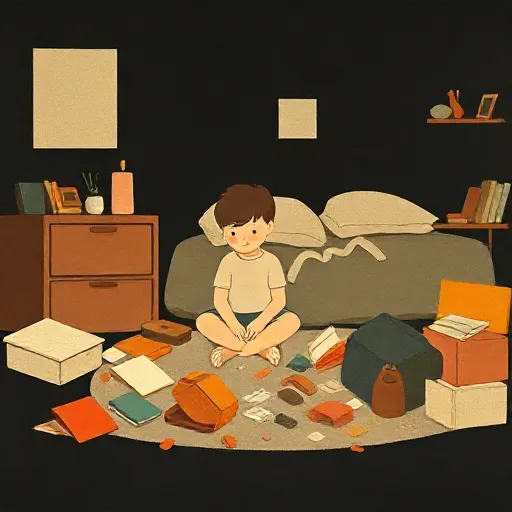
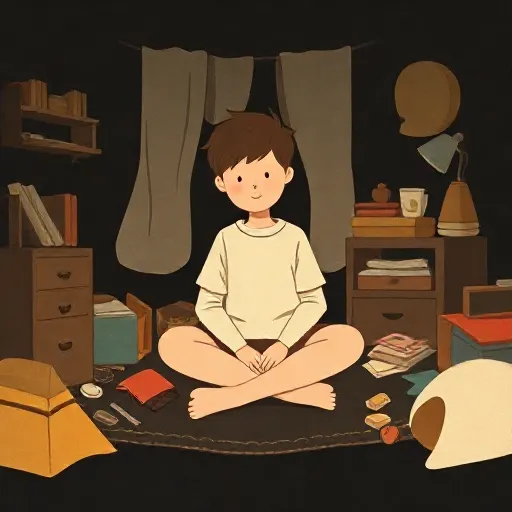
Imagine your room is a complete mess and you decide to sort absolutely everything into the most basic kinds of groups you can think of. Not “things I use” versus “things I don’t,” but deeper: what is each thing actually made of or like? Is it a physical object, a color, a size, a location? This is the kind of sorting game that started a centuries-long philosophical argument.
The ancient Greek thinker Aristotle (384–322 BCE) was the first to propose a full set of highest-level groups, which he called categories. He listed up to ten: substance (what a thing is, like a horse or a person), quantity (how many or how much), quality (what it is like, such as being white or wise), relation (how it stands toward something else, like being taller or a parent), place (where it is), time (when it is), position (sitting, standing), state (being dressed or armed), action (doing something, like teaching), and affection (undergoing something, like being taught). These are not just any old labels — they are supposed to be the most general buckets into which every single thing we can talk about fits.
When you say “Socrates is a man,” you are using the category of substance. “Socrates is five and a half feet tall” lands in quantity. “Socrates is sitting in the marketplace at noon” draws on position, place, and time. Aristotle’s idea was that the ways we answer simple questions — what?, where?, when?, how? — reveal the world’s own deepest structure.
Words, Thoughts, or Real Things?
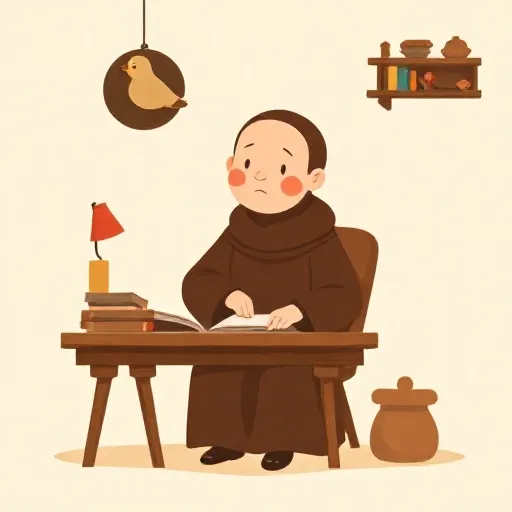
Once Aristotle’s list was on the table, philosophers had to ask the awkward next question: what are categories, exactly? Are they just the words we speak? Are they concepts inside our minds? Or are they real, extra-mental features that things actually have? A toy car is round and red. Is “roundness” only a sound you make, only a thought you have, or a genuine property sitting right there in the car?
This puzzle traveled into the Middle Ages through Boethius (ca. 480–524/5 CE), a Roman thinker who translated Aristotle’s work on categories into Latin and wrote a hugely influential commentary. For centuries, most medieval scholars leaned toward an inclusive view: a category is a word and a concept and a real aspect of the world — just in different ways. They believed in a tight fit, or isomorphism, between language, thought, and reality. The world is built a certain way; your mind naturally grasps that structure; and your words then mirror your mind. So when you say “that cat is black,” the word “black” reliably connects to a concept of blackness, which matches a real quality in the cat.
This idea that speech, thought, and being all line up gave medieval philosophers enormous confidence. It meant you could study categories by studying logic and grammar, and still learn something true about the world outside your head. But that confidence would soon be shaken.
Aquinas’s Challenge: Proving There Are Ten
By the thirteenth century, philosophers wanted more than just a list — they wanted a proof. Why should there be ten categories and not seven or twelve? Thomas Aquinas (1224/6–1274) offered the most famous attempt. He started not with the things themselves, but with the way we predicate, or say things about a subject.
Aquinas noticed three basic patterns of predication. First, you can say what a subject is: “Socrates is a man.” That gives you the category of substance. Second, you can say something that inheres in the subject — a feature that is in it. If that feature comes from the subject’s matter, like being five and a half feet tall, you get quantity. If it comes from the subject’s form, like being rational, you get quality. If it points to something else, like being a father, you get relation.
The third pattern is trickier: you say something that does not inhere in the subject but still affects it from the outside. If it involves measuring time (yesterday), you get time. If it involves measuring place (in the marketplace), you get place. If it arranges the subject’s parts (sitting), you get position. If it clothes or equips the subject (wearing a tunic), you get state. If the subject acts (teaching), you get action. If the subject undergoes that action (being taught), you get affection.
Aquinas believed this showed that the very structure of a sentence, when you push it far enough, unfolds into exactly ten most-general ways of talking — and because language mirrors reality, there must be exactly ten most-general kinds of being. The whole argument hangs on that isomorphism. If the link between words and the world ever breaks, the proof collapses.
Scotus and Ockham: Cutting Down the List
Not everyone bought the proof. John Duns Scotus (ca. 1266–1308) pointed out a flaw. The very first division in Aquinas’s scheme is between predications that express what a subject is and those that express something in it. But that means the deepest split is simply “being in a subject” versus “not being in a subject” — which gives you only two master groups, not ten. Scotus argued that any attempt to prove exactly ten categories secretly assumes what it wants to prove. He still believed there were ten categories in reality, but he thought human reason could not demonstrate it. For him, the orders of knowing and being do not perfectly match; you cannot read the number of real kinds off the number of ways we happen to talk.
William of Ockham (ca. 1285–1347) went further. He is famous for nominalism, the view that only individual things exist and that universal natures (like “horseness” or “fatherhood”) are not extra things in the world — they are just words or concepts. Applying this to categories, Ockham argued that our direct experience gives us reason to believe in only two extra-mental kinds of thing: individual substances (this horse, that rock) and individual qualities (this redness, that heat). All the other so-called categories, he said, are just useful ways of speaking. Instead of saying “Socrates is a father because he has fatherhood,” Ockham would say “Socrates is a father because he has a son.” The extra abstract object “fatherhood” is unnecessary.
So while we can still talk using ten categories in language and logic, Ockham insisted that reality outside the mind contains only substances and qualities. The razor that cuts away eight categories of being is a vivid example of how late medieval thought moved away from the neat, orderly world that Aquinas pictured. Language is a human tool, not a perfect mirror.
Why This Ancient Debate Still Matters

You face the category problem every day, even if you never use the word. When you sort your music into genres, organize your games by type, or group your friends by interests, you are silently deciding which labels capture something true about the world and which are just for convenience. Are the boundaries between “rock” and “pop” real musical joints, or just habits of a streaming service? Medieval philosophers asked exactly the same kind of question, but about the whole of reality.
The fight between Aquinas’s ten and Ockham’s two is not dusty history. It sharpens a question that still divides thinkers: when we classify things, are we discovering divisions that nature already has, or are we projecting our own mental boxes onto a fluid world? Science constantly revisits this. Biologists debate whether a “species” is a natural kind or a human convention. Astronomers argued about whether Pluto is a planet — and what “planet” even means. Every time you hesitate before putting something in one box rather than another, you are doing a tiny piece of what the medievals did with the biggest boxes of all.
So the next time someone asks you “What kind of thing is that?,” remember: you are stepping into a conversation that began over two thousand years ago, and you can decide for yourself whether the boxes we use are built into the world or built only into our minds.
Think about it
- If you could only use two categories to sort everything in your room, which two would you choose and why?
- Imagine a world where words perfectly matched reality. How would that change the way we argue or learn?
- If a scientist says that “species” is just a human label, does that make it less real? Why or why not?