
How Would You Sort Everything That Exists?
What if you had to sort everything in the world?
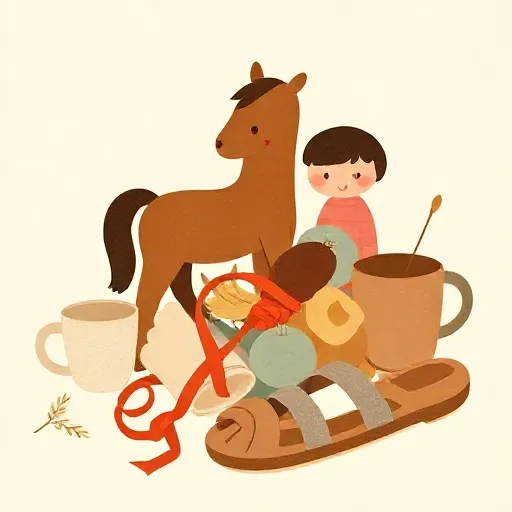
Imagine you are given every object, every living thing, every idea, every tiny part of the universe. Your job: put them into a small number of heaps, where everything in a heap is the same kind of thing. You’d probably start with obvious groups — rocks, animals, colours, numbers. But soon you’d hit tricky questions. Is a pile of sand a thing like a rock is, or is it just many tiny things? Is a dream the same kind of thing as a thought? Is “being friendly” a thing at all?
Around 350 BCE, the Greek philosopher Aristotle (384–322 BCE) tried to answer these questions. He wanted to find the highest kinds — the most basic categories into which every being falls. He believed there were exactly ten such kinds, and he laid them out in a short, puzzling book now called the Categories. His list became one of the most influential — and most criticized — pieces of metaphysics ever written.
The things you can point at: primary substances

Before listing his ten categories, Aristotle started with a simpler idea. Look around you. You see actual, individual things: a particular person, a particular horse, a particular oak tree. These are what he called primary substances. They are the most fundamental things there are. Why? Because everything else either belongs to them or depends on them. A horse can exist on its own. But a colour (like the brown of the horse’s coat) or a size cannot exist by itself — it needs a horse (or something else) to be in.
Aristotle thought that if primary substances didn’t exist, nothing else could either. So in his view, the most real things are not numbers or abstract ideas, but concrete, individual beings you can encounter with your senses. That was a bold move, because his teacher Plato had argued the opposite — that abstract Forms were more real than ordinary things.
Kinds, accidents, and the four-fold division
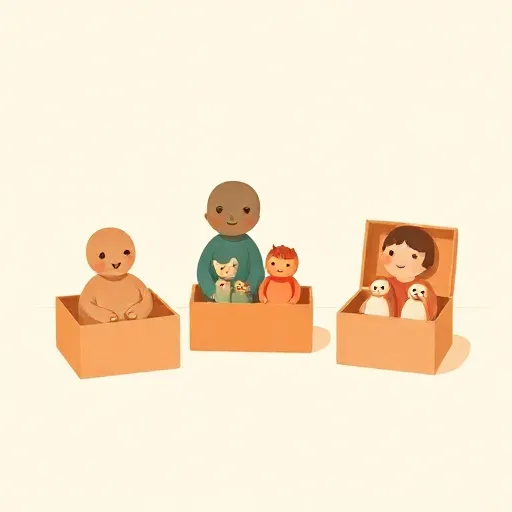
Not everything is a primary substance. There are also universals — things that many individuals can share. For instance, the kind human is not a single person but something that is “said of” many individual humans. And there are accidents — features that a thing has but could survive without. A person’s whiteness or their position (sitting) is an accident: you can stand up and still be you.
Aristotle used two ideas to build a four-fold classification:
- Said-of: Is the item a universal that applies to many things? (like the kind dog said-of all dogs)
- Present-in: Is the item an accident that cannot exist without the thing it’s in? (like the whiteness in a white stone)
Combining these gives four classes:
- Primary substances (neither said-of something nor present-in something): an individual person or horse.
- Accidental particulars (not said-of, but present-in): a particular whiteness that belongs to only one individual thing — like the exact shade of white in your shirt right now. Some modern philosophers call these “tropes.”
- Essential universals (said-of, not present-in): the kind human, which tells you what a person essentially is.
- Accidental universals (both said-of and present-in): the colour white in general, which can be present in many different things.
Aristotle’s terms are dense, but the picture is clear. Reality is built from individual substances, the kinds they belong to, and the changeable features they have.
The ten highest kinds that Aristotle found
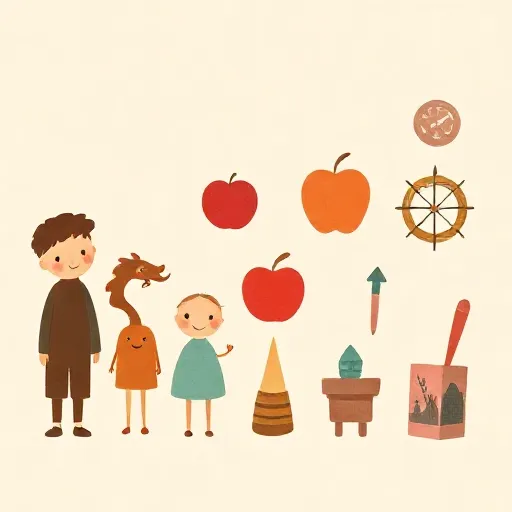
After setting up the four-fold division, Aristotle turned to a bigger list. He claimed that all the things we can talk about fall into exactly ten highest kinds, or categories. The word “category” comes from a Greek word for “predicate” — roughly, the part of a sentence that tells you something about the subject. But Aristotle wasn’t just listing words; he was trying to list the kinds of beings those words point to.
His ten categories are:
- Substance — an individual thing like a human or a horse.
- Quantity — how much, like two cubits or a handful.
- Quality — what it’s like, such as white or wise.
- Relative — how it stands toward something else, like larger or brother.
- Somewhere — where it is, like in the marketplace.
- Sometime — when it is, like yesterday.
- Being in a position — how it is arranged, like sitting.
- Having — what it has on, like “has shoes on.”
- Acting — doing something, like cutting.
- Being acted upon — undergoing something, like being cut.
Aristotle spent the most time on the first four. For instance, quantity divides into continuous (a line, a stretch of time) and discrete (a number, a spoken word). Quality divides into things like shape, natural abilities, and habits. He also arranged each category into a genus-species tree. In the category of substance, human is a species under animal, which is under living thing, all the way up to the highest kind: substance itself.
The list feels natural in some places and awkward in others. Why is having a separate category? Why does the category of quantity include “body,” which also seems to be a substance? Scholars still argue about these quirks.
How did he come up with that list?

The most uncomfortable question about Aristotle’s categories is: where did they come from? He never explains a step-by-step procedure for discovering them. In the 18th century, the philosopher Immanuel Kant (1724–1804) complained that Aristotle “merely picked them up as they came his way” without any principle guiding him. That criticism stung, and ever since, interpreters have tried to reconstruct a method that Aristotle might have used but never wrote down.
One approach, proposed by J.L. Ackrill in the 1960s, is the question method. Ask “What is it?” of something, then ask it again of the answer, and keep going until you can’t ask any further. If you start with Socrates and ask “What is he?”, you get “a human”; ask “What is a human?”, you get “an animal”; eventually you arrive at “substance.” Ackrill thought this process would always land you in one of the ten categories. But critics point out that it’s not clear why the questions stop at exactly ten — and whether the right questions are being asked in the first place.
A second approach looks at grammar. Perhaps Aristotle noticed that language itself contains clues: subjects of sentences map onto substances, while adjectives map onto qualities. This explains why “action” and “passion” are two categories even though Aristotle elsewhere thought they were just two ways of describing one motion — because language has active and passive verbs. The weakness is obvious: why assume the structure of your language matches the structure of reality?
A third, more ambitious idea comes from medieval interpreters like Thomas Aquinas (1225–1274). They tried to derive the categories from even deeper principles about matter, form, and the ways a predicate can belong to a subject. For example, Aquinas argued that quality “flows from” form and quantity “flows from” matter. This would give Aristotle’s list a kind of built-in necessity. But many modern scholars doubt Aristotle himself had developed his matter-form theory early enough, and the derivations seem to stretch the text.
The debate remains wide open. No single explanation commands agreement, and some philosophers think the whole project of finding “highest kinds” is mistaken. But the very fact that Aristotle’s list has provoked centuries of argument tells you something: trying to organize the world without missing anything is one of the hardest tasks there is.
Why does a 350 BCE sorting project still matter?

You might never have seen a list of ten categories before, yet you do something like Aristotle’s project every day. When you call one animal a “dog” and another a “cat,” you are grouping them under kinds. When you say a game is “unfair,” you are treating fairness as a quality — a member of Aristotle’s quality category. When you ask “How long is the movie?” you are asking about quantity.
Modern science has its own ways of sorting: the periodic table, the taxonomy of living organisms, the classification of forces in physics. These schemes are vastly more detailed than Aristotle’s, but they inherit his basic idea that the world has a structure that can be sorted into a limited number of fundamental types.
Aristotle’s categories also push us to ask whether our everyday classifications really fit reality — or whether they are just habits of human thought that could have been otherwise. That question has not gone away. And the trouble Aristotle got into — with strange categories like “having” and fuzzy borders between quantity and substance — reminds us that even the most confident list can hide deep puzzles.
So the next time you sort a pile of things, remember you have company across twenty-four centuries. The Greek thinker who began all this still gets people arguing about what it means for something to be.
Think about it
- If you had to sort everything in your home into only six categories, what would they be? Would anything end up in more than one at the same time?
- Aristotle thought an individual horse is more real than the colour of its coat. Do you agree? Could a colour exist without anything coloured?
- Imagine a language without adjectives, only nouns. Would speakers of that language miss something real in the world, or would they just describe things differently?