What Are the Real Boxes the World Fits Into?
A pile of things and a simple question
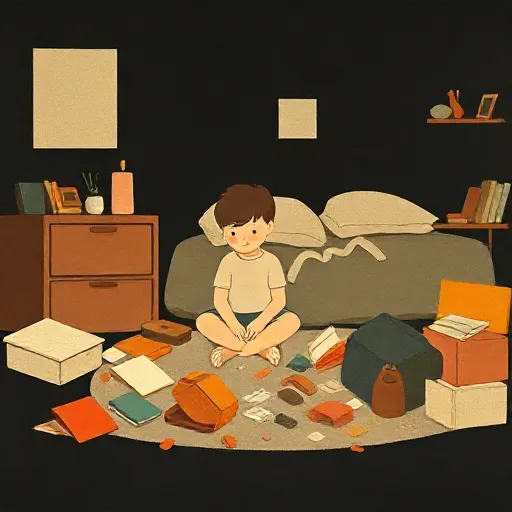
Imagine your room is a total disaster. There’s a sock, a math worksheet, a half-eaten apple, a pencil, a goldfish, a thought about tomorrow’s test, and your little brother’s toy dinosaur. Your mom says, “Put everything away.” But where does the thought go? What shelf holds a goldfish? You’d need the world’s most basic set of boxes — not just “clothes” or “school stuff,” but categories that could hold anything that exists.
That’s the puzzle philosophers have been working on for over two thousand years. A category is simply the most general kind that a thing can belong to. It’s not “horse” or even “animal” — it’s something like substance, quality, or relation. The hunt for categories asks: How many ultimate boxes are there, and what are their labels? And just as importantly: Are those boxes really out there in the world, or are we the ones bringing the boxes?
Aristotle’s ten boxes in the world

The first big attempt came from Aristotle (384–322 BCE). In his book Categories, he listed ten ultimate kinds that things can be, without needing to combine them. The list sounds a little strange to modern ears: substance (a human, a horse), quantity (four-foot, five-foot), quality (white, grammatical), relation (double, half), place (in the market), date (yesterday), posture (lying, sitting), state (has shoes on), action (cutting), and passion (being cut).
But Aristotle didn’t think all ten were equally fundamental. He called an individual man or a particular horse a primary substance — a basic, independent thing. Everything else — the horse’s whiteness, its size, its location — depends on that primary substance. If there were no individual horses, there’d be no horse-sized or horse-colored anything. As he put it, all other things are either said of primary substances or are in them.
He also argued that there is no single highest category, no all-inclusive box labeled “being.” Why? Because for a category to work, you need to define its members by a genus (the larger kind) and a differentia (the specific difference). If “being” were a genus, its differentiae would also have to be beings, and the whole system would collapse. So Aristotle’s categories just sit side by side as the top level, like ten unmatched jars on the top shelf.
Kant flips the arrow: boxes imposed by the mind
For most of the next two thousand years, philosophers largely followed Aristotle’s lead. Then Immanuel Kant (1724–1804) flipped the whole project on its head. He was skeptical that we could ever know the ultimate divisions of things in themselves, apart from how they appear to us. Instead, he argued, we can discover the categories that govern human understanding — the basic concepts our minds must use to make sense of any experience.
Kant started not by looking at the world, but by looking at the forms of judgment we make. For example, every judgment has a quantity: it is either universal (“All swans are white”), particular (“Some swans are white”), or singular (“This swan is white”). That gave him three categories of quantity: unity, plurality, and totality. He did the same for quality, relation, and modality, arriving at twelve pure concepts of the understanding, divided into four groups of three. For instance, under relation we get substance and accident, cause and effect, and community (reciprocity).
These categories, Kant said, are not out in the world waiting to be found. They are built into the structure of the human mind. We cannot help but see the world in terms of substances with qualities, causes with effects, and so on. So when you say “the apple is red,” you are applying the category of substance and the category of quality to your experience, without even thinking about it. For Kant, the categories describe objects of possible cognition, not thing-in-itself reality.
Category mistakes: when boxes get hilariously mixed
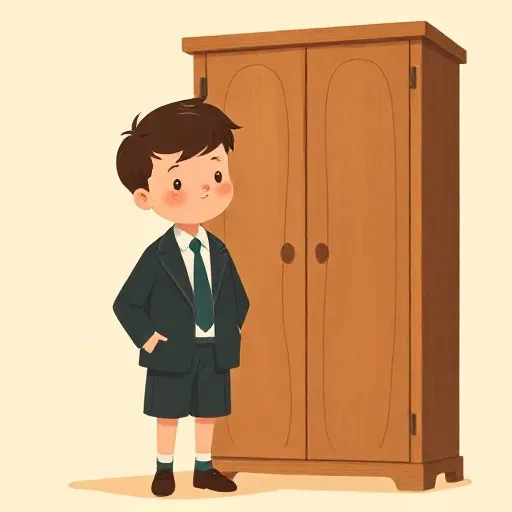
Not everyone wanted to build grand systems of categories. Gilbert Ryle (1900–1976) used the idea of categories to diagnose philosophical confusion. He introduced the concept of a category mistake — a kind of error where you treat a thing as if it belongs in a different logical box than it really does.
Ryle gave a famous example. Imagine a foreign visitor who is shown the colleges, libraries, and administrative buildings of Oxford University. After seeing all of them, the visitor asks, “But where is the university?” The visitor has made a category mistake: he thinks the university is another building like the ones he’s already seen, when in fact it is the way all those buildings are organized. It belongs in a different category altogether.
Ryle thought the same mistake underlies centuries of confusion about the mind. Descartes and his followers talked about the mind as if it were a ghostly thing doing secret acts — thinking, believing, desiring — inside the head. But Ryle argued that words like “knowing” or “believing” are not names of hidden acts; they’re dispositions, tendencies to behave in certain ways. Treating them as acts is a category mistake. Spotting these mistakes, Ryle believed, could dissolve many philosophical puzzles rather than solve them.
He developed a simple test: if you can take a sentence like “the seat is hard” and replace “seat” with “table” and it still makes sense, those words are of the same category. But if you substitute “Saturday” and get “Saturday is in bed,” the absurdity shows a category difference. Not everyone agreed on what counts as absurd, but the idea that some mix-ups are not just false but category-violating became hugely influential.
Why the hunt still matters — even if we never finish it

You might wonder: if philosophers have been at this for millennia and still don’t agree on one system, is the whole project hopeless? After centuries of competing lists — Aristotle’s ten, Kant’s twelve, Husserl’s formal and material categories, and many modern attempts — some thinkers became skeptical that a single, true, exhaustive set of metaphysical boxes exists. How could we even tell which list is correct? What experiment could settle it?
But giving up on a final answer doesn’t make categories useless. Working out a category system, even a tentative one, gives us a framework to ask questions systematically. It helps us check whether we’re accidentally smuggling in strange assumptions when we talk about “objects” in physics versus “objects” in mathematics. It can reveal hidden category mistakes in debates about whether the mind is the brain, or whether numbers exist like chairs do. As the philosopher Amie Thomasson has argued, many puzzling arguments in ontology fold once we notice that we can’t just toss around the word “exists” without first deciding what kind of thing we’re talking about.
Category work also shows up outside philosophy. In cognitive science, researchers study how infants and even other primates carve up the world into objects, actions, and causes. In information science, building huge databases for medicine or biology requires deciding on a top-level set of categories so that computers can share data. So the next time you try to clean your room and get stuck on what box “the thought of a goldfish” belongs in, you’re thinking like a metaphysician. You may never finish sorting, but the very act of sorting teaches you something about how your mind — and maybe the world — fits together.
Think about it
- If you had to sort everything that exists into exactly three categories, what would they be? Defend your list against a classmate who picks completely different ones.
- Can you think of a time when a real-life argument got stuck because two people were using the same word but actually talking about different kinds of things? How might noticing a category difference have helped?
- If our brains come with built-in category templates, as Kant believed, could an alien with a different mental structure have a totally different but equally “true” set of categories for the world?