Is Water Just a Bunch of Tiny Things, or Something Else?
A Glass of Water and a Pile of Marbles
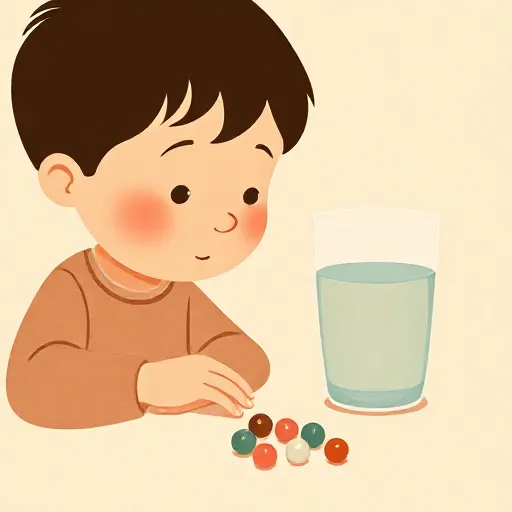
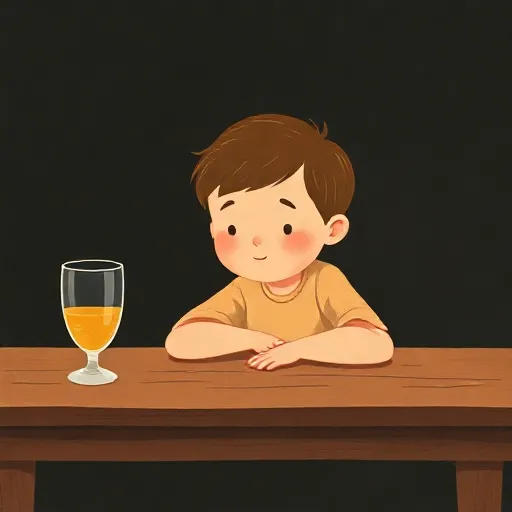
You can count the chairs in your classroom, the marbles in your pocket, or the books on your shelf. But try counting the water in your glass. You can’t — not without using a measuring cup or saying “one gulp.” Water seems like one big continuous thing, not a collection of separate pieces. The same goes for air, gold, or oatmeal. Philosophers call words like water and gold mass nouns, and words like chair and marble count nouns.
This difference in how we talk has led some thinkers to wonder: does reality come in two fundamentally different flavors — things, which we can count, and stuff, which we can only measure? Or is one of them just a way of talking about the other? This question takes us straight into metaphysics, the branch of philosophy that asks what the world is made of at the deepest level.
Thing Theory: The World Is a Collection of Objects
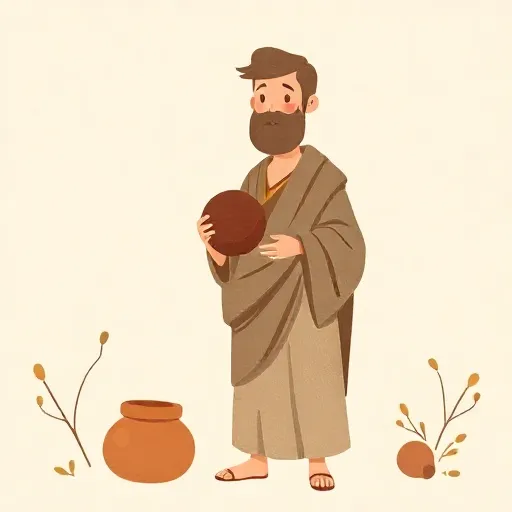
A view many philosophers have shared is what we can call Thing Theory. Roughly, it says: everything that exists — apart from properties like colour or relations like “taller than” — is either a thing, or can be reduced to things. A thing is something you can count as one, without needing to add “gallon of” or “piece of.” For Thing Theorists, “to be is to be countable.”
This idea goes back at least to Aristotle (384–322 BCE), who argued that the most real items in the world are primary substances — individual horses, people, and trees. In the 20th century, Peter Strawson (1919–2006) claimed that anything we can talk about can be introduced with a singular, identifying expression like “that dog.” Willard Van Orman Quine (1908–2000) went further, holding that only physical objects and sets are needed to describe all of reality. For them, even stuff like water must, in the end, be made of things — tiny particles, maybe, or some other countable units.
Thing Theory offers a tidy picture: the universe is a gigantic collection of individual objects, and anything that doesn’t look like an object is really just an arrangement of objects. But is that right? Let’s look at why many people feel there must be something more — something stuffy — out there.
Why People Think Stuff and Things Are Different
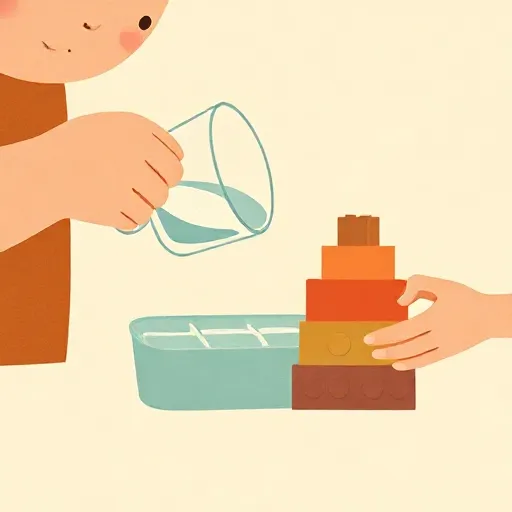
Early in life we learn to treat a pile of sand differently from a single toy truck. The truck is a thing you can point to and name; the sand you scoop and measure. Philosophers have pointed to several features that seem to separate stuff from things:
- Cumulativity: If you add some water to more water, you just get water. But add one bicycle to another bicycle, and you do not get a bicycle — you get two bicycles.
- Dissectivity: If you cut a piece of wood in half, each half is still wood. But cut a chair in half, and the halves are not chairs.
- History: The water that forms a snowball existed long before the snowball was made, and could still be water after it melts.
These patterns tempt us to think that the water itself is not just another thing — it is a different kind of entity, a stuff that can take different shapes. The English language seems to support this with mass nouns like “water” and “furniture,” which resist being counted directly. But language can be tricky. For example, in English “rice” behaves like a mass noun, but “beans” behaves like a count noun — even though both are small, separate grains. And with a little imagination, almost any count noun can be used as mass: imagine a Universal Grinder that grinds chairs into powder, and you suddenly have “chair all over the floor.” So maybe grammar alone doesn’t settle the deep question of what’s real.
Three Ways to Fit Stuff into a World of Things
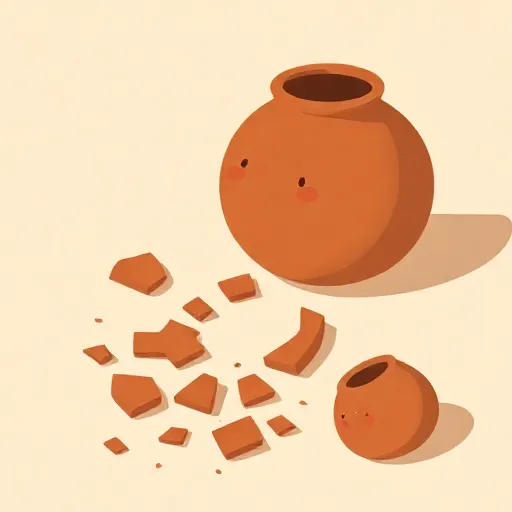
Many philosophers have tried to show that talk about stuff is really just a clever way of talking about things. They want to keep Thing Theory while still making sense of sentences like “the gold in that ring is soft.” Here are the three most popular strategies.
First, the mereological sums view. Mereology is the study of parts and wholes. On this view, when we say “the water in the tub,” we are really referring to the fusion — the single thing made up of all the water molecules in the tub. That fusion is a thing, even if its parts are scattered or rearranged. It can be counted as one lump. Most advocates of this view accept Unrestricted Mereology: any collection of objects, no matter how scattered, forms a further object — a mere sum. So the Eiffel Tower and your left shoe form a single object too. One puzzle that arises is whether a sum can survive losing a part. If I pour out half the water, is it the same water mass? Many sum theorists say no: masses of matter cannot change any of their parts and stay the same — this is called Mereological Essentialism.
Second, the sets view. This treats “the gold in the ring” as referring to the set of all gold atoms. Sets are abstract, not concrete, so this avoids saying the gold is a material object — but it makes something concrete like gold into an abstract mathematical collection, which many find bizarre.
Third, the pluralities view. Here, mass nouns don’t refer to a single thing at all, but to many things at once — just like when you say “the students surrounded the building,” you aren’t talking about a single giant student. “The gold” means the many gold atoms taken collectively. This view is attractive because it is ontologically innocent: the gold atoms exist already, and calling them “the gold” doesn’t invent a new object on top of them. However, it struggles with substances that might be infinitely divisible, like hypothetical gunk — stuff with no smallest parts.
All three approaches keep the world’s fundamental inventory strictly thing-based. But not everyone is convinced.
A More Radical Idea: There Is Only Stuff
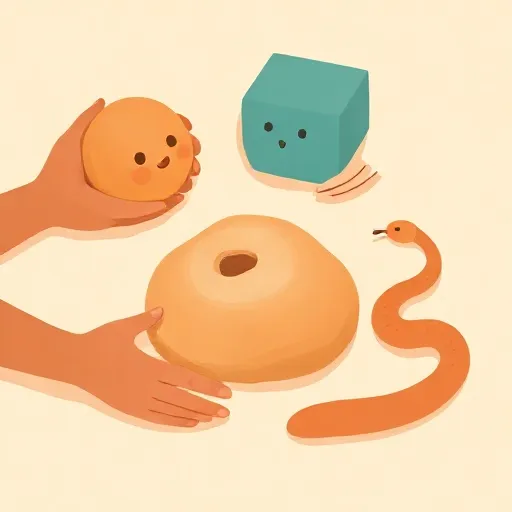
Some philosophers flip the picture entirely. They say stuff is fundamental, and so-called things are just temporary shapes that stuff takes. Alan Sidelle (a contemporary philosopher) argued that when a tree is chopped down, no thing truly ceases to exist — the underlying stuff merely changes its form. What we call a “tree” or a “chair” is just a useful label we apply when stuff is arranged in a certain way, but reality itself is one continuous world-stuff. Objects, on this radical view, are illusions carved out by our language and our interests.
This idea may sound far-fetched, but it echoes some interpretations of modern physics. Some scientists suggest that at the deepest level, the universe is not made of tiny billiard-ball particles, but of fields, or space-time itself, where what we call particles are just temporary ripples. If that’s right, then stuff — not individual objects — might be the true foundation of everything.
Yet this position faces a tough question: if there are no real objects, why does it feel so natural to talk about billions of them every day? Defenders reply that even though we can’t help talking that way, our talk doesn’t have to mirror the ultimate structure of reality.
Why This Debate Still Matters for You
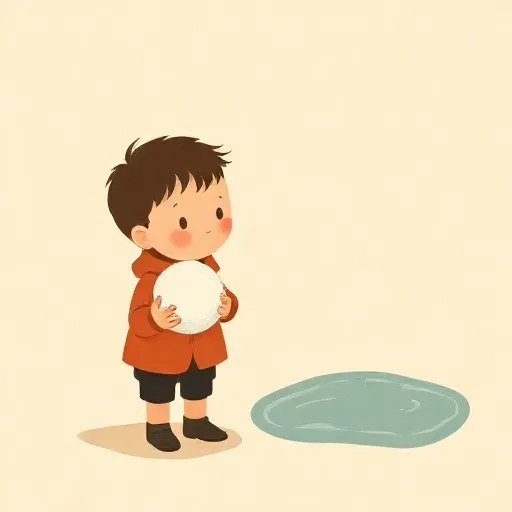
You might wonder: so what? Whether the universe is made of things or stuff probably won’t change what you eat for breakfast. But this debate gets at something deeply puzzling. Think about a statue made of clay. If you squish the statue, the clay is still there, but the statue is gone. Two things, or one? If you can’t tell where the statue ends and the clay begins, maybe our whole idea of what counts as an “object” is shakier than we thought. And if you ever tried to answer “who are you?” you know that identity over time is a tricky business — are you the same person you were five years ago, or just a continuous arrangement of changing matter?
The stuff-vs-things puzzle teaches you to question everyday assumptions, to listen carefully to how words shape your thinking, and to recognize that some of the simplest questions — “What is a thing?” — are still wide open after 2,500 years of philosophy. Whether you end up a Thing Theorist or a Stuff Ontologist, wrestling with this question sharpens your mind for every other mystery you’ll meet.
Think about it
- If you had a magic microscope that could zoom in forever, would you eventually find tiny uncuttable marbles that make up all matter, or just more and more stuff with no end? What difference would that make for how you count the world?
- Imagine a language where everything is treated like water — you can’t say “a chair” but only “some chair-stuff.” Would speakers of that language live in a different reality than you? Why or why not?
- If a scientist could prove that the universe is entirely made of fields with no tiny particles at all, would you stop believing that your hand is a single thing? What would it take for you to change your mind about what’s real?