What Makes Water Water? The Battle Over Real Kinds
The Glass of Water That Wasn’t
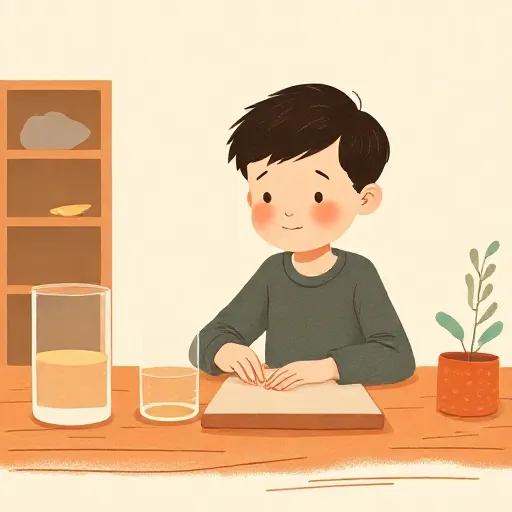
Pick up a glass of water. It’s clear, has no smell, and you know it’s safe to drink. Now imagine there’s another world, a twin to our own, where a liquid looks and tastes exactly the same but its molecules are built completely differently. Would you still call that liquid water? That question gets at one of philosophy’s deepest puzzles: what makes a natural kind real? Are some groups of things – like water, gold, or tigers – real divisions carved into nature, or are they just labels we invent because they’re useful to us? For centuries, thinkers have argued about this. Their answers shape how we do science, how we talk, and even how we see ourselves.
Real Joints or Just Handy Labels?
Most of us assume that some groups are more real than others. Putting zinc, copper, and iron together as metals feels like we’re finding a pattern that exists out in the world, not one we made up. But lumping together Trajan’s column, the number two, and Julius Caesar is just arbitrary. Philosophers call the first view naturalism (sometimes weak realism): the idea that there are genuine, non-arbitrary ways of sorting the world.
The opposite position, conventionalism, says that all kinds are human inventions. According to the conventionalist, the way chemists sort elements or botanists sort lilies is no more “natural” than the way a cook groups vegetables by what goes into soup. Weak conventionalists, like John Locke (1632–1704), worried that we can never know the real inner structures of things, so our classifications are at best best guesses. Strong conventionalists add that there are no real divisions at all – everything is constructed by our concepts and social practices.
History gives us reasons to doubt that our everyday categories perfectly match nature. For centuries, traders and gem-lovers talked about “jade” as a single precious mineral. But it isn’t. There are two distinct minerals: nephrite and jadeite. Our single label hid a real division. Similarly, biologists now think “reptiles” isn’t a true natural kind, because crocodiles are closer cousins to birds than to lizards. In these cases, nature seemed to push back against our sloppy groupings. But other cases are messier. The philosopher John Dupré (born 1952) points out that even within biology, different ways of classifying species can all be scientifically respectable. A lily in the supermarket might belong to a very different group in the botanist’s system. For Dupré, that doesn’t mean one is wrong; it means the world is rich enough to be cut up in many natural ways. He calls this promiscuous realism.
Still, if we can be proven wrong by nature – as the jade story suggests – maybe some classifications really do capture something deeper than others.
The Hidden Essence: What Makes Gold Gold?
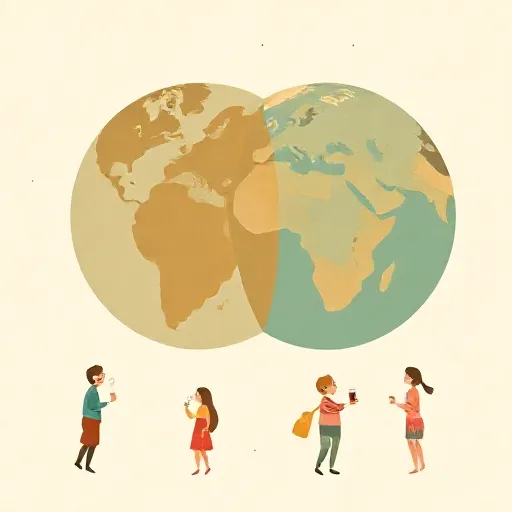
In the 1970s, two philosophers, Saul Kripke (1940–2022) and Hilary Putnam (1926–2016), made a powerful argument for essentialism about natural kinds. They said that some kinds have a hidden essence – a deep property that makes them what they are, even if we don’t know it by looking.
Putnam’s famous “Twin Earth” thought experiment imagines a planet exactly like Earth in almost every way. Every person on Earth has a twin there. The lakes, taps, and clouds are full of a clear liquid that tastes just like water. But the liquid’s chemical structure is not H₂O; it’s a different molecule we can call XYZ. Putnam asked: is that stuff water? Most people’s gut says no. If our chemists tell us that water is H₂O, then anything that’s not H₂O simply isn’t water, no matter how much it looks the part.
Kripke made similar points about gold. Imagine that we discover gold only looks yellow because of an optical illusion; the metal is actually blue. Would we say there’s no gold? No, Kripke argued. We’d say we were wrong about gold’s color. What makes a lump of gold gold isn’t its color or shiny surface. It’s the fact that its atoms contain exactly 79 protons. That atomic number is the essence of gold. Surface features – yellow, shiny, heavy – are just clues, not the real test.
For kinds like water and gold, essentialism seems to work beautifully. But where does this leave living things? A tiger’s essence can’t be its stripes, because a tiger born without stripes is still a tiger. And species evolve. There’s no single stretch of DNA that every fruit fly shares and only fruit flies share. So essentialism about biological species faces big trouble. Some philosophers, like Joseph LaPorte, suggest species might have historical essences: being a tiger means being part of a particular ancestral lineage, not having a specific look. But that’s a very different flavor of essence.
The Fuzzy Club: When Kinds Have No Sharp Edges
Many philosophers think biology demands a more flexible account of kindhood than essences. One influential view is Richard Boyd’s (1942–2021) idea of homeostatic property clusters, or HPCs. On this view, a natural kind is a group of things that share a bunch of properties – but no single property is absolutely required for membership. These properties cluster together because some mechanism keeps them bundled.
Think about a species like humans. Most humans have two eyes, five fingers, walk upright, and use language – but not all. Some people are born with different numbers of fingers or can’t speak. Why are they still human? Because the cluster of typical human features holds together through gene flow, common ancestry, and the way our bodies develop. These mechanisms make extreme variations rare. A person 4 meters tall just isn’t viable. The cluster is homeostatic: it tends to stay within a stable range, even if occasional oddballs appear.
HPC kinds have fuzzy boundaries. It can be unclear exactly where one species ends and another begins, because evolution is a slow, branching process. That doesn’t mean species aren’t real. It just means they’re real in a looser, more dynamic way than chemical elements, which have sharp boundaries (no atom has a number of protons between 17 and 18). So a defender of HPC kinds can happily accept that water has a precise essence, while biological kinds are messier. There may not be one single recipe for what a “natural kind” is.
Why This Old Fight Still Matters
You might think this is just a squabble over definitions. But how we draw the lines between kinds has real consequences. In science, our kinds guide induction: if a new lump of iron behaves like other iron, we predict it will rust. If we mess up the kinds, we mess up our predictions – just think of the old, wrong category “jade.”
In medicine, diseases are kinds. If doctors treat “fevers” as one kind when they are really many, patients suffer. In social life, categories like “child abuse” can be discovered through careful investigation – the philosopher Ian Hacking (1936–2023) showed that such a kind emerged only in the 1960s, but once named, it helped identify real harm. Yet social kinds are odd because the people being classified can react back: they may accept a label or resist it. Hacking calls these interactive kinds, and they remind us that some parts of the world push back against our categories in complicated, human ways.
The battle over natural kinds is alive because nature itself is a mix of sharp edges and fuzzy patches. Water has an essence you can write as a chemical formula. Tigers probably don’t. Coming to terms with that patchwork isn’t a failure of philosophy – it’s a way of learning to see the world a little more clearly, and a little more humbly.
Think about it
- If we discovered a liquid that looked, tasted, and behaved exactly like water but was made of completely different molecules, would you still call it water? Why or why not?
- Jade was once thought to be one mineral but turned out to be two. Can you think of something that is often treated as a single kind but might actually be several different things?
- A biologist says “reptile” isn’t a real natural group and we should stop using the word in science. Would that be a good idea? What might we lose or gain?