Do All Red Things Share a Single Thing Called “Red”?
Two apples, one colour
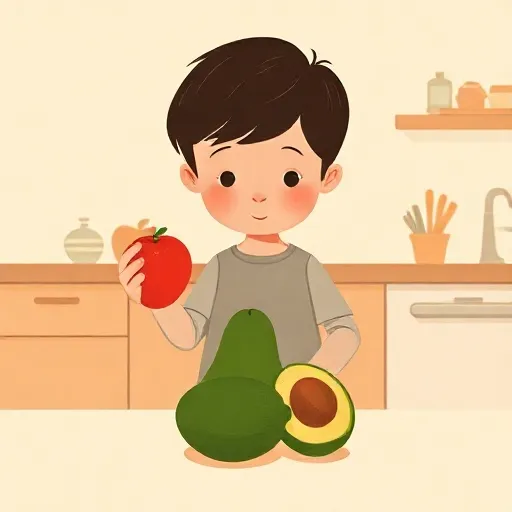
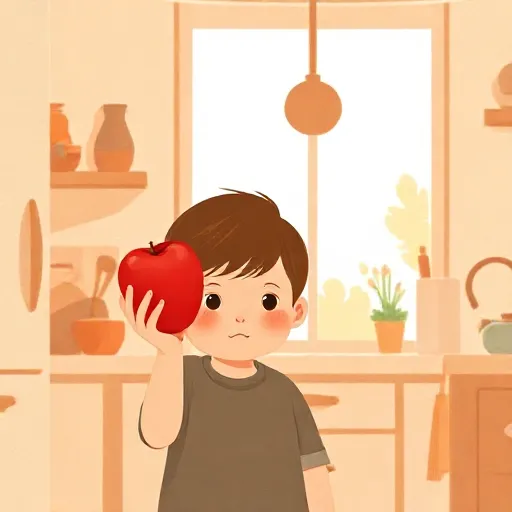
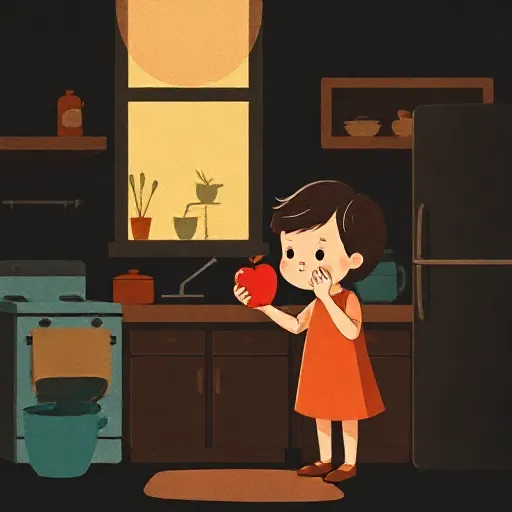
You bite into a crisp red apple. Across the table, a second red apple sits in a bowl. They are two different apples, separate objects with different bumps and shapes. Yet you call them both “red.” What makes them red in the same way? Do they share one single thing — a property called “redness” — or is each apple just red on its own, with nothing real in common?
This question is not just about apples. It is about every similarity you notice: two chairs that are both made of wood, two dogs that are both friendly, two ideas that are both fair. Philosophers want to know whether these similarities point to invisible building blocks of reality. Their answers have divided them for over two thousand years.
The one‑over‑many puzzle
Imagine a box of crayons. You sort them by colour: all the red crayons in one pile, all the blue in another. Why do those crayons belong together? It is not because you decided to group them that way for fun. Something about the crayons themselves makes them similar. The ancient Greek philosopher Plato (c. 428–348 BCE) described this as the “one over many” problem: many different things are somehow one — they are all red, for instance.
If you think there must be something that explains this oneness, you are already thinking about properties. A property is a feature or characteristic that an object has. Being red, being round, being heavy — these are all candidates for properties. The challenge is to say what kind of thing a property is. Is redness a single real entity that many objects share? Or does “red” just mean that we put objects into a group?
In everyday language, we use predicates — words like “is red” or “has a heart” — to describe things. The collection of all objects that a predicate truly describes is called its extension. For example, the extension of “has a heart” includes you, a cat, a goldfish. But notice: “has a heart” and “has kidneys” have exactly the same extension — every creature with a heart also has kidneys, and vice versa. Yet the two predicates do not mean the same thing. This suggests that a property is not just a list of objects; it is something more.
Realism: the redness that’s out there

Philosophers who believe properties really exist, independently of us, are called realists about properties. They often call properties universals because many particular things can share the same universal.
Plato was a transcendent realist. He thought universals exist in a timeless realm, completely separate from the physical world. According to Plato, the perfect universal “Redness Itself” exists whether or not any red object ever existed. Every red thing you see is just a shadowy copy of that perfect form.
Plato’s student Aristotle (384–322 BCE) disagreed. He was an immanent realist. He thought universals are not floating in another world; they are in the things themselves. The redness of an apple is right there in the apple, not in some heavenly catalogue. Aristotle argued that a universal exists only if at least one object has it — no redness without a red thing.
Realists point out that properties do serious work. They help explain why we classify objects as we do. They appear in scientific laws, like the law of gravity, which talks about masses and distances — both properties. And when you think “this apple is red,” the property seems to be the very meaning of the word “red.”
Nominalism: no shared redness, just words or little pieces
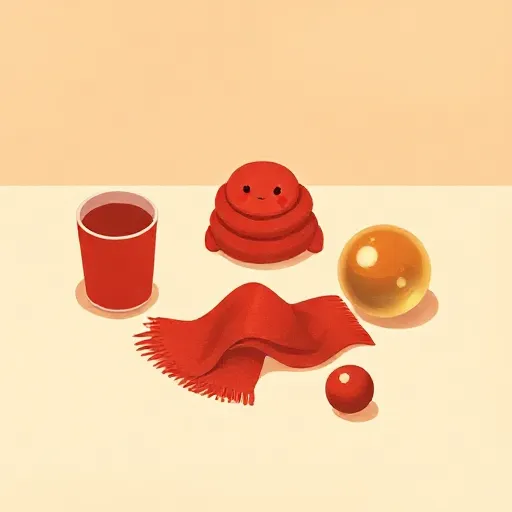
Not everyone is convinced. Nominalists deny that there are mind‑independent universals. For a nominalist, when you say two apples are both red, you are just using the same word, but there is no single thing — no Redness — that they share.
One simple version is predicate nominalism. It claims that the predicate “is red” does all the classifying work by itself. You notice some objects make the predicate true and others do not; that is as far as the story goes. Realists find this odd: it seems to put language in charge of reality, as if the world had no similarities until we invented words.
A more powerful nominalist view today is trope theory. A trope is a particular property that belongs to exactly one object. Your apple has its own redness‑trope, and the other apple has a different redness‑trope. The two tropes are not identical, but they resemble each other closely. So a group of red objects forms a resemblance class of similar tropes. In this picture, “redness” is not one universal but a big family of look‑alike tropes.
Tropes still answer the one‑over‑many puzzle: the similarity is explained by the resemblance relations among tropes. But nominalists pay a price: they must assume that resemblance itself is a real relation, and realists might ask whether that relation is itself a universal.
The glue that sticks things together
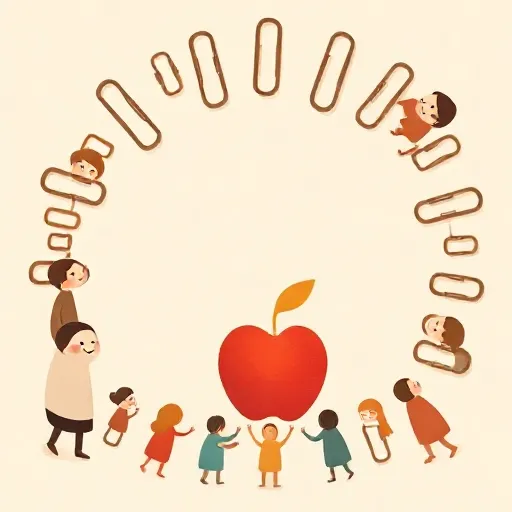
Even if you accept properties, a new puzzle appears. How does a property actually attach to an object? When an apple is red, there must be a link between the apple and redness. Philosophers call this link exemplification or instantiation.
A British idealist, F.H. Bradley (1846–1924), pointed out a troubling regress. Suppose to connect apple (a) and redness (R), you need a relation (I_1). But then you need another relation (I_2) to connect (I_1) to (a) and (R). And so on forever. It looks as if the connection never gets made.
Some philosophers respond that exemplification is not an ordinary relation at all. It is more like glue that binds things without needing more glue. Others, like David Armstrong (1926–2014), suggest that a whole state of affairs — the apple’s being red — simply holds itself together. For them, the unified fact is the basic unit, not a puzzle to take apart.
Bradley’s regress still worries ontologists because it suggests that the simplest fact — “the apple is red” — might be harder to explain than it seems. But many think it is a harmless chain of logical steps, not a real problem.
Sparse and abundant: how many properties are there?
Once you accept properties, you must decide how many exist. The sparse view says there are only the properties that do real scientific work — mass, charge, spin. These carve nature at its joints. An abundant view says that for any predicate you can dream up, there is a corresponding property — even weird ones like “grue” (green until the year 3000, then blue) or “round and square.”
David Lewis (1941–2001) and others have tried to have it both ways: a minimal set of fundamental sparse universals, plus an infinite ocean of abundant properties constructed out of them, useful for talking about meaning and thought. This dualism about properties is a kind of middle path.
The sparse approach appeals to scientists and those who want a tidy, physical universe. The abundant approach matters to philosophers of language, because when you say “John believes the apple is red,” you need a fine‑grained property that captures the exact shade and shape of that thought — not just a blurry mass of possible worlds.
Why this still matters: the stuff you’re made of
Every time you notice that two things are alike, you are stepping into one of philosophy’s oldest debates. The question of properties touches everything: the laws of physics, the way words mean things, and even what you are. Are you a bundle of properties? Do you have an essence that makes you you? When scientists discover a new particle, they are trying to find a new property — something real that belongs to nature.
Next time you pick up a red apple, you can wonder: is there one universal Redness shining through it, shared by every red thing in the universe? Or is its redness a tiny private trope, resembling others but never identical? Philosophers still argue about this, and no one has the final answer. That means the question is yours to think about, too.
Think about it
- If every object in the classroom suddenly changed colour overnight, but everyone’s memories were altered so that no one noticed, would the old colours still be real? Why or why not?
- Could a scientist prove that a single universal Redness exists, or is it something you can only believe in for other reasons?
- Imagine you invent a new word — “blorf” — for things that are blue or funny. Does a property of blorfness suddenly come into existence, or was nothing really added to the world?